

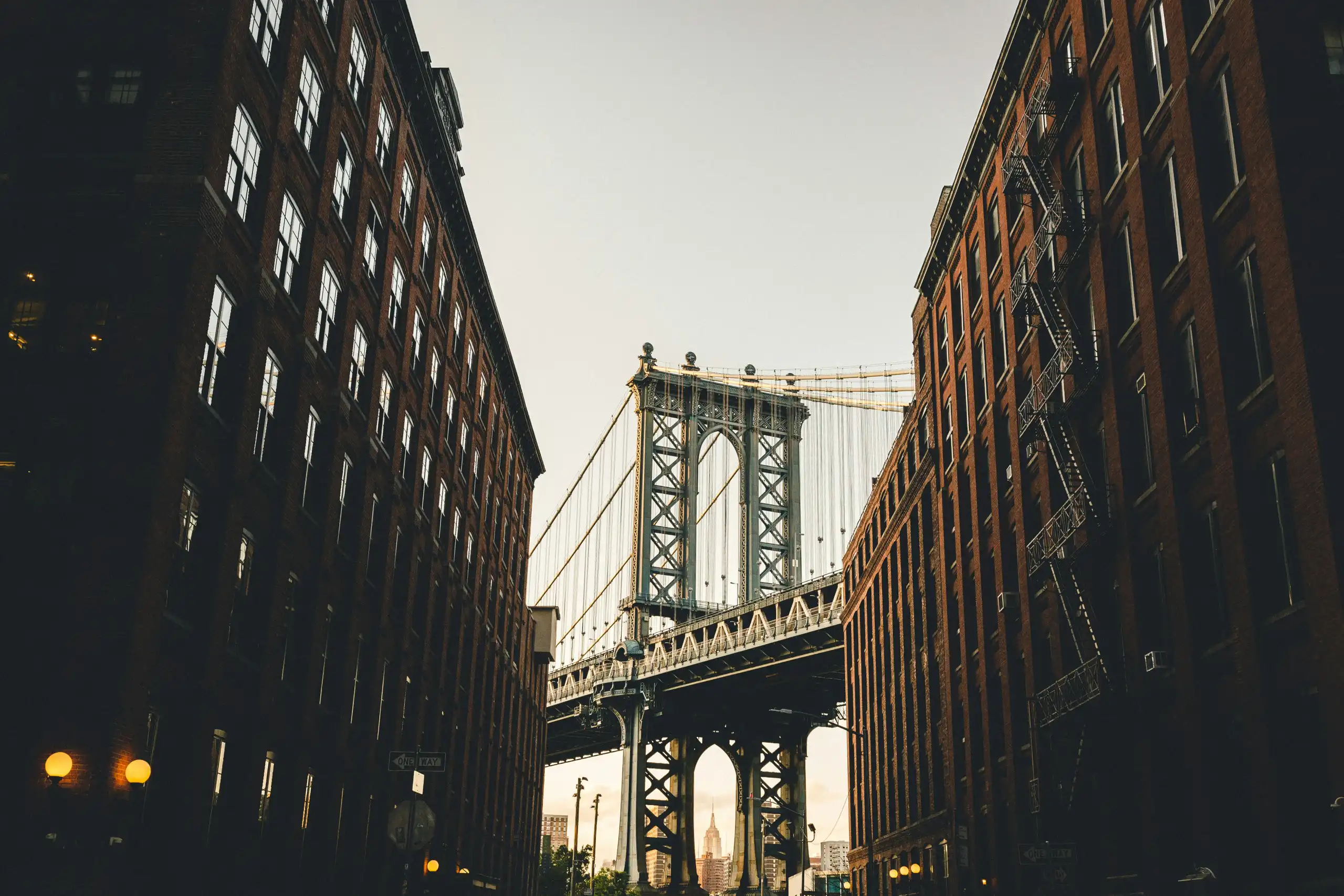
The best Brooklyn neighborhood to buy in is the one where your budget, the type of building you want, and how long you plan to stay all line up, and the range is wide: in the third quarter of 2026, the median sale ran from $444,000 in South Brooklyn to $1.73 million in Williamsburg and Greenpoint, according to The Corcoran Report for Brooklyn. Below, The Michael J. Franco Team compares Brooklyn by price, co-op and condo mix, townhouses, budget, resale speed, transit, and lifestyle.
How much does it cost to buy in each part of Brooklyn?
It depends on the submarket: in the third quarter of 2026, median sale prices ran from $444,000 in South Brooklyn to $1.73 million in Williamsburg and Greenpoint, against a Brooklyn-wide median of $866,000, according to Corcoran. The Brooklyn median slipped 1% from a year earlier, while the average sale price reached a record $1.185 million.
Corcoran divides Brooklyn into eight submarkets and covers co-ops, condos, and new development. Price per square foot is often the fairer comparison, because it adjusts for size.
| Submarket (third quarter of 2026) | Median sale price | Average price per square foot | Closed sales |
|---|---|---|---|
| Williamsburg and Greenpoint | $1.73 million | $1,610 | 190 |
| Carroll Gardens, Boerum Hill and Red Hook | $1.60 million | $1,499 | 102 |
| Brooklyn Heights, Cobble Hill, Dumbo and Downtown | $1.36 million | $1,486 | 242 |
| Park Slope and Gowanus | $1.30 million | $1,437 | 147 |
| Fort Greene, Clinton Hill and Prospect Heights | $1.02 million | $1,322 | 162 |
| Bedford-Stuyvesant, Crown Heights, Lefferts Gardens and Bushwick | $755,000 | $918 | 98 |
| Kensington, Windsor Terrace, Ditmas Park, Flatbush and Prospect Park South | $603,000 | $793 | 105 |
| South Brooklyn | $444,000 | $562 | 435 |
Source: The Corcoran Report, Brooklyn 3Q 2026 (October 2026).
Is it cheaper to buy a co-op or a condo in Brooklyn?
Yes, at the median: resale co-ops sold for $520,000 in the third quarter of 2026, against $1.215 million for resale condos and $1.361 million for new development, according to Corcoran.
Resale co-ops and resale condos each made up 42% of Brooklyn sales that quarter, and new development 16%, down from 27% a year earlier. The resale condo median rose 22% from a year earlier.
Co-ops ask more of buyers up front, with a board review and building rules on financing and subletting, while condos usually cost more and offer more flexibility. Michael asked whether that discount is an opportunity in Have New York City Co-ops Become Undervalued?
What do brownstones and townhouses cost in Brooklyn?
Brooklyn houses sold for a median of $1,699,000 in the third quarter of 2026, up 1.1% from a year earlier, according to Compass figures reported by Brick Underground on October 8, 2026.
The same Compass figures showed Brooklyn house inventory down 17.3%, with townhouse closings up 1.2% in North Brooklyn and 5% in Northwest Brooklyn. A townhouse is a different purchase from an apartment: there is no board review or common charge, but the owner takes on the roof, the facade, the heating system, and any rental units.
What can you buy in Brooklyn at different budgets?
At the median, a budget under $1 million points to South Brooklyn, the Kensington and Flatbush submarket, and the Bedford-Stuyvesant and Crown Heights submarket, while $1 million to $1.5 million reaches Fort Greene, Park Slope, and Brooklyn Heights.
Third-quarter 2026 medians, from Corcoran and the Compass house figures above:
| Budget | What sold at the median |
|---|---|
| Under $1,000,000 | South Brooklyn ($444,000); Kensington, Windsor Terrace, Ditmas Park, Flatbush and Prospect Park South ($603,000); Bedford-Stuyvesant, Crown Heights, Lefferts Gardens and Bushwick ($755,000). |
| $1,000,000 to $1,500,000 | Fort Greene, Clinton Hill and Prospect Heights ($1.02 million); Park Slope and Gowanus ($1.30 million); Brooklyn Heights, Cobble Hill, Dumbo and Downtown ($1.36 million). |
| Over $1,500,000 | Carroll Gardens, Boerum Hill and Red Hook ($1.60 million); Williamsburg and Greenpoint ($1.73 million). Brooklyn houses ($1,699,000). |
These medians mix sizes and building types, so treat them as a starting point.
Which Brooklyn neighborhoods are selling fastest?
Park Slope and Gowanus sold fastest in the third quarter of 2026, at an average of 47 days from list date to signed contract, while South Brooklyn was slowest at 103 days, according to Corcoran.
The Brooklyn average was 71 days, down 2% from a year earlier. Corcoran measures from list date to contract date and leaves new development out.
- Park Slope and Gowanus: 47 days
- Carroll Gardens, Boerum Hill and Red Hook: 52 days
- Fort Greene, Clinton Hill and Prospect Heights: 56 days
- Bedford-Stuyvesant, Crown Heights, Lefferts Gardens and Bushwick: 61 days
- Brooklyn Heights, Cobble Hill, Dumbo and Downtown: 62 days
- Williamsburg and Greenpoint: 63 days
- Kensington, Windsor Terrace, Ditmas Park, Flatbush and Prospect Park South: 78 days
- South Brooklyn: 103 days
One quarter is a snapshot, not a forecast. Resale speed later depends as much on the building, the layout, and the price as on the neighborhood.
How does transit affect where you buy in Brooklyn?
Transit is part of resale value, and the largest planned change for Brooklyn is the Interborough Express, a light rail line between Brooklyn and Queens with 18 stations that is expected to carry more than 160,000 riders each weekday.
In a September 9, 2026 announcement, Governor Kathy Hochul’s office put the cost at $5.5 billion and gave no opening date, so the team treats the line as a long-term factor, not a reason to pay a premium today.
How do lifestyle factors change which Brooklyn neighborhood fits you?
In Brooklyn, lifestyle usually comes down to four things: the services your building provides, private outdoor space, access to parks and the waterfront, and your commute.
- Building services: a doorman and gym usually mean higher monthly charges than a brownstone or walk-up co-op, so amenities belong in the budget.
- Outdoor space: a townhouse often comes with a backyard, while among apartments a private terrace is more common in new development.
- Parks and waterfront: Prospect Park covers 585 acres, according to the Prospect Park Alliance; Brooklyn Bridge Park is an 85-acre waterfront park; and Domino Park is a 6-acre park on the East River in Williamsburg.
- Commute: time your weekly trips at the hours you make them, from the front door.
Visit at different times of day to check the light, the noise, and the walk to the subway.
How does The Michael J. Franco Team help buyers choose a Brooklyn neighborhood?
The Michael J. Franco Team starts with the building type and the monthly budget and chooses the neighborhood second, because in Brooklyn a brownstone, a co-op, and a new development condo on the same block can be three very different purchases.
- Decide between a townhouse, a co-op, and a condo. Ownership costs, board review, and financing rules all differ.
- Compare price per square foot within the same building type, not across types.
- Check days on market for the submarket, and more closely for the building or block.
- Plan around the holding period. If you expect to sell in a few years, resale speed matters more than if you plan to stay for decades.
For costs and commutes side by side, see Manhattan vs. Brooklyn.
How does buying in Brooklyn compare with Manhattan?
Brooklyn costs less at the median: $866,000 in the third quarter of 2026, against $1,250,000 in Manhattan, according to The Corcoran Report for each borough.
| Third quarter of 2026 | Brooklyn | Manhattan |
|---|---|---|
| Median sale price | $866,000 | $1,250,000 |
| Average price per square foot | $1,161 | $1,751 |
| Resale co-op median | $520,000 | $875,000 |
| Resale condo median | $1,215,000 | $1,650,000 |
| Average days on market | 71 | 90 |
Sources: The Corcoran Report, Brooklyn 3Q 2026 and Manhattan 3Q 2026 (October 2026).
The team’s guide to the best Manhattan neighborhoods to buy compares Manhattan’s six regions the same way.
In this video, Michael walks through what $1 million, $3 million, and $5 million or more buys in New York City, and why the building tells you as much as the apartment.
If you are deciding where to buy in Brooklyn, request a confidential consultation and The Michael J. Franco Team will help you compare buildings and neighborhoods against your budget. For the numbers behind the market every quarter, sign up for The Franco Report.
About the author. Michael J. Franco is a top producing broker at Compass with more than 20 years of experience as a broker, attorney, and investor. The Wall Street Journal and Real Trends ranked him number 13 in Manhattan and number 100 in the United States.
This post is for general information and is not financial, legal, or tax advice. Compass is a licensed real estate broker. Equal Housing Opportunity.
Social Cookies
Social Cookies are used to enable you to share pages and content you find interesting throughout the website through third-party social networking or other websites (including, potentially for advertising purposes related to social networking).