

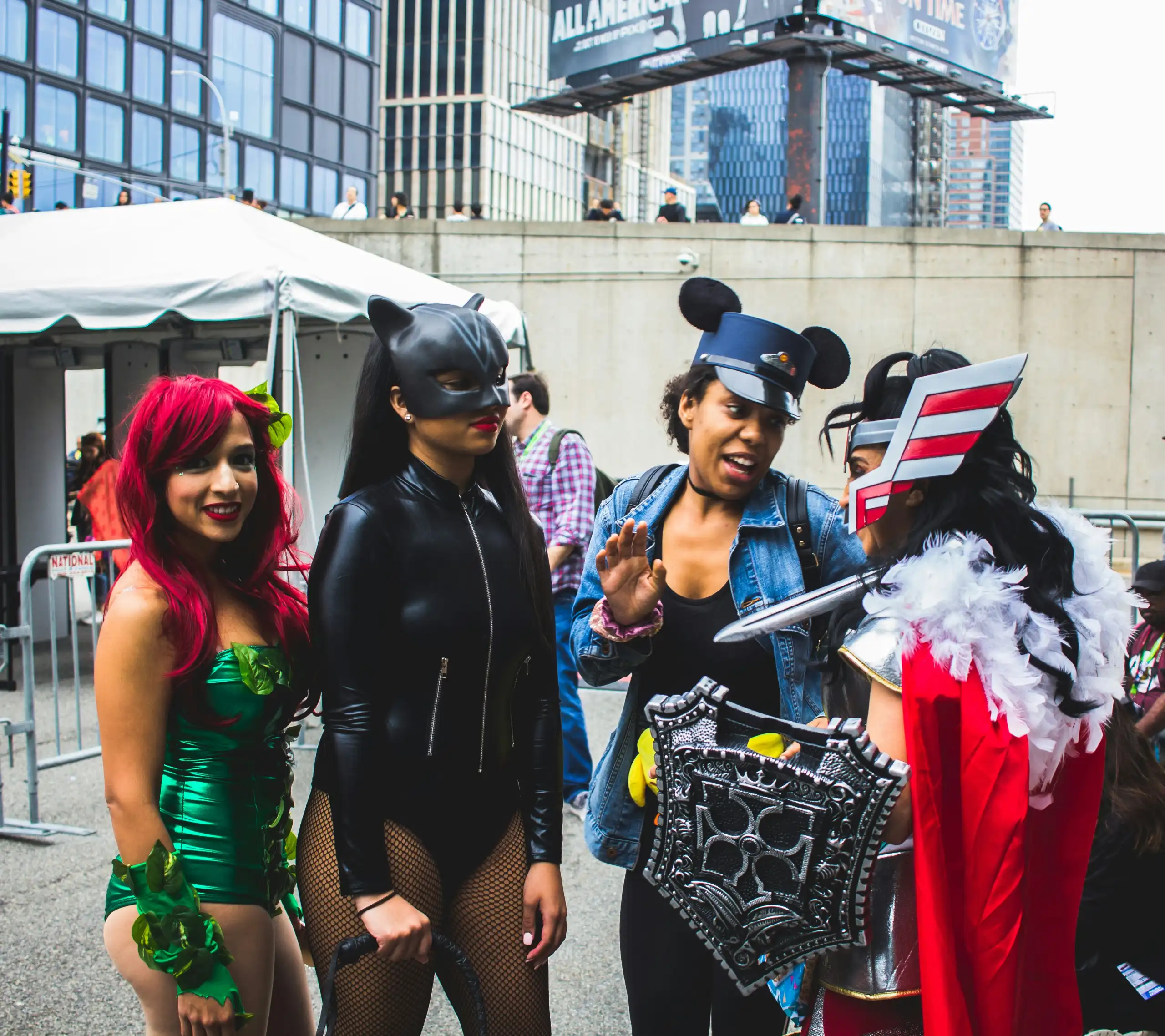
Halloween became a big deal in New York City largely because of one Greenwich Village tradition: a neighborhood walk that puppeteer Ralph Lee started for his children in 1973 grew into the Village Halloween Parade, one of the largest Halloween celebrations in the world. Halloween is my second favorite holiday (Thanksgiving still wins), and my birthday falls the day before, so I have always had a soft spot for it. Below I look at how the parade began, how it grew, and how Halloween became a tradition in Manhattan’s apartment buildings too.
How did the Village Halloween Parade start?
The Village Halloween Parade started in 1973, when Greenwich Village mask maker and puppeteer Ralph Lee organized a walk from house to house in his neighborhood for his children and their friends, according to the parade’s own history. Westbeth credits its courtyard as the place where Lee started the parade.
At the time, the Village was a center of artistic experimentation, full of musicians, actors, writers, and artists. Lee had spent years making masks and oversized puppets for the theater. Rather than keep them on a stage, he brought them into the street, where the whole neighborhood could watch and join in.
What is Westbeth, and why does it matter to the parade’s story?
Westbeth is the artists’ housing complex in the West Village where the parade’s story begins, and it has its own remarkable history. The buildings were home to Bell Telephone Laboratories, which took them over in 1898 and relocated outside Manhattan in 1966, according to Westbeth’s history. Richard Meier was the renovation architect, and Westbeth opened in 1970 as housing and studios for artists.
It is a good example of something I see again and again in this city: a building designed for one purpose finds a second life that becomes part of the neighborhood’s identity.
How did a neighborhood walk become a citywide spectacle?
The parade grew because anyone could join, and the scale kept building on itself. After the second year of Lee’s local promenade, Theater for the New City stepped in and produced the event on a larger scale, according to the parade’s history. In its seventh year, when the founder retired, artist and producer Jeanne Fleming took over, and she has directed it for 45 of its 52 years.
What made the parade special, and so different from Thanksgiving, was that there were no auditions. All you needed was a costume and a willingness to take part. That openness reflected the spirit of Greenwich Village, where individuality and self-expression have always been celebrated. As crowds grew, the route moved from the side streets to Sixth Avenue, according to the parade’s documented history.
How big is the Village Halloween Parade today?
Today the parade draws more than 80,000 costumed participants and an estimated 2 million spectators, according to the parade organizers. Giant skeletons, floating creatures, marching bands, drag performers, and theatrical acts turn Sixth Avenue into an enormous outdoor stage.
This year, Halloween falls on a Saturday, so the Village will once again be filled with thousands of elaborately costumed New Yorkers and visitors. It is one of the few nights when a quiet, historic neighborhood becomes one of the most exuberant places on earth.
How did Halloween traditions develop across America before New York took over?
The modern American Halloween took shape during the 20th century, even though its roots go back centuries to European traditions. By the 1950s and 1960s, trick-or-treating had become a familiar childhood ritual, with homemade costumes, candy, and the occasional prank.
Growing up in Detroit, I remember that the pranks happened the night before Halloween, which was known as Devil’s Night. Meanwhile, New Yorkers were about to take the holiday to an entirely different level.
What is Halloween like in a Manhattan apartment building?
In many Manhattan apartment buildings, Halloween is a building-wide event, with costumed children going door to door without ever stepping outside. Lobbies fill with families, and some buildings coordinate trick-or-treating so residents know which doors to knock on. A child can collect an extraordinary amount of candy in very little time. It is one of the perks of growing up in a vertical city. For parents, it is also a chance to meet neighbors they may only nod to in the elevator the rest of the year.
Halloween is just as visible on the street. Brownstone blocks uptown, downtown, and in Brooklyn are decorated with elaborate displays, and whole blocks turn out for the evening. If you are comparing boroughs, my Manhattan vs. Brooklyn guide covers the practical differences.
What does Halloween tell me about living in New York?
To me, Halloween shows how a simple creative idea can grow into something the whole city shares. The holiday is now an enormous commercial occasion, with lavish parties and professionally designed costumes. Yet one of its most celebrated traditions began with one artist and a handful of neighborhood children. It did not need a sponsor or a committee to get started, only an invitation that anyone could accept.
That is a very New York story. When clients ask me what makes a neighborhood special, I often point to traditions like this one, because they are part of what people are buying into when they choose where to live. Fall is also a good season to look around; I explained why in Why Fall Is One of the Best Times to Buy an Apartment in Manhattan.
On a more practical note, I also recorded a short update this week on the new co-op board deadlines.
If you are thinking about buying or selling in Manhattan or Brooklyn, request a confidential consultation. For my quarterly read on the market, sign up for The Franco Report. Happy Halloween.
About the author. Michael J. Franco is a top producing broker at Compass with more than 20 years of experience as a broker, attorney, and investor. The Wall Street Journal and Real Trends ranked him number 13 in Manhattan and number 100 in the United States.
This post is for general information and is not financial, legal, or tax advice. Compass is a licensed real estate broker. Equal Housing Opportunity.
Social Cookies
Social Cookies are used to enable you to share pages and content you find interesting throughout the website through third-party social networking or other websites (including, potentially for advertising purposes related to social networking).