

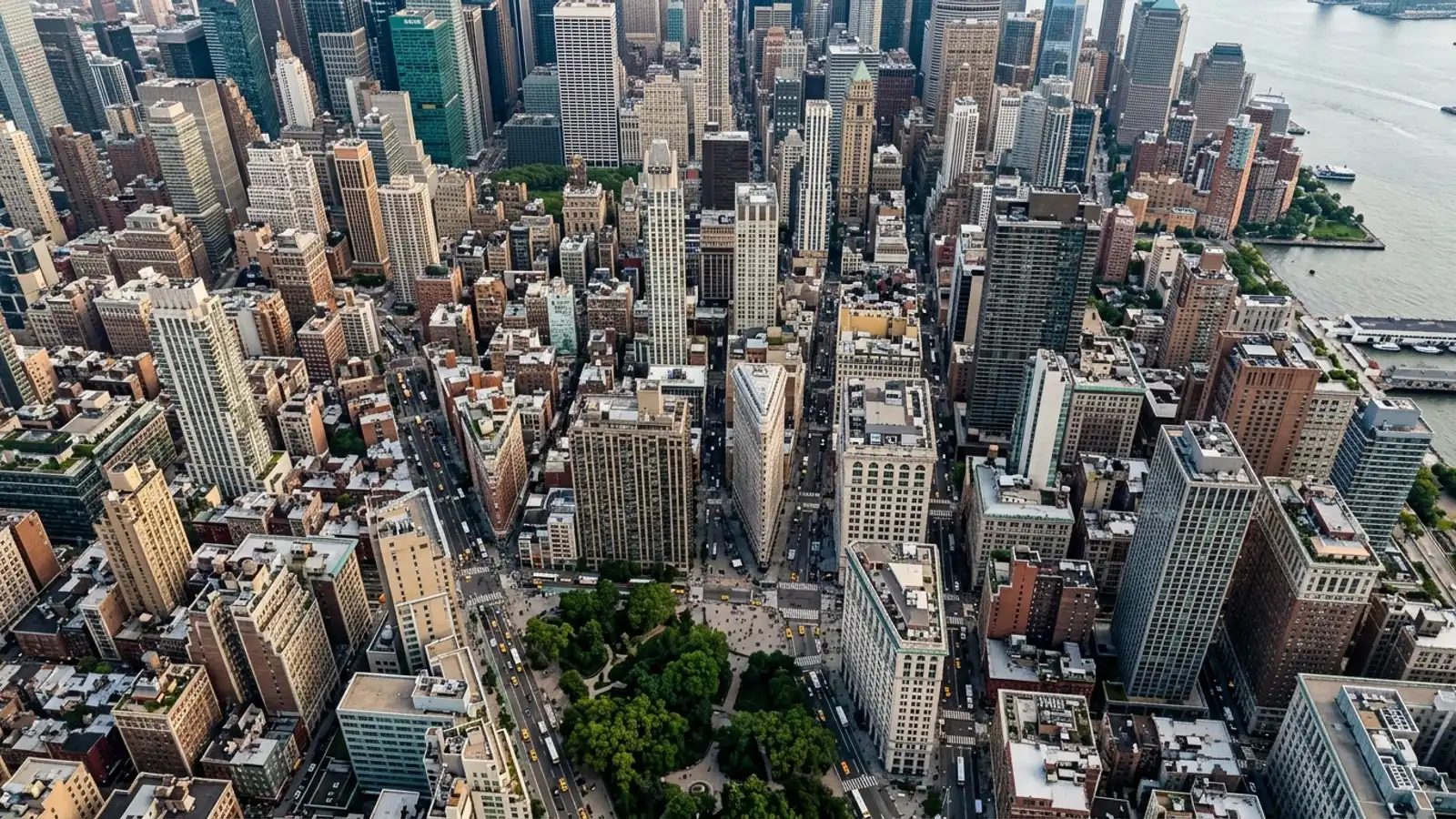
Moving to the center of New York City means accepting tradeoffs that will affect your budget every single month. Most people focus on the skyline and skip straight to the part where they’re signing a lease or buying a home in Manhattan – but the daily reality of housing costs, commute times, and density is what actually determines whether this borough works for you.
In 2026, buyers are looking at a median home price of roughly $1.45 million. Renters aren’t getting a break either, with average monthly rates well above the national average. What follows is a straightforward breakdown of what you actually need to know before you sign anything.
What to Expect When Moving to Manhattan, NY
Transit, employment, and cultural institutions are genuinely unmatched here. That access comes at a price – and not just in rent. The borough spans 22.7 square miles and houses over 1.66 million people, which means space is not something you’re buying much of at any price point.
The decision most buyers and renters land on eventually is this one: how much is proximity to work worth to you versus how much square footage you’re willing to give up to get it?
Pros of Living in Manhattan
Not owning a car is a real financial advantage here. Transit infrastructure is extensive enough that most residents skip the insurance, parking fees, and maintenance costs entirely. Beyond that, you’re within reach of major corporate headquarters, public parks, and world-class medical facilities – and because of high-density zoning, most of your daily errands are walkable from your front door.
Cons of Living in Manhattan
The cost of living in Manhattan, NY runs 131.5% higher than the national average. Housing is the main driver, coming in at 402.8% more expensive than the national baseline. On top of that, you’re sharing 22.7 square miles with over 1.66 million other people, which means smaller apartments, limited inventory, and crowded commutes are just part of the deal.
Manhattan’s Location and Size
Manhattan is an island sitting between the Hudson and East rivers – the geographic and economic core of New York City. It’s coextensive with New York County, meaning the borough and the county share the exact same boundaries, which matters when you’re looking at county-level tax or school district data.
Bridges, tunnels, and subway lines connect it to the outer boroughs and New Jersey, which is why millions of commuters pour in daily from every direction.
New York County and City Access
Living in New York County puts you at the center of the regional transit web. Penn Station, Grand Central Terminal, and the Port Authority Bus Terminal give you access to the entire tri-state area without needing a car. Getting to Brooklyn, Queens, the Bronx, or across the river is straightforward – usually more straightforward than driving would be.
Population and Density
World Population Review estimates the 2026 population at roughly 1,664,214 residents packed into those 22.7 square miles, which works out to about 73,292 people per square mile. The population is seeing a slight annual decline of 0.04%, following a 1.35% decrease since the 2020 census count.
Understanding Manhattan Crime Statistics
Anecdotal accounts of crime in this borough range from dismissive to alarmist, and neither extreme is useful to you. The New York Police Department tracks incidents through its CompStat system, broken down by precinct – that’s the data worth looking at.
Citywide figures from the NYPD and the Governor’s office showed a 38% decline in shooting incidents in Manhattan during 2025, contributing to a historic low in shootings across the city. That’s a notable trend, and it’s publicly available if you want to dig into the source data yourself.
Published Crime Rates and Sources
According to NYPD CompStat data cited by Vital City, Manhattan’s year-to-date major crime rate stands at 388.7 per 100,000 residents. The violent crime rate registers at 114.4 per 100,000 residents based on mid-year comparisons. These are borough-wide figures, so treat them as a baseline rather than a verdict on any specific block.
Researching Local Precinct Data
The numbers shift considerably depending on where in the borough you’re looking. Review localized figures directly through the NYPD crime map portal, and cross-reference with the FBI’s Uniform Crime Reporting (UCR) program, which publishes annual data for the broader region. Look at both, draw your own conclusions.
Housing and Everyday Costs in Manhattan
This market moves fast and doesn’t leave much room for hesitation. As of mid-2026, MLS data shows a median sale price of approximately $1.45 million – a 9.6% increase year-over-year. Homes spend roughly 84 days on the market, and the borough holds about 8.2 months of supply.
Renters aren’t in softer territory. RentCafe reports the 2026 average rent in Manhattan at $5,673, reflecting a 4.9% year-over-year increase.
Home Prices and Monthly Rent
Buyers are paying an average of 99.3% of the listing price, so lowball offers don’t get much traction here. The median sale price sits around $1.45 million across property types. For renters, average studio apartments are running $4,252 per month, one-bedrooms at $5,621, and three-bedrooms reaching $8,395.
Income Needed to Live Comfortably
A 2025 SmartAsset study cited by CBS New York puts the number at more than $150,000 for a single adult to live comfortably in the city. Other estimates specific to Manhattan set the range between $110,000 and $150,000 for a single adult, with families needing upwards of $200,000. All of these figures sit well above the borough’s median household income.
Demographics and Civic Life
The economic picture here is worth understanding clearly before you start budgeting. Census Reporter lists the median household income for Manhattan at $106,403, while other 2024 Census estimates place the average household income closer to $170,767 – a wide spread that reflects significant variation across neighborhoods.
The median home value sits at roughly $1,142,160, which is 79% higher than the New York state median overall. That gap tells you something about the earning requirements this borough effectively demands of its residents.
Median Age and Household Income
The median age of a Manhattan resident is 39 years old. Point2Homes data breaks it down further: 35.6% of the population falls between 25 and 44, and 23.7% are between 45 and 64. About 11.6% of residents are under 15, and 18.2% are 65 or older.
Local Amenities and Services
The borough’s public services are dense by design – neighborhood libraries, transit hubs, and municipal offices are built into the street grid rather than located on the outskirts of anything. Public transit runs 24 hours a day. Most addresses sit within walking distance of grocery stores, pharmacies, and medical clinics. That’s not marketing language; it’s just how the borough is laid out.
Weather, Utilities, and Daily Lifestyle
Manhattan has a full four-season climate, and that matters more than most relocation guides acknowledge. Summer humidity affects cooling costs in older residential buildings more than you might expect, and the city manages its own extensive water and sanitation infrastructure to support the population density.
Factor utility reliability and climate data into your property search. It’s the kind of thing that’s easy to skip over and annoying to discover after closing.
Climate and Heat Factors
Redfin and First Street data indicate that 51% of homes in Manhattan have a Severe Heat Factor. Over the next 30 years, the borough is expected to see a 114% increase in the number of days over 98 degrees Fahrenheit – meaning residents will likely experience 15 days above 98 degrees annually, up from the current average of seven. That has direct implications for cooling costs in buildings without modern HVAC systems.
Utilities and Water Quality
New York City’s annual Drinking Water Supply and Quality Report confirms that the city’s tap water meets all National Primary Drinking Water Regulations and is prepared in accordance with the New York State Sanitary Code. It’s safe to drink straight from the tap. That said, building-specific plumbing can affect water pressure, so test the fixtures during any inspection – it’s a quick check that occasionally reveals something worth negotiating.
Comparing Manhattan to Outer Boroughs
Brooklyn, Queens, and the Bronx all come up in this conversation, and for good reason. The outer boroughs generally offer lower price points per square foot and more opportunities to find a townhouse or single-family structure.
Manhattan counters with shorter commutes to central business districts and a higher density of transit options. There’s no objectively right answer – it comes down to whether you’re optimizing for space or for location.
Tradeoffs in Commute and Housing
Manhattan typically means a smaller apartment in a high-rise or walk-up, in exchange for a short subway ride to work. Outer borough residents often get more square footage and easier street parking, but they trade that for a longer commute into the city center. Map your actual daily routes before you commit to either side of that equation.
Specialized Housing Options
The borough has specific residential facilities for individuals who need care, assistance, or a more structured environment. These buildings are woven into the standard street grid rather than set apart on separate campuses, which keeps residents close to transit and urban amenities.
Finding these options usually means working with a specialized placement service or checking local directories directly. One structural note: care facilities here tend to be vertical, with elevator access, rather than the sprawling ground-level layouts you’d find in suburban markets.
Senior and Assisted Living Facilities
Senior living in Manhattan, NY spans independent living apartments, assisted living communities, and memory care floors within high-rise buildings. Most provide on-site dining, medical monitoring, and social programming, and they’re typically located near major hospitals. Costs run higher than the national average – that’s a function of the real estate premiums that affect everything else in this borough.
Sober Living Accommodations
Sober living in Manhattan, NY offers structured, substance-free housing for individuals in recovery. These residences generally require regular drug testing and adherence to curfews, providing a supported transition between inpatient treatment and independent living. Many are located near outpatient treatment centers and public transit routes.
Local Amenities by Household Type
The commercial and recreational infrastructure here isn’t separate from the residential neighborhoods – it’s built directly into them. Public green spaces, late-night venues, medical facilities: they’re distributed across the island, though concentrations vary by neighborhood.
Whatever block you land on, you’re sharing these resources with everyone else year-round. That’s part of the borough’s appeal, and part of its daily friction.
Schools and Parks
Manhattan’s public schools are managed by the New York City Department of Education, with private and charter institutions alongside them. Central Park provides 843 acres of green space. Washington Square Park and Riverside Park are among the smaller parks that offer playgrounds, dog runs, and athletic courts.
Healthcare and Nightlife
Major medical networks and specialized hospitals with 24-hour emergency rooms are distributed across the borough. Commercial corridors cover dining, theaters, and entertainment venues that stay open late. The concentration is real – you’re generally not traveling far for medical care or a meal.
Frequently Asked Questions
How much income do you realistically need to afford living in Manhattan, NY?
A single adult needs between $110,000 and $150,000 to live comfortably in the borough, while families generally require more than $200,000. Those figures reflect a housing market that runs 402.8% above the national average.
What are the biggest hidden downsides to buying an apartment in Manhattan?
Median sale prices around $1.45 million set a high floor, and you’re getting limited square footage for that money. Buyers in older buildings should also factor in the severe heat factors that affect 51% of homes in the borough, and crowded commutes are simply part of daily life here.
How does the lifestyle and real estate in Manhattan compare to Brooklyn for families?
Manhattan offers shorter commutes to commercial centers and immediate access to high-density transit, but the housing stock is almost entirely apartments. Brooklyn generally comes in at a lower cost per square foot and offers more options for townhouses or single-family structures – the tradeoff is a longer subway ride into the city.
Does the convenience of living in Manhattan outweigh the high monthly co-op maintenance and condo fees?
That depends entirely on your priorities and budget. Eliminating a car saves real money and shortens daily travel time, but the ongoing monthly fees layer on top of housing costs that are already well above the national average. Run the actual numbers for your situation.
How does the strict co-op board approval process affect the timeline of moving to Manhattan?
It extends your closing timeline meaningfully. Homes already spend roughly 84 days on the market here, and co-op board approval adds to that. If you’re purchasing a co-op, build more time into your planning than you would for a standard condo or townhouse.
Is keeping a car in Manhattan, NY worth the extra parking costs and daily hassle?
For most residents, no. The borough’s 24-hour public transit network makes a car unnecessary for daily life, and skipping car ownership means avoiding monthly garage fees and the insurance premiums that come with city driving.
Social Cookies
Social Cookies are used to enable you to share pages and content you find interesting throughout the website through third-party social networking or other websites (including, potentially for advertising purposes related to social networking).