

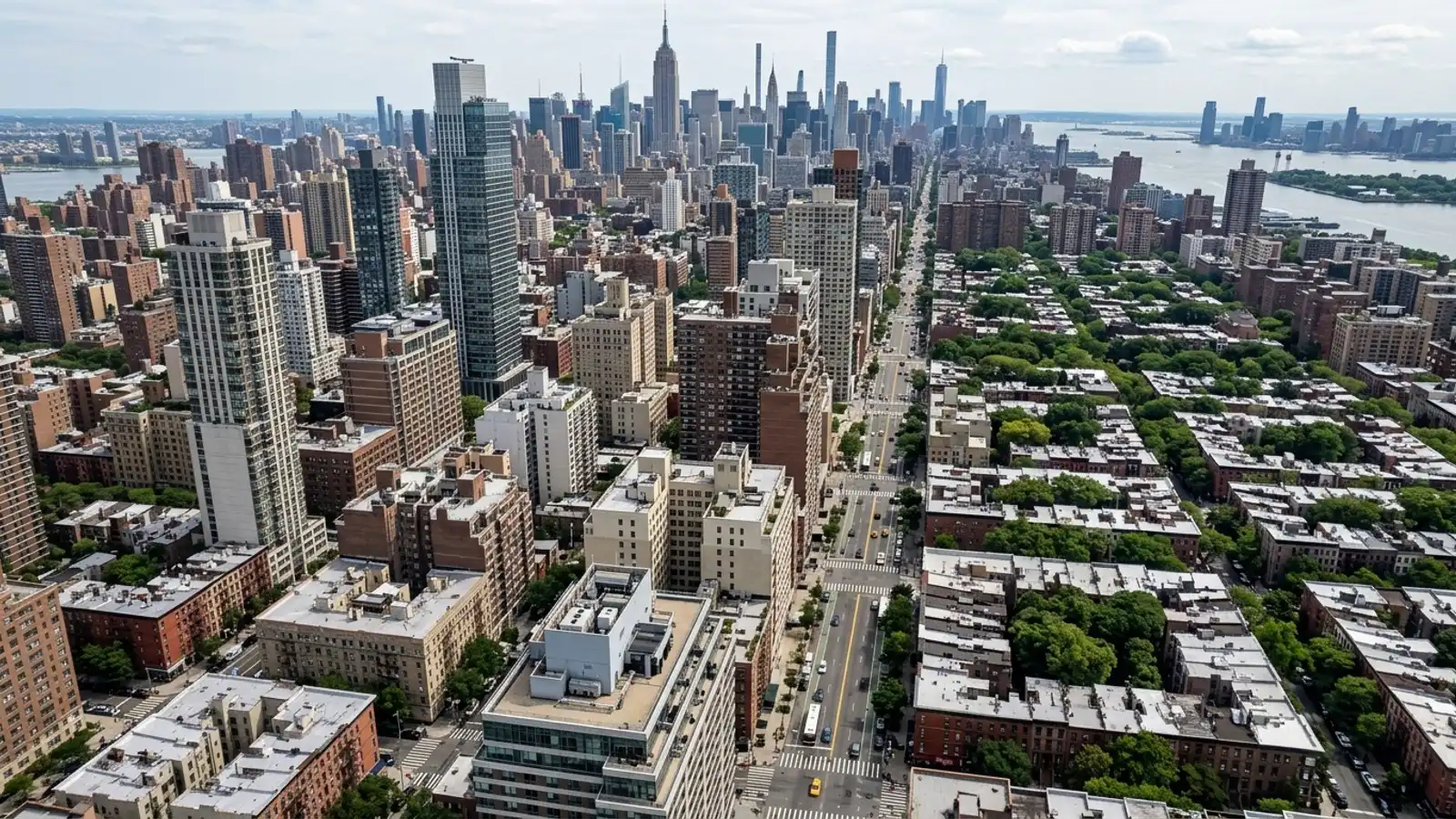
Let’s start with the number that stops most first-time buyers cold: the median sale price in Manhattan, NY sits around $1,450,000 as of mid-2026. The instinct is to do the math on 20% and quietly close the browser tab. Don’t. While 20% is common – particularly in certain building types – plenty of buyers get into this market with considerably less. Knowing the local pricing landscape and the actual loan requirements lets you build a budget grounded in reality, not worst-case assumptions.
Home Prices and Down Payment Expectations
Market data from May 2026 shows 5,715 available homes in Manhattan, with properties spending roughly 84 days on the market and a median sale price of $1.45 million. That figure moves around a lot depending on what you’re buying.
A down payment is the upfront cash you put toward the purchase price, with a mortgage covering the rest. Lenders express it as a percentage of the total price. The 20% assumption is understandable – on a typical Manhattan home that’s $290,000 in cash, and yes, hitting 20% does eliminate mortgage insurance. But lenders routinely accept smaller percentages, and there are programs designed specifically to help you get there.
Condo Versus Co-op Pricing
Condominiums and co-ops dominate the local supply, and they don’t price the same. Recent figures put condo medians somewhere around $1.6 million to $1.7 million, while co-ops come in noticeably lower at roughly $850,000 to $865,000.
That gap matters for your upfront math. Co-op boards frequently require buyers to put down at least 20%, regardless of what your lender would accept. Condos and single-family homes generally follow the minimums set by your mortgage program instead.
Minimum Down Payment Rules for Standard Mortgages
Conventional loans backed by Fannie Mae and Freddie Mac allow first-time buyers to put down as little as 3% on a primary residence. On an $850,000 co-op, that’s $25,500 – assuming the building’s board will actually permit it, which many won’t.
Federal Housing Administration (FHA) loans set their minimum at 3.5%. They’re designed to help buyers with lower credit scores access financing, though finding FHA-approved condo buildings in Manhattan takes real legwork. Don’t assume the building qualifies; verify it early.
Zero-Down Options and Exclusions
The Department of Veterans Affairs (VA) offers 0% down loans for eligible military service members and veterans. VA loans work for condos and single-family homes, provided the property meets VA approval standards.
The United States Department of Agriculture (USDA) also offers 0% down mortgages – but only for rural areas. New York County falls entirely within a USDA loan exclusion zone. That program isn’t available to Manhattan buyers.
State and Local Down Payment Assistance Programs
The NYC Department of Housing Preservation and Development (HPD) runs the HomeFirst Down Payment Assistance Program, which provides up to $100,000 toward a down payment or closing costs. You can use those funds on a 1-4 family home, a condominium, or a cooperative anywhere in the five boroughs.
To qualify for HomeFirst, your household income has to come in at or below 120% of the Area Median Income. The program also requires that you bring a minimum down payment or contract deposit of at least 3% of the total purchase price from your own funds – the assistance layers on top of that, it doesn’t replace it.
New York State offers additional resources through the State of New York Mortgage Agency (SONYMA), which operates under NY Homes and Community Renewal and runs several targeted mortgage products for first-time buyers.
SONYMA Loan and Grant Specifics
SONYMA’s Achieving the Dream program offers low interest rates, but it caps purchase prices at $1,255,920 for a one-family unit – which rules out a lot of Manhattan condos but fits comfortably within co-op territory. Income limits are $155,520 for a one- or two-person household in NYC, and up to $181,440 for three or more people.
SONYMA also offers a Down Payment Assistance Loan (DPAL) and an enhanced DPAL PLUS. The standard DPAL gives you the greater of $3,000 or 3% of the purchase price, capped at $15,000. DPAL PLUS goes further, offering up to $30,000 for low-income borrowers.
Factoring in Private Mortgage Insurance
Put down less than 20% on a conventional loan and you’ll pay for Private Mortgage Insurance (PMI). That monthly cost protects the lender if you default – not you. It’s an ongoing line item in your housing budget until you’ve built enough equity to get rid of it, at which point you can request the lender remove the requirement once you hit 20% equity in the home.
FHA loans carry their own version called a Mortgage Insurance Premium (MIP). The difference worth knowing: unlike conventional PMI, FHA mortgage insurance stays on the loan for its entire lifespan if your down payment is less than 10%.
Preparing Your Finances for a Purchase
In May 2026, Manhattan saw 698 homes sold, with the average property closing at roughly 99.4% of its list price. That’s a tight spread. It means you shouldn’t be scrambling to pull funds together after you find something you want – your down payment money needs to be fully accessible before you make an offer.
The funds themselves typically move in two stages: an earnest money deposit when you sign the contract, and the remaining balance at the closing table.
Using Gift Funds
Lenders do allow buyers to use financial gifts from family members toward some or all of the down payment. You’ll need a formal gift letter confirming the money isn’t a loan and won’t need to be repaid.
Co-op boards are a separate conversation entirely. Some allow gifts to cover the full purchase amount. Others cap the percentage. Others prohibit gift funds altogether. You’ll need to check the specific building’s rules before counting on that money.
Frequently Asked Questions
What is the minimum down payment required for a co-op versus a condo in Manhattan?
Conventional lenders allow down payments as low as 3% for both condos and co-ops. That said, many Manhattan co-op boards impose their own requirements on top of what the lender allows – often 20% minimum, regardless of your financing.
Are there any first-time homebuyer down payment assistance programs available for Manhattan apartments?
Yes. The NYC HomeFirst program provides up to $100,000 for qualified buyers purchasing a condo, co-op, or 1-4 family home. New York State also offers SONYMA programs like the Down Payment Assistance Loan (DPAL), which provides up to $15,000.
Can I use an FHA loan to buy in Manhattan with only a 3.5% down payment?
You can, if the building is FHA-approved and the property price falls within local loan limits. Finding FHA-approved condos in Manhattan is genuinely difficult, so verify building eligibility early – not after you’re already under contract.
Do Manhattan co-op boards allow first-time buyers to use gift money for their down payment?
It depends entirely on the building. Some co-op boards allow family gifts to cover a portion of the down payment; others require all funds to come directly from the buyer’s own savings. There’s no blanket rule.
How much extra should I save for NYC closing costs on top of my down payment?
Closing costs are a separate budget item from your down payment – they cover things like title insurance, legal fees, and state or city transfer taxes. Ask your lender for an official loan estimate to see the exact cash you’ll need at closing.
How many months of post-closing liquidity do I need left in the bank after paying a Manhattan down payment?
Lenders typically require several months of mortgage payments held in reserve after closing. Co-op boards tend to set the bar higher, often asking buyers to demonstrate substantial post-closing liquidity as proof of financial stability.
Social Cookies
Social Cookies are used to enable you to share pages and content you find interesting throughout the website through third-party social networking or other websites (including, potentially for advertising purposes related to social networking).