

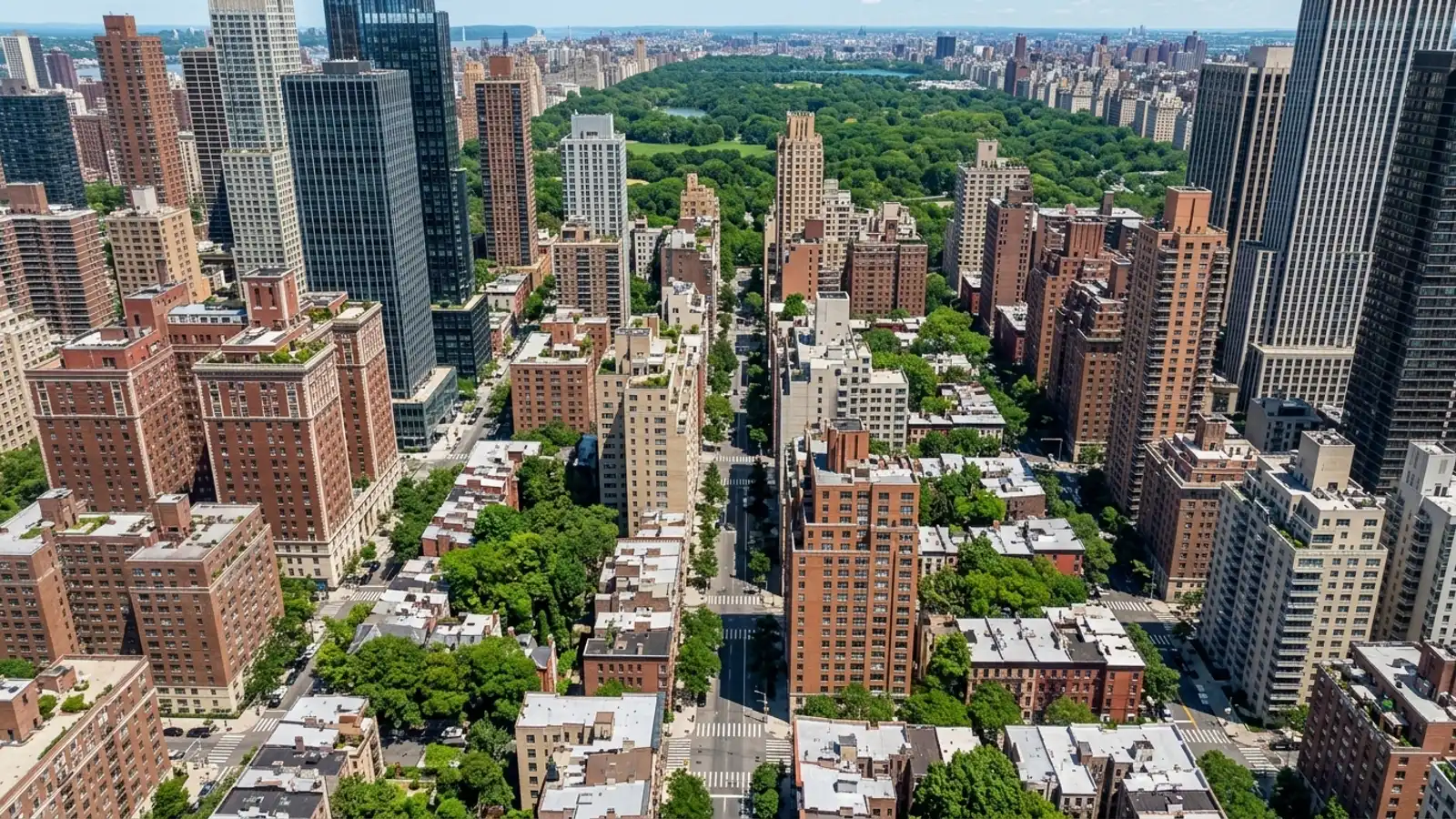
Manhattan is the center of New York City – dense with jobs, restaurants, and cultural institutions that draw new residents every year. Residents quickly learn the pros and cons of living in Manhattan. Moving here means trading square footage and a quiet street for a 24-hour subway system and just about everything else within walking distance.
As of 2026, the borough holds a population of roughly 1.66 million people and keeps growing. Housing costs and daily expenses rank among the highest in the country, so careful budgeting and neighborhood research aren’t optional – they’re the price of admission.
Where is Manhattan, NY?
Manhattan sits at the core of New York City and serves as the region’s primary commercial center. A massive public transit network connects it to the surrounding areas, which means you can get almost anywhere without a car.
Above Houston Street, the borough follows a grid, so orienting yourself as a new resident is easier than you’d expect. The MTA subway runs 24 hours a day and handles most of what a car would do anywhere else.
What county is Manhattan, NY in?
Manhattan and New York County are the exact same geographic area. When you fill out official forms, register to vote, or handle legal documents, you’ll list New York County as your residence.
Because city and county governments are consolidated within New York City, most municipal services are handled at the city level rather than the county level.
Proximity to airports and transit
Air travel access depends on traffic and which airport you’re using. LaGuardia (LGA) is the closer option, sitting about 8 miles from Midtown Manhattan with an off-peak drive time of roughly 15 to 25 minutes.
John F. Kennedy International Airport (JFK) is farther out – approximately 17 miles from Midtown via the Van Wyck Expressway. Off-peak, expect 35 to 50 minutes. During rush hour, plan for significantly longer.
Manhattan ZIP codes
The borough is covered primarily by ZIP codes in the 100xx range. Common residential codes include 10001 for Chelsea, 10002 for the Lower East Side and Chinatown, and 10003 for the East Village and Gramercy areas.
Standard residential codes span from 10011 through 10040, along with specific codes like 10044 and 10069. There are also unique and PO-box codes such as 10118 and 10119 assigned to specific commercial buildings.
Is Manhattan, NY a good place to live?
It really comes down to two things: your tolerance for density and how much you value immediate access to amenities. You give up square footage and a backyard. In return, restaurants, theaters, and major employers are a subway ride away – sometimes less.
The environment is constantly active. That’s the appeal for a lot of people. It also requires a real adjustment period if you’re coming from somewhere quieter, and noise is a factor you shouldn’t underestimate.
Who the borough fits best
Manhattan works well for buyers and renters who want a short commute to the city’s major commercial hubs. It also draws people who prioritize cultural access – Broadway, world-renowned museums, and massive public spaces like Central Park are woven directly into the residential fabric here.
If you prefer walking or transit over driving, the infrastructure supports that completely. Owning a car tends to mean steep monthly garage fees and strict street-parking regulations, so most residents simply don’t bother.
Pros and cons of living here
The primary advantage is convenience. Almost anything you need is available within a few blocks or a short train ride, and the transit system connects you to the rest of the city without ongoing costs for gas or vehicle maintenance.
The cost of living is steep, inventory moves fast, and apartments run smaller than the national average. Day-to-day logistics – carrying groceries up a walk-up staircase, for instance – can be more physically demanding than you’d expect if you’ve always had an elevator or a garage.
Local lifestyle and daily pace
Life moves fast here. Residents walk quickly, plan their schedules around train times, and use the sidewalk the way suburban residents use a front porch. You’ll pass neighbors, commuters, and tourists every single day.
Weekends tend to revolve around neighborhood parks, brunch spots, and local events. Large home gatherings aren’t really the norm – the borough’s cafes, restaurants, and public venues handle most of the socializing.
Cost of living in Manhattan, NY
Housing takes up the largest share of any budget in this market, and whether you’re buying or renting, you should expect costs that exceed national averages. That’s not a surprise to most people moving here, but the specific numbers tend to be.
Beyond the monthly payment itself, factor in building maintenance fees, broker fees, and the higher prices you’ll pay for everyday goods. Those add up faster than most people anticipate.
Home prices and property taxes
As of May 2026, the median sale price for homes in Manhattan sits at roughly $1,450,000 – a 9.6% year-over-year increase. The market stays competitive: homes spend a median of 84 days on the market, and sellers receive about 99.4% of their asking price.
During this recent period, 698 homes sold across the borough, with inventory at around 5,715 available homes and an 8.2-month supply. If you’re buying into a co-op or condo, build monthly maintenance or homeowners association dues into your budget – those fees cover building upkeep and taxes and aren’t small.
Rent and apartments
The rental market requires substantial upfront capital and fast decision-making. The Douglas Elliman Report showed the median rent hitting $4,720 in late 2025, while mid-2026 estimates from Zumper place the average monthly rent closer to $5,395.
Most landlords require tenants to show an annual income of 40 times the monthly rent. If you don’t meet that threshold, you’ll need a guarantor who earns 80 times the monthly rent to get the lease signed.
Utilities, groceries, and everyday costs
Day-to-day expenses reflect the premium of island logistics and high commercial rents. Groceries cost more at local corner markets than at larger outer-borough supermarkets, though bulk delivery services take some of the edge off.
Utility costs vary by building – some older pre-war apartments include heat and water in the rent or maintenance fee. You’ll still need to budget for electricity, internet, and a monthly MTA unlimited subway pass.
Neighborhoods and where to live
Manhattan is a patchwork of distinct enclaves, each with its own architectural style and daily rhythm. Choosing the right area comes down to your budget, your commute, and the type of building you want to live in.
The borough breaks broadly into Downtown, Midtown, and Uptown. Inside those boundaries, you’ll find dozens of micro-neighborhoods with their own characters – and meaningful differences in price.
Evaluating neighborhood features
When you’re touring areas, pay close attention to the nearest subway station and which specific lines run there. A neighborhood can look close to your office on a map and still require two transfers, which adds real time to your daily commute.
The local retail landscape matters more than most people realize before they move here. Having a full-sized grocery store, a pharmacy, and a laundromat within a five-minute walk makes a substantial difference in daily life – especially if your building doesn’t have in-unit laundry.
Popular areas across the borough
The Upper West Side sits close to Central Park and features large residential buildings. Compared to the commercial intensity of Midtown, the pace there feels slightly more relaxed.
Further south, neighborhoods like Chelsea and the East Village offer different architectural styles and access to local parks. Both command premium prices – high demand and limited new construction keep it that way.
Living in Downtown Manhattan
Downtown Manhattan covers the Financial District, Tribeca, and the surrounding lower tip of the island. What was once strictly a business sector has transformed into a residential hub of high-rise luxury condos and converted loft spaces.
Major transit hubs make it easy to commute to Brooklyn, New Jersey, or Midtown from down here. The waterfront parks along the lower edge of the island offer paved paths for running and biking with views of the harbor – a genuine perk of living at the bottom of the island.
Things to do in Manhattan: dining and entertainment
The concentration of dining, arts, and entertainment is what pulls most residents here in the first place. You can find virtually any cuisine, cultural event, or specialized retail shop without leaving the borough.
The subway makes it simple to explore neighboring boroughs when you want a change of scenery, but most weeks you won’t feel any particular urgency to leave.
Restaurants in Downtown Manhattan
The dining scene in Downtown Manhattan runs from historic taverns in the Financial District to high-end dining in Tribeca. The area serves both daytime office crowds and evening residents without much overlap between the two.
Expansive outdoor seating goes up at many local restaurants during the warmer months. Large food halls that gather multiple local vendors under one roof are also well represented down here.
Shopping and nightlife
Retail in Lower Manhattan includes major brand storefronts and independent boutiques. There are extensive indoor and outdoor shopping corridors that cover everyday retail needs without requiring a trip to a mall.
Nightlife varies significantly by neighborhood. The Lower East Side is known for dense clusters of late-night venues; other residential pockets go quiet not long after dinner.
Local events and attractions
Living here means sharing your neighborhood with global attractions like Central Park – though as a resident, you learn quickly which hours to avoid the worst of the tourist traffic. Going early or on a weekday makes a real difference.
The borough runs year-round events: summer outdoor film screenings, massive holiday parades, and street fairs that close down avenues on summer weekends and bring food vendors directly into residential areas.
Visiting before you move: hotels and lodging
If you’re planning a scouting trip to look at homes for sale or apartments for rent, staying in the area you’re considering is a genuinely useful strategy. The only real way to test a neighborhood’s commute and evening noise level is to be there for it.
Booking a room in a central location lets you walk the local streets at night and get a sense of how things actually feel after dark – not how they look in listing photos at noon.
Hotels in Downtown Manhattan
Downtown Manhattan has a solid range of accommodations, particularly in the Financial District and Tribeca. Options run from established luxury chains oriented toward business travelers to boutique hotels with rooftop lounges.
Staying Downtown gives you immediate access to multiple subway lines, which makes it easy to travel uptown for apartment viewings while still experiencing the waterfront amenities of Lower Manhattan.
Options near Downtown Manhattan
If you want to explore adjacent areas, the Lower East Side has boutique hotels with a more residential feel – closer to independent dining and local streetscapes than large commercial towers.
Hotel options in the surrounding New York City boroughs are also worth considering if you’re looking at properties across the wider metropolitan area. A short subway ride puts you back in Manhattan whenever you need to be.
Frequently Asked Questions
What are the strict income and guarantor requirements to secure an apartment in Manhattan, NY?
Property management companies enforce the 40x rule strictly, meaning a $4,000 monthly apartment requires a $160,000 annual salary. If you plan to use a guarantor, they must submit their own tax returns and bank statements to prove they meet the 80x threshold.
How much are typical broker fees when moving to Manhattan and can they be avoided?
Broker fees are a standard part of the rental market and represent a significant upfront cost. You can avoid them by searching specifically for “no-fee” apartments, where the landlord pays the broker or leases directly to the tenant.
How far in advance should I start apartment hunting before my Manhattan move-in date?
Start your search just a few weeks before your target move-in date. Inventory moves fast, and landlords rarely hold vacant units for tenants looking several months out.
How do you handle moving truck parking and freight elevator rules in a Manhattan building?
You’ll need to coordinate directly with your building’s management. Most high-rises require you to book a specific time slot for the freight elevator and provide a certificate of insurance from your moving company before they’ll allow a truck to unload.
Is it better to rent first or buy immediately when relocating to Manhattan?
Renting first lets you test a neighborhood’s commute and noise levels before making a long-term commitment. Buying directly into the $1.45 million median market requires real confidence in your chosen location to offset closing costs.
Will I be subject to the New York City local resident income tax if I move to Manhattan?
Yes. Because Manhattan is part of New York City, residents pay the local city income tax on top of state and federal taxes. Factor that into your net income calculations when you’re budgeting for the move.
Social Cookies
Social Cookies are used to enable you to share pages and content you find interesting throughout the website through third-party social networking or other websites (including, potentially for advertising purposes related to social networking).