

Key Takeaways
- The Supply Deficit: A report by the NYC Department of Housing Preservation and Development (HPD) and the Department of City Planning (DCP) reveals NYC must increase its total housing stock by nearly 19% (700,000 units) over the next decade.
- Historic Precedent: The only era in NYC history that met a housing crisis of this scale was the 1920s, when a property tax exemption fueled the creation of over 740,000 homes—producing today’s iconic pre-war co-ops.
- Fundamental Scarcity: Despite policy shifts like the City of Yes for Housing Opportunity, structural supply limits ensure Manhattan residential property remains an inherently scarce asset class.
The 700,000-Unit Housing Gap
New York City’s housing market operates under extreme inventory constraints.
According to a report released by the NYC Department of Housing Preservation and Development (HPD) alongside the Department of City Planning (DCP), the five boroughs require approximately 700,000 additional homes over the next ten years to address structural deficits and keep pace with growth.
With NYC’s housing stock standing at roughly 3.7 million units, satisfying this target requires a 18.9% increase in total inventory within a single decade.
┌─────────────────────────────────────────────────────────────┐
│                 BREAKDOWN OF NYC HOUSING NEED               │
├──────────────────────────────┬──────────────────────────────┤
│ Current Shortage             │ 290,000 Units                │
│ Projected 10-Yr Population   │ 240,000 Units                │
│ Future Housing Demand        │ 170,000 Units                │
├──────────────────────────────┼──────────────────────────────┤
│ TOTAL NEED OVER 10 YEARS     │ 700,000 Units                │
└──────────────────────────────┴──────────────────────────────┘
The underlying drivers of this shortfall include:
- Historic Low Vacancy: The rental vacancy rate sits at 1.4%—the lowest level since 1968—severely restricting mobility.
- Low Inventory Mobility: Regulatory constraints and rent freezes disincentivize tenant turnover, keeping existing inventory off the open market.
- Production Drag: While the city added roughly 43,800 units in 2025 (a strong output year historically), current production runs far below the annual requirement of 70,000 units needed to meet the 10-year goal.
NYC Housing Production Eras
Below is a visual breakdown comparing production numbers across NYC’s major housing eras:
  1920–1929           1930–1941          2000–2009          2012–2023
┌──────────────┐    ┌──────────────┐   ┌──────────────┐   ┌──────────────┐
│  740,000     │    │  279,000     │   │  <200,000    │   │  240,000     │
│  Units       │    │  Units       │   │  Units       │   │  Units       │
└──────────────┘    └──────────────┘   └──────────────┘   └──────────────┘
  Roaring '20s        Great Depression    2000s Boom         Pre-Pandemic
  Tax Exemption       Era Construction    Era                Recovery
Historic Perspective: How New York Solved Housing Crises Before
New York City has only successfully scaled housing production to this magnitude once before: The 1920s.
In 1920, facing a post-WWI housing crisis characterized by surging population numbers, stalled construction, and soaring rents, NY Governor Al Smith enacted legislation exempting new residential structures from property taxes.
- The Result: Builders added 740,000 housing units during the 1920s—at a time when the city’s population was a third smaller than today.
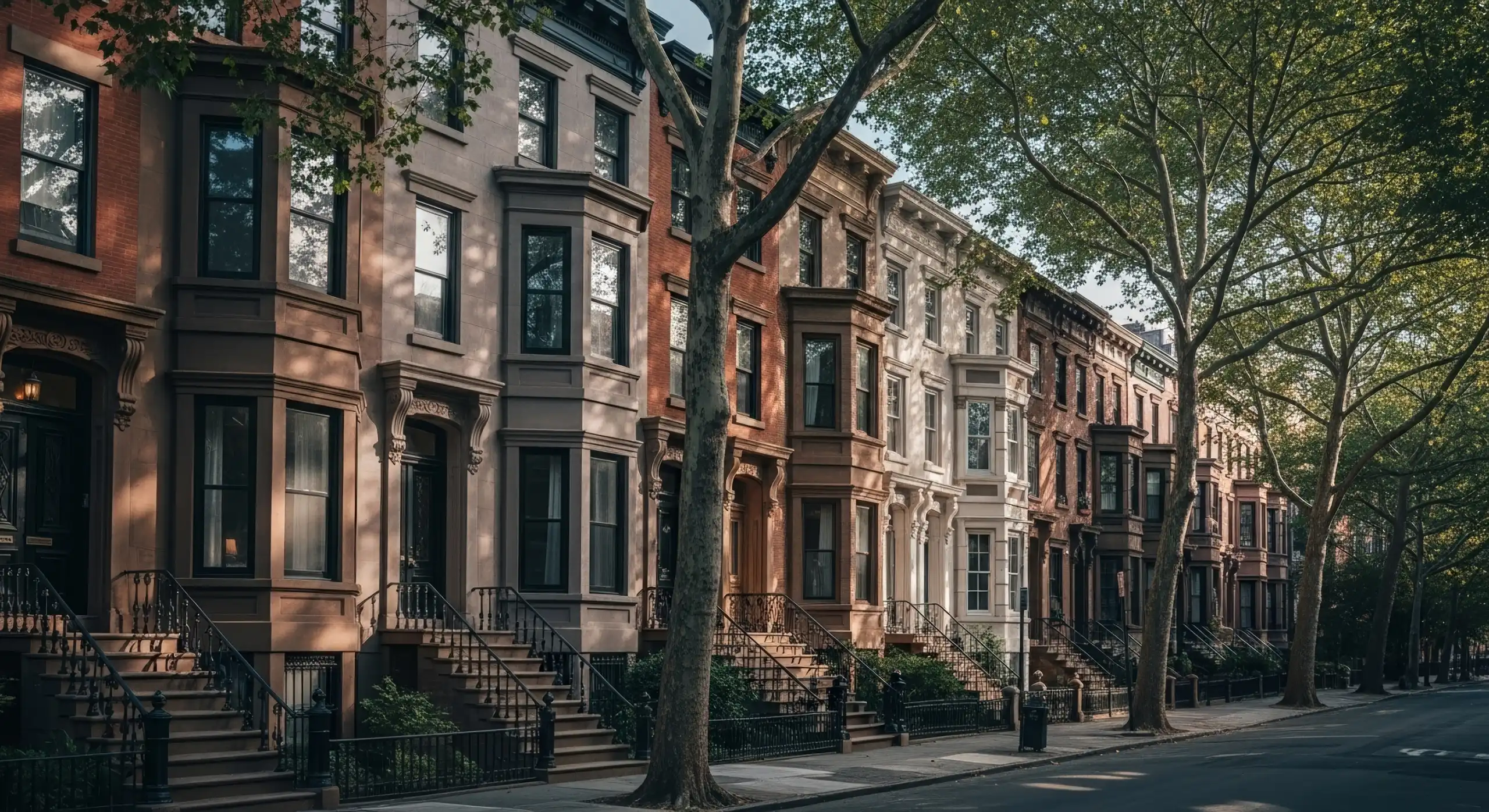
- The Architectural Legacy: The high-rise elevator buildings across the Upper West Side, Upper East Side, and historic Manhattan enclaves—celebrated today as classic pre-war co-ops—originated as rapid emergency mass housing.
Even during the economic contraction between 1930 and 1941, New York completed 279,000 units. By comparison, during the recent expansion between 2012 and 2023, the city added approximately 240,000 units.
Modern Zoning Controls & Supply Constraints
Production slowed substantially after mid-century legislative shifts:
- The 1961 Zoning Resolution: Imposed strict height, bulk, and density caps across all five boroughs, sharply curtailing total buildable square footage.
- 1970s Fiscal Crisis: Caused widespread building abandonment, leading to a net loss in total housing units.
- 2000s–Present Constraints: From 2000 to 2009, despite a national real estate boom, NYC added fewer than 200,000 units.
Recent policy updates like the City of Yes for Housing Opportunity adjust zoning mechanics to encourage development, projecting an additional 80,000 units over 15 years. However, this falls short of the 700,000-unit requirement identified by housing agencies.
What Housing Scarcity Means for Manhattan Property Values
Creating new housing stock in Manhattan requires navigating zoning approvals, converting existing commercial assets, or replacing existing low-density structures.
For real estate buyers and sellers, this structural deficit underpins a core economic reality: Manhattan real estate operates on absolute scarcity.
While interest rates, economic cycles, corporate bonuses, and tax policies drive short-term price fluctuations, the structural imbalance between demand and high barrier-to-entry housing supply continues to support long-term asset value in New York City.
Frequently Asked Questions
Why is New York City’s rental vacancy rate so low?
The city’s rental vacancy rate stands at 1.4% due to extreme supply constraints, limited tenant turnover in rent-regulated units, and steady population inflows competing for a limited pool of market-rate listings.
How did the 1920s tax exemption change NYC real estate?
In 1920, NY State exempted new residential construction from property taxes, spurring the construction of over 740,000 apartments in ten years. This boom produced the classic “pre-war” co-op and condo inventory that forms the backbone of Manhattan’s prime residential neighborhoods today.
Navigating Manhattan Real Estate Strategy?
Understanding micro-market supply dynamics is essential whether you are acquiring or positioning a premier Manhattan property. Reach out to the Michael J. Franco Team today!
Social Cookies
Social Cookies are used to enable you to share pages and content you find interesting throughout the website through third-party social networking or other websites (including, potentially for advertising purposes related to social networking).