

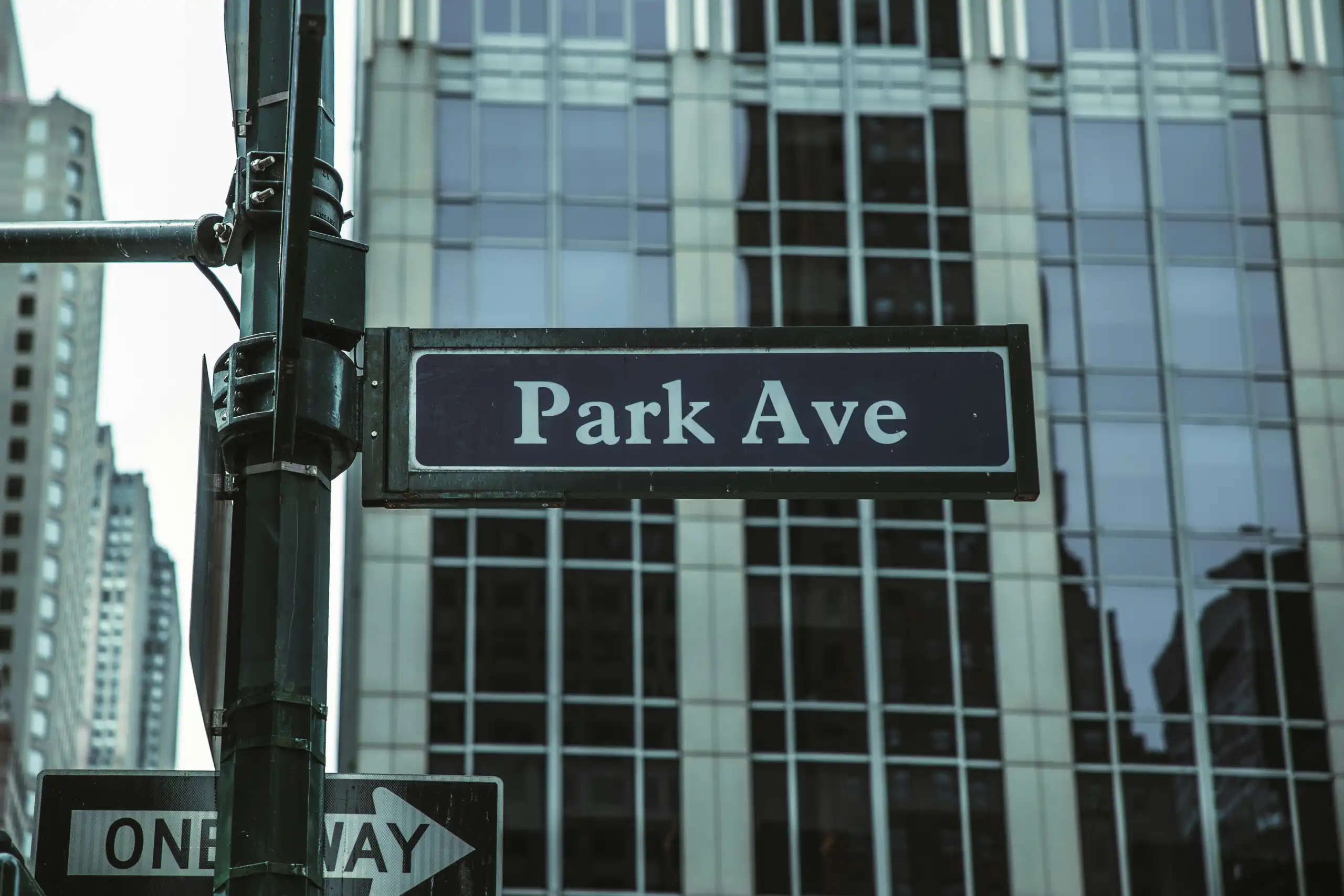
Park Avenue became one of the world’s most prestigious addresses because the city buried a smoky railroad beneath it, and developers then filled the new boulevard with grand apartment houses. It is hard to believe that the street now synonymous with wealth and elegance was once one of Manhattan’s least desirable places to live. Below I trace how Fourth Avenue became Park Avenue, what makes its prewar co-ops so admired, and what the city’s newest redesign plan could mean for the avenue.
Why was Park Avenue once an undesirable place to live?
Park Avenue was undesirable in the 19th century because it was Fourth Avenue, and it carried an open railroad. In 1831, the New York and Harlem Railroad was franchised, and its route ran north along Fourth Avenue, according to the history of the Park Avenue main line. Steam locomotives brought smoke, soot, noise, and real danger. Not surprisingly, the railroad did little for the value of the real estate around it.
How did Fourth Avenue become Park Avenue?
Fourth Avenue became Park Avenue by putting the railroad out of sight. Under the Fourth Avenue Improvement of the 1870s, much of the line was lowered below street level, and the center of the roadway was landscaped over the openings. The boulevard north of Grand Central was renamed Park Avenue in 1888, according to the avenue’s documented history.
The new name was more aspirational than descriptive. The city was learning what developers have understood ever since: perception, presentation, and even an address can change how people value real estate.
What turned Park Avenue into a prime residential address?
A tragedy and a train station turned it into prime real estate. In 1902, a fatal collision between two trains occurred under Park Avenue, in part because smoke from the steam engines obscured the signals. The state then banned steam trains in Manhattan, the railroad moved to electric trains, and the new Grand Central Terminal opened in 1913.
With the tracks underground, the land above them became an extraordinary opportunity. Hotels, office buildings, and apartment houses rose around Grand Central in what became known as Terminal City. Farther north, a residential transformation was underway. In the 1920s, the stretch of Park Avenue from Grand Central to 96th Street saw extensive apartment building construction.
Why did wealthy New Yorkers trade mansions for Park Avenue apartments?
Wealthy New Yorkers moved to Park Avenue apartments because a grand apartment offered the scale of a mansion without the burden of running one. For generations, the symbol of success had been a private mansion, often on Fifth Avenue. Those homes required large staffs, considerable expense, and constant effort.
A luxury apartment offered the proportions, privacy, and elegance of a private home, plus the convenience of a professionally run building. Architects such as Rosario Candela designed residences with grand entrance galleries, formal dining rooms, libraries, fireplaces, private elevator landings, separate bedroom wings, and generous staff quarters. Some apartments filled entire floors or several levels. They were, in effect, private mansions stacked on top of one another.
What makes 740 Park Avenue so famous?
740 Park Avenue is famous because it captures that era at its most ambitious. Construction began in 1929, and the building officially opened in October 1930, according to its documented history. Rosario Candela and Arthur Loomis Harmon designed it, and it was built by James T. Lee, the grandfather of Jacqueline Kennedy Onassis, who lived there as a child.
The building has 31 units, including duplexes and triplexes. That is a small number of homes for a building of its size, which tells you how large and elaborate the residences are.
How is Park Avenue different from Fifth Avenue?
Park Avenue offers something Fifth Avenue does not: a wide, planted boulevard lined with remarkably consistent prewar architecture. Fifth Avenue has the grandeur and the views of Central Park. Park Avenue has a cohesive streetscape, where one distinguished apartment house follows another for blocks.
Many of these buildings are now approaching or passing 100 years of age, and they remain among Manhattan’s most admired residences. Their gracious proportions, architectural detail, and thoughtful layouts continue to attract buyers generations after they were built. I have written before about why New York City co-ops may be undervalued, and Park Avenue is where that argument is easiest to see.
Is Park Avenue changing again?
Yes: on September 17, 2026, the city unveiled an updated plan to redesign 11 blocks of Park Avenue, from 46th Street to 57th Street. According to the Mayor’s Office announcement, the plan would expand the median and add pedestrian space, seating, and landscaping, with new crosswalks connecting the medians and a southbound travel lane converted into a two-way protected bike lane.
The project area sits directly above the Grand Central Terminal train shed, which Metro-North Railroad is rehabilitating. In other words, the next chapter of Park Avenue is still being written around the same railroad that started the story.
What do I tell clients who want to buy on Park Avenue?
I tell clients that Park Avenue’s prestige was built, not inherited, and that the same thinking should guide their purchase. Infrastructure, private investment, architecture, and changing ideas about city living created this address. A buyer should look just as carefully at what is behind a particular building.
- Study the layout and proportions, because those are what keep a prewar apartment desirable for decades.
- Have your attorney review the co-op’s financial statements, reserves, and planned capital work before you make an offer.
- Understand the board’s expectations early, since many of these buildings are co-ops with their own requirements.
- Compare Park Avenue with the other neighborhoods on your list. My guide to choosing the best neighborhoods in Manhattan is a good place to start.
The next time you walk along Park Avenue and admire the flowers and the apartment houses, remember that trains are still running beneath much of that boulevard, just as they have for more than a century.
I talk through how prewar, postwar, and new construction buildings compare in this video.
If you are thinking about buying or selling on Park Avenue or anywhere in Manhattan, request a confidential consultation. For my quarterly read on the market, sign up for The Franco Report.
About the author. Michael J. Franco is a top producing broker at Compass with more than 20 years of experience as a broker, attorney, and investor. The Wall Street Journal and Real Trends ranked him number 13 in Manhattan and number 100 in the United States.
This post is for general information and is not financial, legal, or tax advice. Compass is a licensed real estate broker. Equal Housing Opportunity.
Social Cookies
Social Cookies are used to enable you to share pages and content you find interesting throughout the website through third-party social networking or other websites (including, potentially for advertising purposes related to social networking).