

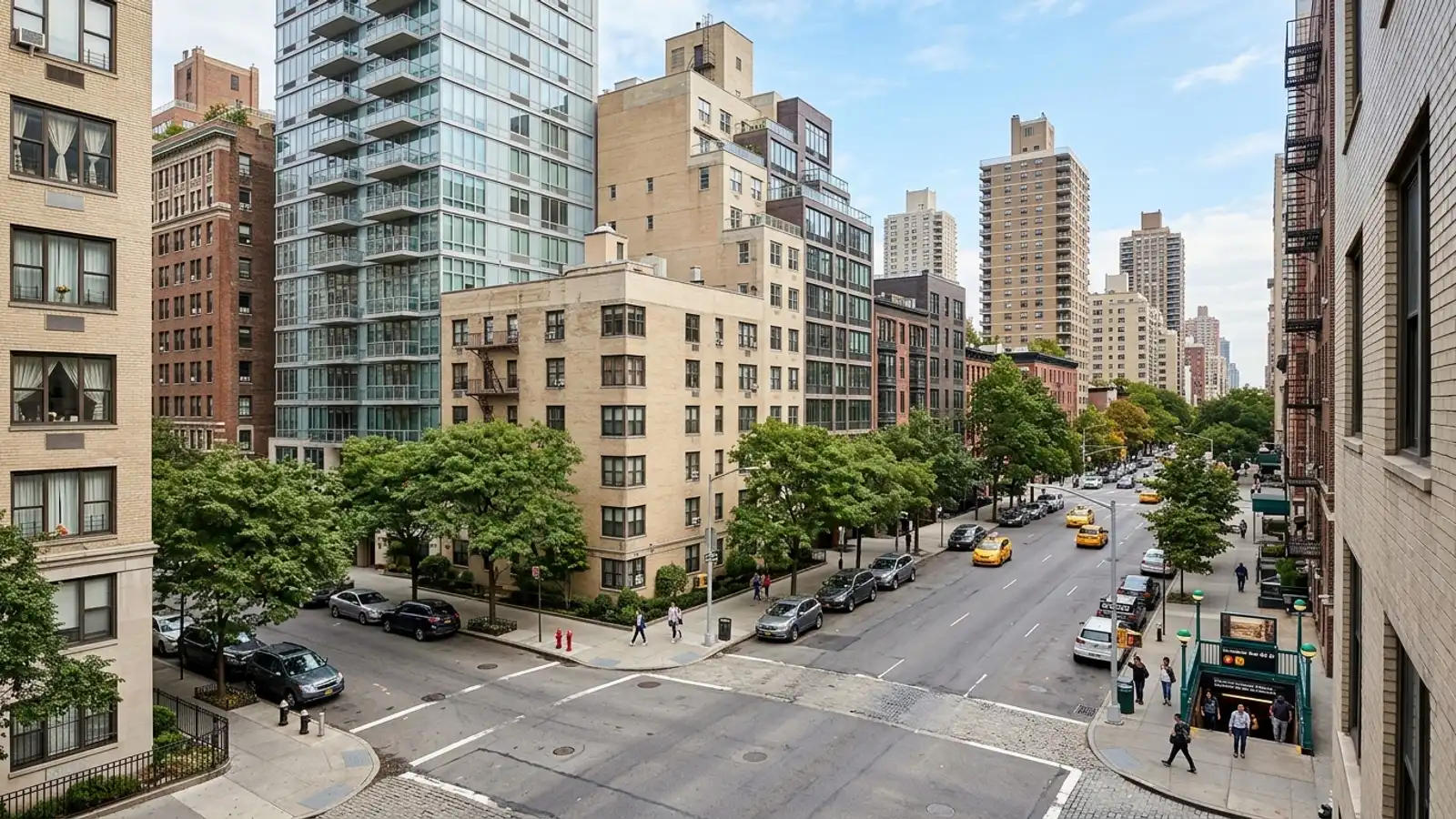
The median home sale price in Manhattan, NY sits around $1,450,000 as of mid-2026. At that price point, you’re right to want a clear picture of the borough’s safety profile, emergency services, and what daily life actually looks like before you commit. Weighing the pros and cons of living in Manhattan starts with understanding these local realities.
Assessing crime across an entire borough means working with broad data rather than block-by-block anecdotes – and that’s appropriate here. Manhattan operates at a scale most cities can’t match, with millions of residents, commuters, and visitors sharing the same infrastructure every single day.
Borough-level crime statistics, environmental factors, and public safety systems all shape the lived reality of owning a home in New York County. Understanding how those pieces fit together is where we start.
Manhattan Crime Rates and Trends
CrimeGrade.org reports Manhattan’s overall crime rate at 29.52 incidents per 1,000 residents in a typical year. The platform puts a resident’s chance of being a victim somewhere between 1 in 25 in the southwestern sections of the borough and 1 in 47 in the eastern areas.
Those figures place Manhattan in the lower half of national safety rankings. The borough’s density plays a real role in how incidents get recorded – that context matters. Looking at specific categories tells you more than the headline number does.
Violent and Property Crime Figures
CrimeGrade reports a violent crime rate of 4.977 per 1,000 residents, which translates to roughly 497.7 per 100,000 people. That lands Manhattan in the 20th percentile for safety in this category nationally – a ‘D’ grade from the platform.
Property crime comes in at 18.28 per 1,000 residents, or about 1,828 per 100,000. The platform grades that a ‘D+’ and puts the borough in the 27th percentile for property-crime safety among U.S. cities.
How Manhattan Compares to State Averages
For context, 2024 FBI data published by USAFacts puts New York’s statewide violent crime rate at 380 per 100,000 residents, with a statewide property crime rate of 1,720 per 100,000 during that same period. Manhattan’s specific rates run higher than both of those statewide figures. That gap reflects what you’d expect from a concentrated urban center carrying heavy daytime population and tourism.
Public Safety and Emergency Services
The New York Police Department (NYPD) and the Fire Department of New York (FDNY) handle emergency response across the borough. Their networks of precincts, firehouses, and specialized units run from Lower Manhattan all the way up through Inwood.
Heavy traffic and dense crowds mean both departments can’t rely on a centralized model – decentralized deployment is how they keep response times workable. Both agencies also maintain specialized divisions covering transit, waterways, and high-rise incidents, which is a practical necessity in a borough where the buildings themselves present unique challenges.
Police Coverage and Response
The NYPD divides the borough into Manhattan South and Manhattan North patrol boroughs, with those command structures overseeing dozens of individual precincts. Officers stay close to the areas they serve. The department also runs a dedicated Transit Bureau for the subway system, which means you’re dealing with layered law enforcement depending on whether you’re at street level or underground.
Fire and EMS Services
The FDNY manages both fire suppression and emergency medical services throughout New York County. Firehouses are spaced closely together – the vertical density of Manhattan’s buildings demands it. EMS units work out of hospitals and dedicated stations, with ambulances often staged at busy intersections to cut response times. When you’re evaluating a specific building, it’s worth knowing where the nearest firehouse or hospital actually is.
Environmental Safety and Natural Hazards
Crime data is only part of the picture. Manhattan is an island, surrounded by the Hudson River, the East River, and the New York Harbor, and that geography brings real weather and water-related considerations with it.
If you’re looking at waterfront properties or ground-floor units, these natural factors belong in your evaluation alongside the standard property features. The city actively manages these risks through infrastructure and public advisories, but the exposure doesn’t disappear.
Hudson River Water Quality
The waters around Manhattan – including the Hudson River – are used for boating and recreation, but swimming is generally restricted. The New York City Department of Environmental Protection monitors water quality and issues advisories on bacteria levels. Heavy rainfall can trigger combined sewer overflows that temporarily reduce water quality in the surrounding rivers. Before any water sports, check with local agencies for current conditions.
Flood and Weather Risks
Certain low-lying coastal edges of the borough sit in designated flood zones. Storm surges from hurricanes or severe nor’easters can affect these areas, and that reality carries specific implications for building construction and insurance. The New York City Emergency Management department publishes updated evacuation zone maps. If you’re considering anything near the water, pull those maps before you make an offer – not after.
What It Is Like to Live in Manhattan
Daily life here is built around walkability, public transit, and immediate access to just about everything. You’re also sharing that infrastructure with a massive commuter population and international tourism year-round. It doesn’t slow down.
The real estate market reflects that demand directly. There are currently 5,715 homes in inventory, properties are averaging roughly 84 days on the market, and the pace is steady rather than frenzied. That’s a deliberate market – worth understanding before you start making offers.
Commuting and Transit Access
The Metropolitan Transportation Authority (MTA) runs the subway and bus network that most residents depend on entirely. Car ownership is uncommon here. Proximity to an express subway stop carries a real premium in the pricing, and that’s not just a broker talking point – it shows up in the numbers. Before you fall in love with a specific building, test your actual commute during rush hour. The distance from the platform matters more than the map makes it look.
Real Estate Costs and Options
You’ll find a mix of co-ops, condos, and townhouses, with co-ops making up the majority of available inventory. The median sale price holds around $1,450,000, and homes are typically selling for roughly 99% of list price. With 8.2 months of supply currently available, there’s some room to negotiate – more than you’d have in a tighter market. Don’t forget to factor in monthly maintenance fees or homeowner association dues. Those carrying costs add up and need to be in your budget from the start.
Frequently Asked Questions
Which Manhattan neighborhoods are currently considered the safest for real estate buyers?
Safety data is aggregated at the borough level rather than ranked by neighborhood. CrimeGrade reports an overall borough crime rate of 29.52 per 1,000 residents, with statistical variations depending on the specific location. For the area you’re actually considering, review the local precinct data directly.
Do local crime rates impact property values and resale prices in Manhattan?
Yes, localized crime data can influence buyer demand and property values. That said, broader market forces are what’s driving the $1.45 million median sale price right now. Transit access, building amenities, and housing inventory all play significant roles in where prices land.
How can I check the official crime statistics for a specific Manhattan block before making an offer?
The NYPD’s CompStat database is available online and breaks down statistics by police precinct. It’s the most direct way to get factual, reported incident data for a given area before you commit.
What building security features should I prioritize when buying a co-op or condo in Manhattan?
Look for buildings with secure entry systems – a virtual doorman or a staffed front desk. Secure package rooms and camera coverage in common areas are standard in many residential buildings. What you’re really evaluating is how well the building controls access from the street.
Are there specific safety concerns buyers commonly overlook when touring Manhattan apartments?
Two come up regularly. First, buyers often forget to check the building’s designated flood zone status, particularly near the waterfront. Second, they don’t always think to locate the nearest firehouse or hospital, which directly affects emergency medical response times. Both are straightforward to verify and worth doing before you’re under contract.
How safe is the subway system for daily commuting from residential parts of Manhattan?
The NYPD Transit Bureau patrols the subway system. Millions of residents use the network every day, though conditions do fluctuate based on crowd density and time of day. Stay aware of your surroundings and use populated train cars – that’s practical advice, not an alarm.
Social Cookies
Social Cookies are used to enable you to share pages and content you find interesting throughout the website through third-party social networking or other websites (including, potentially for advertising purposes related to social networking).