

New York City’s overall cost of living index sits at 187.2, making it one of the most expensive places to live in the United States. Within that massive metropolis, Manhattan stands out with an even higher price tag and a real estate landscape that operates by its own rules. These distinct market conditions shape the pros and cons of living in Manhattan.
Buyers searching for property here often weigh Manhattan against the broader city – Brooklyn, Queens, the Bronx, and Staten Island included. The differences in median sale prices, property types, and daily commutes are significant enough that understanding them upfront can save you a lot of time and frustration.
Cost of Living and Housing Prices Across the Boroughs
As of mid-2026, the median sale price for a home in Manhattan, NY sits at roughly $1,450,000. The median home sale price across the entirety of New York City as of July 2026 was about $907,000. That’s a meaningful gap, and it shapes everything about what your budget actually buys.
A $1 million budget in Manhattan typically gets you a studio or one-bedroom apartment, often outside the priciest core neighborhoods. That same $1 million in the outer boroughs can purchase a larger apartment or a single-family house. The math is simple, even if the decision isn’t.
Median Home Prices and Market Pace
The Manhattan market moves at its own speed. Homes spend about 84 days on the market, with an available inventory of around 5,715 properties. Sellers receive roughly 99.4% of their list price – steady demand, even at these price points.
Breaking down Manhattan prices by property type tells the fuller story. Townhouses reach a median sale price of around $10.5 million. Condos average $1.6 million. Co-ops sit near $865,000. If you’re working with a budget under $500,000, your search should focus on studios and one-bedrooms in upper Manhattan or the Financial District – those are your entry points.
Property Taxes and Monthly Fees
Manhattan property taxes depend on the property class. One-to-three family homes fall under Class 1, taxed at a rate of 20.085% of assessed value for the 2025 tax year. Because the assessed value for Class 1 is generally 6% of market value, the effective tax rate works out to roughly 1.19%.
Most Manhattan housing – condos and co-ops – falls under Class 2. These properties face a 12.5% tax rate applied to a different assessed-value formula based on comparable rental income. In practice, that structure keeps effective property tax rates well under 1% of market value for most buyers.
Property Types Available in the Urban Core
Manhattan real estate breaks down into about 70% co-ops, 25% condos, and 5% townhouses and condops. The outer boroughs offer a much larger supply of single-family homes, multi-family properties, and attached rowhouses.
Buying in Manhattan means trading land and square footage for high-rise amenities and location. In the outer boroughs, you’re more likely to find private backyards, driveways, and multiple floors of living space. Neither trade-off is wrong – they’re just different.
Co-ops Versus Condominiums
Co-ops dominate the Manhattan market. When you buy a co-op, you’re purchasing shares of a building from a real estate corporation, not acquiring a deed to a unit. You’ll need to pass a strict board background check, and subletting is frequently restricted.
Condominiums are considered real property under New York law – you own the actual unit. That ownership structure gives you more flexibility over subletting and renovating, and you won’t answer to a co-op board about your plans. That flexibility comes at a price: condos generally command higher purchase prices than comparable co-ops.
Townhouses and Brownstones
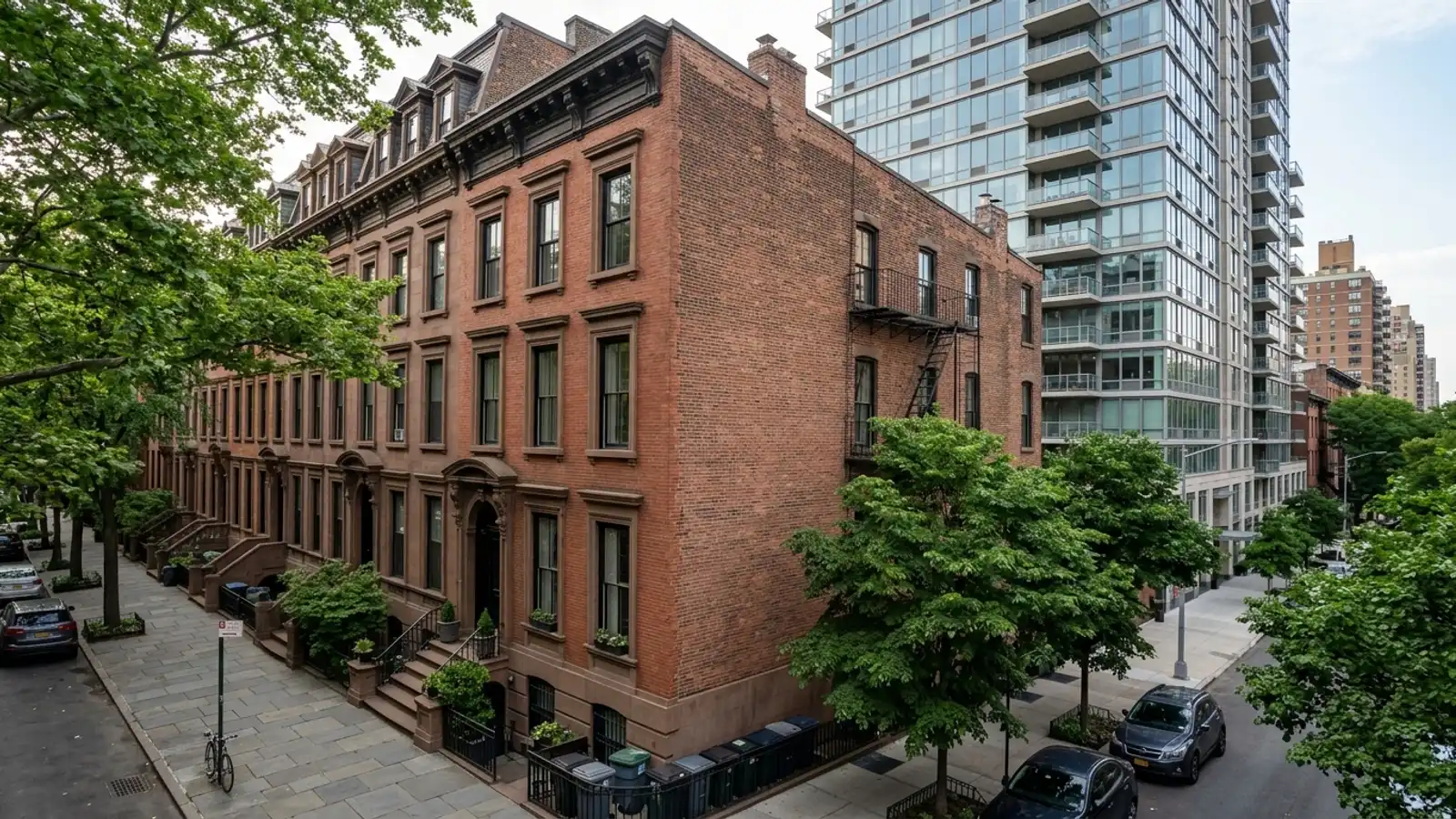
A Manhattan townhouse is a private home where at least one wall is shared with an adjacent building. You take direct responsibility for all real estate taxes and maintenance costs – no building management company involved, no board approval required to sell.
These properties offer rare multi-level living in the borough. They also come with median prices exceeding $10 million, which puts them out of reach for most buyers. Worth knowing what they are, even if they’re not what you’re shopping for.
Transit Access and Daily Commutes
The U.S. Census Bureau ranks New York City first nationally for commuting time among major metropolitan areas, averaging 37.7 minutes. Manhattan residents generally experience shorter travel times, though, because of how dense the public transit network is here.
Manhattan contains 17 of the 20 New York City neighborhoods with the shortest commute times. Midtown Manhattan averages a 26-minute commute, with roughly 47% of workers spending between 15 and 30 minutes traveling to their jobs.
Getting Around the City
Subway density in Manhattan is such that most residents live within a few blocks of a station. For a lot of people, that makes a personal vehicle genuinely unnecessary rather than just inconvenient.
If you do want to own a car, be clear-eyed about the costs. Monthly garage fees add up quickly, and street parking is limited. Buyers who prioritize car ownership tend to look to the outer boroughs, where private driveways and street parking are far more common.
How to Buy a Home in the Center of the City
Purchasing a home in Manhattan requires preparing for a specific set of transaction steps that you won’t encounter everywhere. One of the most significant is the mansion tax – a progressive tax applied to residential purchases of $1 million or more in New York State.
The closing timeline in Manhattan also tends to run longer than in other markets. Co-op board approval processes can add weeks or months to a transaction, and that’s not an exaggeration.
The Purchase Process
Get a real estate attorney involved early. New York requires attorneys to draft and review contracts – unlike some states where title companies handle closings, you don’t have that option here.
Preparing a co-op board package is its own undertaking. You’ll need to provide tax returns, bank statements, and personal reference letters documenting your financial stability. It’s thorough by design, and there’s no shortcut through it.
Frequently Asked Questions
Do closing costs and property taxes differ when buying an apartment in Manhattan versus the rest of New York City?
Yes, though the citywide property tax classes remain the same across all five boroughs. Class 1 properties in New York City are taxed at 20.085% of assessed value, while Class 2 properties – most condos and co-ops – are taxed at 12.5%. Closing costs vary primarily based on purchase price, since properties over $1 million trigger the state mansion tax.
If I search for ‘New York City’ homes on real estate portals, will it only show me Manhattan listings?
No. Most major portals include all five boroughs when you search the broader city name. If you want to look specifically at Manhattan, filter by New York County or select Manhattan directly – otherwise you’ll see listings from Brooklyn, Queens, the Bronx, and Staten Island alongside them.
Why are there so many more co-ops for sale in Manhattan compared to the other NYC boroughs?
Manhattan’s housing stock consists of approximately 70% co-ops due to historical development patterns in the early and mid-20th century. Many older rental buildings converted to cooperative ownership decades before the condominium structure became popular under state law.
Are popular neighborhoods like Williamsburg and Astoria considered part of Manhattan, or just the broader NYC area?
They’re part of the broader city, but outside Manhattan. Williamsburg is located in Brooklyn, which boasts the shortest average commute time in the city, while Astoria is located in Queens.
What is the average price per square foot trade-off when choosing Manhattan, NY over an outer borough?
You’re paying a significant premium for space. The median home sale price in Manhattan sits around $1.45 million compared to the citywide median of $907,000. For the same budget, you’ll generally secure less square footage in Manhattan than you would in an outer borough – that’s the trade-off in plain terms.
Does Manhattan real estate historically hold its resale value better than the rest of New York City?
Manhattan properties maintain strong demand, reflected in homes selling for roughly 99.4% of their list price. That said, resale value retention depends on the specific property type – condos offer more flexibility for future buyers than restrictive co-ops, and that matters when it’s time to sell.
Social Cookies
Social Cookies are used to enable you to share pages and content you find interesting throughout the website through third-party social networking or other websites (including, potentially for advertising purposes related to social networking).