

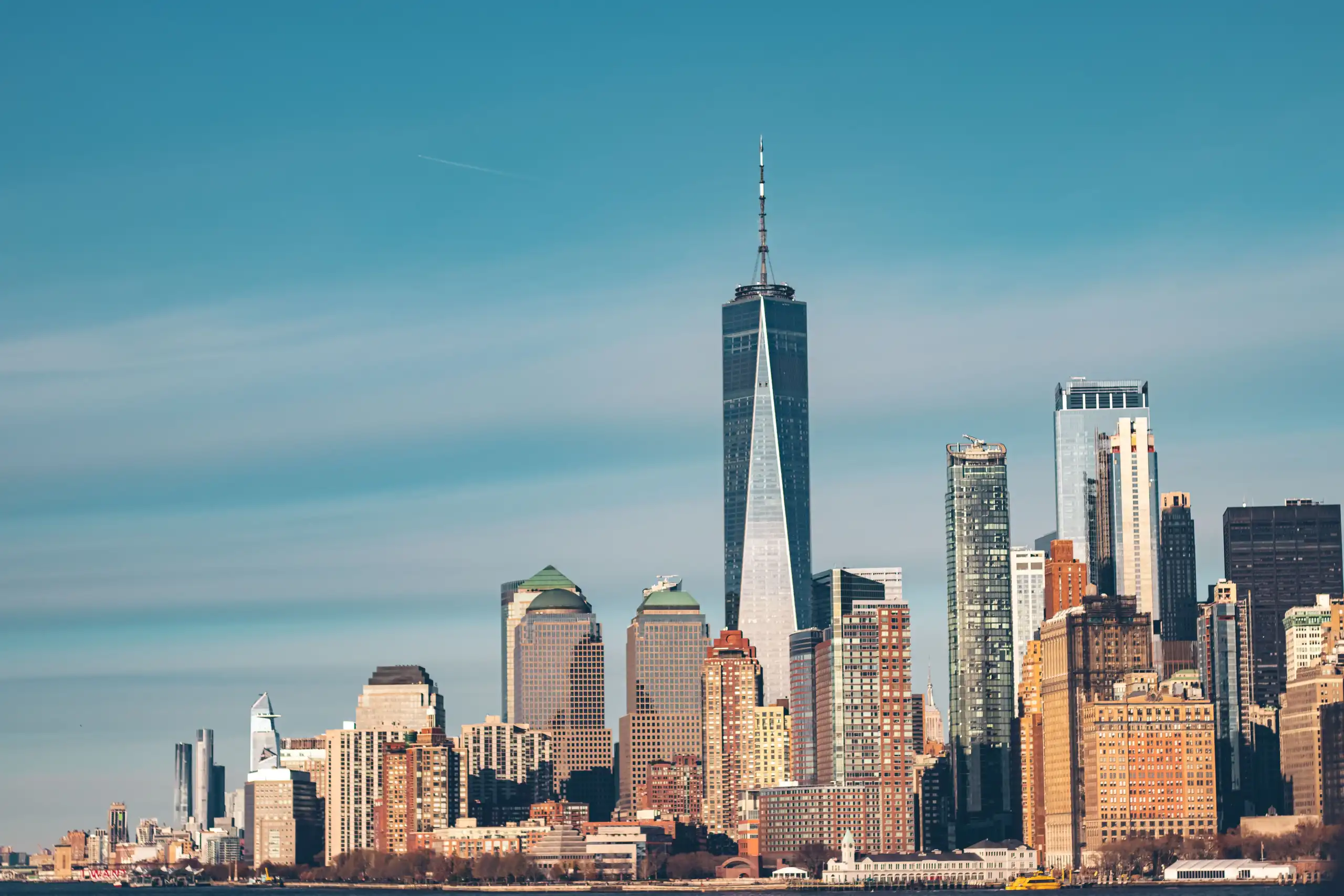
Manhattan’s climate shapes daily life in ways that ripple straight into real estate decisions. In fact, weather patterns are a key part of the pros and cons of living in Manhattan. With the median sale price sitting around $1,450,000, buyers in this market aren’t just weighing square footage and finishes – they’re thinking about heating costs, flood risk, and whether a January closing is actually a good idea.
From the low-lying streets of Lower Manhattan to the higher elevations of Washington Heights, conditions shift considerably across the borough throughout the year. Getting a handle on those shifts prepares you for everything from summer cooling bills to a commute that turns into an obstacle course after a nor’easter.
Manhattan, NY Weather at a Glance
New York City runs the full four-season calendar, and it doesn’t do any of them halfway. Temperatures span from roughly 28°F in the depths of winter to about 85°F at the peak of summer – that’s nearly a 60-degree swing you’ll dress around, budget for, and eventually accept as normal.
Geography plays a real role in how those conditions land on the ground. Manhattan’s average elevation is only about 17 feet above sea level across much of the borough, while its highest point – Bennett Park in Washington Heights – reaches 265.05 feet.
The Local Climate Zone
Based on data from the Central Park weather station, Manhattan sits in the Cfa climate zone under the Köppen-Geiger system, which classifies it as humid subtropical. That label tells you the essentials: hot, humid summers and cool to cold winters.
The surrounding waters of the Atlantic Ocean and the Hudson River help moderate the most extreme temperature swings compared to inland areas. That moderation has limits, though, as anyone who’s waited for a crosstown bus in February already knows.
Year-Round Seasons in Manhattan, NY
With roughly 5,715 homes available on the market, buyers touring units will run into all four seasons eventually – and each one reveals something different about a property. Southern exposures that flood an apartment with natural light in December look very different from the same unit baking through August. Central air conditioning stops being a nice-to-have and becomes a dealbreaker once July arrives.
The practical upside of knowing the seasonal rhythm is simpler than that, too. You’ll know when to switch out your wardrobe and, more importantly, when your utility bills are about to spike.
Summer Heat and Humidity
July is the peak, with average highs around 85°F and an overall average temperature near 81°F. Add in the heat retained by miles of concrete and asphalt and the air feels meaningfully hotter than whatever the thermometer says.
Humidity makes it worse. From June through early September, most residents are running air conditioning consistently rather than occasionally – that’s a real line item in your monthly budget, not a minor inconvenience.
Winter Cold and Snow
January averages between 30°F and 35°F, with highs hovering near 40°F and lows dropping to around 28°F. You’ll want a genuinely warm coat and waterproof boots that can handle slushy sidewalks, not just stylish ones.
Older buildings with steam radiators work hard during these months, which is a comfort in some ways and a source of noise complaints in others.
Spring and Fall Transitions
These are the shoulder seasons that make Manhattan residents briefly forget they live through the other two. Humidity settles into a more manageable 55% to 60% range during months like April, the foliage in Central Park becomes a legitimate reason to go outside, and the walking conditions are about as good as they get.
Spring and fall are also the most popular times for moving and listing – which matters when you’re planning a purchase.
Rain, Snow, and Humidity Levels
Precipitation in Manhattan isn’t a seasonal event – it’s a year-round constant. The borough receives roughly 49 to 50 inches of total precipitation annually between rain and melted snow, and the city’s average annual relative humidity runs around 63%.
That moisture in the air is background noise for daily life here, worth understanding before you commit to a building with questionable ventilation.
Annual Rainfall and Snowfall
Rain falls throughout the year, but snow is primarily a winter concern. Manhattan averages about 30 inches of snowfall annually, with February typically being the snowiest month at around 10 inches.
Major blizzards can and do exceed those averages – recent storms have dropped 9 to 11 inches on Manhattan neighborhoods in a single event. That’s the kind of snowfall that cancels elevator reservations and delays closings.
Humidity Expectations
Summer humidity paired with high heat is where the discomfort really concentrates. Outdoor commutes become a genuine ordeal, and reliance on indoor cooling goes from optional to mandatory.
Come winter and spring, the air gets comparatively drier, though relative humidity still tends to hover in that 55% to 60% range. It never gets truly arid here.
Severe Weather and Natural Hazards
Manhattan’s coastal location and dense urban environment create specific weather risks that belong in your due diligence, not just your small talk. The right building in the wrong flood zone is a different financial proposition than it first appears, and additional insurance policies aren’t cheap.
Understanding the local geography at the block level – not just the borough level – clarifies which risks actually apply to a specific address.
Coastal Storms and Flooding
Hurricanes, tropical storms, and nor’easters are real considerations here. Historic storms including Hurricane Irene and Tropical Storm Lee brought heavy flooding rains to the area. Parts of Lower Manhattan sit only 7 to 8 feet above sea level, which means storm surge and flash flooding aren’t theoretical – they’re documented.
Buildings in those low-lying zones have adapted in various ways, including moving mechanical systems to higher floors. Whether a specific building has made those upgrades is exactly the kind of question to ask before you sign anything.
The Urban Heat Island Effect
The dense concentration of buildings and paved surfaces causes the city to retain heat, running warmer than surrounding suburban areas. The practical consequence is that nighttime temperatures don’t drop much during summer, so air conditioners run around the clock rather than giving you a break after dark.
That sustained demand shows up on your electricity bill.
How Weather Impacts the Manhattan Real Estate Market
Weather shapes both buyer behavior and the physical experience of being in this market. With homes currently spending a median of 84 days on the market, seasonal fluctuations in demand are real. Touring in extreme weather also tells you things about a building that a sunny spring afternoon won’t reveal – a drafty window in January is obvious, and a weak air conditioning system announces itself immediately in July.
Both pieces of information are useful. Plan accordingly.
Timing Your Move
Mild spring and fall months are genuinely easier for moving than summer heat or winter snow. The tradeoff is that everyone else knows this too, which means higher demand for moving companies and more competition among available listings.
Coordinating a move during a winter snowstorm creates delays that co-op and condo board restrictions make worse – many buildings restrict move-in hours, and a blizzard will not motivate a board to make exceptions. If your closing falls between December and March, build flexibility into your timeline.
Building Amenities and Weather
Covered parking, indoor fitness centers, and direct subway access all reduce your daily exposure to whatever the weather is doing outside. These aren’t luxury abstractions – they’re practical calculations about how often you want to stand in the rain.
Properties with these features often carry a premium. Whether that premium is worth it depends entirely on your tolerance for walking in snow with groceries.
Frequently Asked Questions
Which Manhattan neighborhoods are most susceptible to flash flooding and storm surge during hurricane season?
Low-lying areas – particularly parts of Lower Manhattan that sit only 7 to 8 feet above sea level – face the highest risk from storm surge and tropical storms. For any specific address you’re considering, check FEMA flood maps rather than relying on general neighborhood descriptions.
What happens to my mortgage and insurance costs if the Manhattan apartment I am buying is in a newly drawn FEMA flood zone?
If you’re buying with a mortgage in a designated high-risk flood zone, your lender will require you to carry flood insurance – a separate premium on top of your standard homeowner’s insurance policy. Factor that ongoing cost into your monthly budget before you fall in love with a particular unit.
Do high-floor luxury condos in Manhattan experience more extreme wind noise and weather wear than lower-level units?
Yes. Higher floors face stronger wind exposure, which translates to noticeable noise during severe storms and nor’easters. Building engineering and high-quality window glazing help, but how much depends on the specific building. It’s worth asking about during your tour rather than discovering it the first time a nor’easter comes through.
Do Manhattan co-op maintenance fees typically cover the fluctuating costs of winter heating and summer cooling?
It depends on the building. Many older co-ops include radiator heating in the monthly maintenance fee while residents pay separately for electricity to run window air conditioners in summer. Newer buildings tend to meter all utilities individually. Read the offering plan carefully – the answer varies more than you’d expect.
How do seasonal weather patterns in Manhattan, NY impact strict building move-in rules and elevator reservations?
Co-op and condo boards enforce strict move-in schedules, and severe weather can blow those up completely. If a major winter blizzard drops 9 to 11 inches of snow, a building may cancel your elevator reservation outright to prevent lobby damage. Always have a backup date lined up if you’re moving between November and March.
Can harsh winter weather and snowstorms legally delay the closing timeline for a Manhattan real estate transaction?
Yes. Extreme weather can delay a closing if necessary parties can’t attend or if bank operations are disrupted. The contract controls the timeline in theory, but a declared state of emergency or a significant snowstorm creates a practical postponement that buyers and sellers generally agree to once conditions improve.
Social Cookies
Social Cookies are used to enable you to share pages and content you find interesting throughout the website through third-party social networking or other websites (including, potentially for advertising purposes related to social networking).