

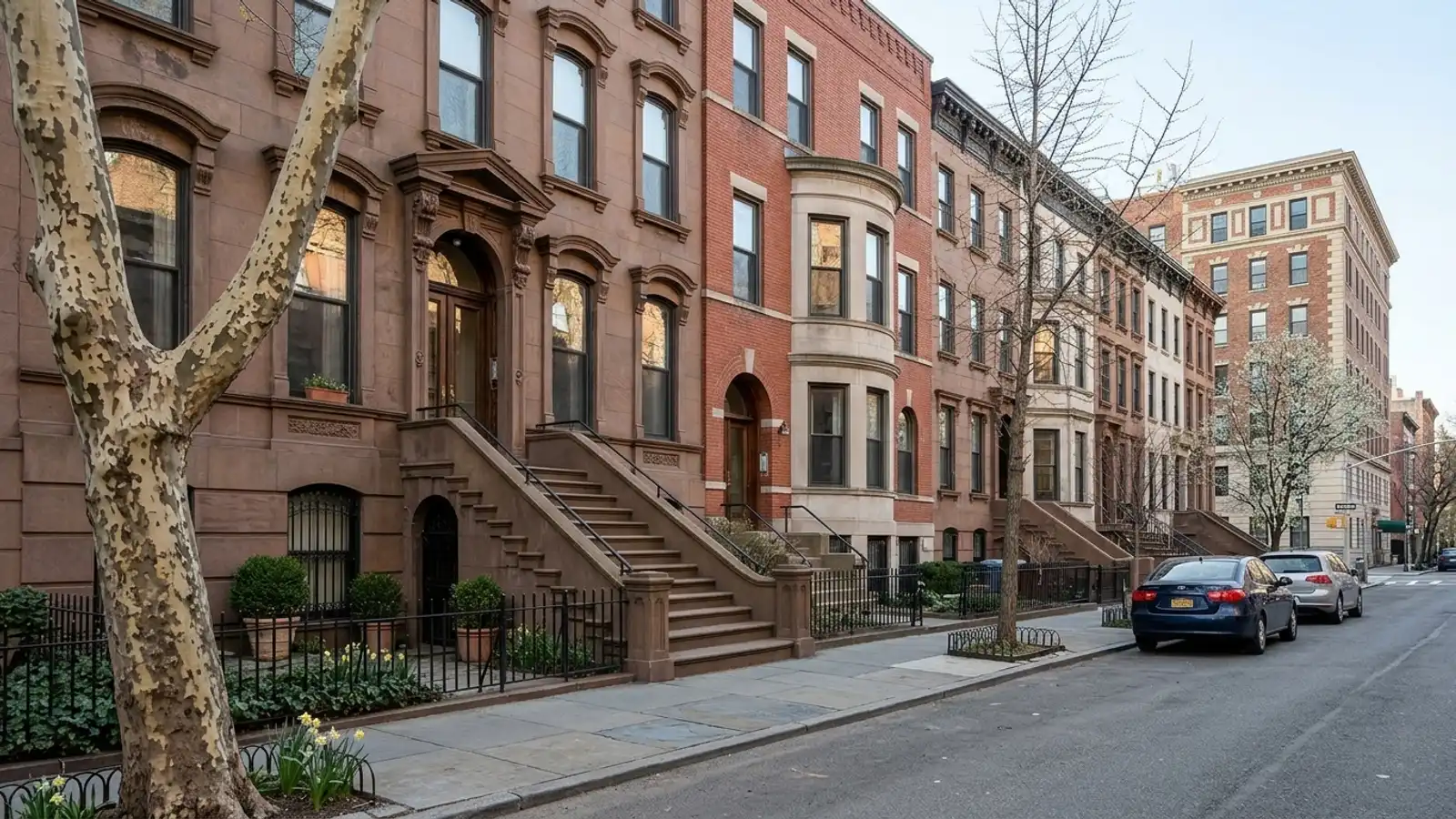
Selling a home in Manhattan, NY requires specific paperwork, but what you need depends entirely on what you own. The local market runs overwhelmingly on cooperative apartments and condominiums, which operate under a different set of rules than a traditional house.
An early review of your obligations gives you time to pull together the right building records, tax documents, and insurance claims. A complete file means a buyer’s attorney finds nothing surprising during due diligence, which keeps your negotiating position intact and the deal moving toward closing.
Key Takeaway
In Manhattan, New York’s Property Condition Disclosure Statement applies mainly to houses and townhouses, which accounted for just 122 of 2,836 home sales in the 90 days ending September 30, 2026. Since a 2024 legal amendment, sellers of those properties must deliver the completed form before the contract is signed, with no option to pay a credit instead. If you’re selling a condo or co-op, the state form doesn’t apply, and your disclosure runs through the building’s records, the contract’s representations, and the federal lead paint rule.
Who This Guide Is For
You own a Manhattan home and are working out which disclosure rules apply to your sale and what to prepare before you list.
Which Seller Disclosure Rules Apply in Manhattan?
Most Manhattan sellers never fill out New York’s Property Condition Disclosure Statement. Roughly 2,707 of the 2,836 total home sales in the 90 days ending September 30, 2026 were in the condo category that the law exempts, leaving only 122 houses and townhouses on the state form. For the majority of sellers, disclosure means what the building’s records and the contract say.
The small house-and-townhouse group, which sits longest on the market, must now deliver the completed form before the contract is signed. Ownership form, not building shape, decides your paperwork. A townhouse held as a condominium unit follows the condo path; a fee-simple townhouse requires the state form.
If you own a fee-simple house or townhouse, you follow the statewide disclosure path. If you own a unit, you follow the condo and co-op path. If your building was built before 1978, you also need to review the federal lead paint rules regardless of ownership type. And if your house or townhouse has ever flooded, carried flood insurance, or received FEMA assistance, you’ll need to answer specific flood questions on the state form.
What Is the New York Property Condition Disclosure Statement?
The Property Condition Disclosure Statement is a state-prescribed questionnaire under Real Property Law Article 14 covering a property’s structure, systems, environmental conditions, flood history, and known defects. The current version is a seven-page form that applies to binding real estate contracts.
The form uses an “actual knowledge” standard, meaning you report what you know and aren’t required to hire an inspector. It’s not a warranty and doesn’t replace a buyer’s independent inspection. Under state law, your real estate agent has a duty to inform you of your obligation to complete the form.
Selling a House or Townhouse in Manhattan
If you sell a fee-simple house or townhouse, you must deliver the completed Property Condition Disclosure Statement to the buyer before they sign a binding contract. In 2024, New York eliminated the old rule that let a seller skip the form and give the buyer a $500 credit at closing. The form is now required upfront, full stop.
Townhouses in Manhattan recently took a median 84 days to sell. Because a contract can arrive at any point during a long marketing period, you should have the form ready when the listing goes live. A seller who willfully fails to perform the article’s requirements can be held liable for the buyer’s actual damages.
Flood questions on the disclosure form
The current state form asks sellers about the property’s flood zone location, flood insurance requirements, past flood damage, and whether the property has ever received FEMA or other federal disaster assistance. In a borough with waterfront blocks, this is not a theoretical question. Look up your address on the official NYC Coastal Flood Hazard Mapper and pull any past claim or FEMA paperwork before you answer.
The form asks whether you ever received federal disaster assistance for flood damage, not just whether the home sits in a flood zone. Past federal flood aid can carry an ongoing flood insurance requirement that a buyer’s lender will check for, so missing details tend to surface during financing rather than disappear without notice. An “unknown” answer isn’t a safe default when your own repair invoices or insurance claims say otherwise.
Selling a Condo or Co-op in Manhattan
Condominium and cooperative units are exempt from the state’s Property Condition Disclosure Statement. A buyer’s attorney reviews the building’s financial statements, board minutes, and offering plan instead. The managing agent completes a due diligence questionnaire as part of that process. Ask your managing agent how long the questionnaire takes and what it costs before you’re under contract and running against a clock.
Your contract of sale carries your specific representations. The standard cooperative contract contains a section where you represent certain facts, like ownership of shares, while stating that you make no representation regarding the physical condition of the unit beyond what is expressly written. Your practical job is to know about pending assessments, building litigation, and leaks or repairs in your unit, and to answer the buyer’s questions truthfully.
Exemption from the state form doesn’t protect a seller from active concealment claims. Read your building’s recent board minutes before a buyer’s attorney does, and note any assessments, litigation, or leak discussions. A leak or assessment you never mentioned can turn into a credit request late in the deal, at the exact moment when you have the least room to push back.
Lead Paint Disclosure for Pre-1978 Buildings
The federal lead paint rule is the one disclosure that cuts across all ownership types. Sellers of housing built before 1978, including co-op and condo units, must disclose known lead-based paint and hazards. You must hand over available records and the EPA pamphlet, attach the lead warning statement to the contract, and give the buyer an opportunity to inspect, typically 10 days unless waived.
Confirm your building’s year built through city property records or the managing agent to see whether this applies to you. Much of Manhattan’s housing stock predates 1978, so this is the disclosure co-op sellers most often mistakenly assume doesn’t apply to them.
How Disclosure Timing Affects Your Manhattan Sale
Manhattan recently had roughly 6.1 months of housing supply across all property types. Buyers in a six-month-supply market have time to read everything carefully. An issue discovered late in due diligence becomes negotiating ammunition for them. A complete file at listing removes that lever.
For the rare single-family sale, which recently saw a median 166 days on market based on a small sample of 38 sales, a long marketing period means your disclosure statement may be read by many prospective buyers before anyone signs. Treat that small-sample figure with caution, but expect a longer process for a standalone house. Michael J. Franco can walk a seller through the selling process and assemble the complete file before listing.
Preparing Your Disclosure File Before You List
Start with your deed or proprietary lease to confirm your exact ownership form. For a house or townhouse, collect your repair invoices, building permits, insurance claims, flood claims, and any FEMA paperwork. If you’re selling a unit, request the managing agent questionnaire, pull the recent minutes and financials, and note any upcoming assessments. For pre-1978 buildings, locate any existing lead reports.
Ask your real estate attorney to review your disclosure answers or contract representations before they go to a buyer. Michael J. Franco can coordinate with your attorney and managing agent to manage your closing costs and file preparation.
A disclosure file built after an offer arrives tends to be rushed and incomplete. Missing documents create delays, and delays are exactly when wrong answers happen.
At a Glance
- All homes, Manhattan (90 days ending 2026-09-30): 2,836 homes sold; median sale price $1,329,367 (+3.4% year over year); median 70 days on market; 99.5% sale-to-list; 14% sold above list; 6.1 months of supply
- Condo, Manhattan (90 days ending 2026-09-30): 2,707 homes sold; median sale price $1,274,869 (+4.1% year over year); median 69 days on market; 5.8 months of supply
- Townhouse, Manhattan (90 days ending 2026-09-30): 84 homes sold; median sale price $2,385,028 (-0.6% year over year); median 84 days on market; 100.1% sale-to-list; 8 months of supply
- Single family, Manhattan (90 days ending 2026-09-30): 38 homes sold; median sale price $6,172,539 (+45.8% year over year; a large swing on a small 38-sale base, so treat with caution); median 166 days on market; 0% sold above list; 11.9 months of supply
Manhattan Seller Disclosure FAQs
Is New York a non-disclosure state for home sale prices?
No. Manhattan deeds and transfer records, including sale prices, are publicly searchable through the city’s ACRIS system. This database is operated by the NYC Department of Finance and provides free public access to property records.
Do you have to disclose a death in a home in New York?
No. New York Real Property Law §443-a provides that it is not a material defect if a property was the site of a homicide, suicide, accidental death, or natural death. Sellers and agents are not required to disclose these events, and a buyer would need to make a specific written inquiry to seek that information.
Does selling a Manhattan home “as is” remove disclosure obligations?
No. An “as-is” clause doesn’t remove the state disclosure requirement for houses and townhouses or the federal lead paint rule. Under New York law, courts generally enforce “as is” clauses to bar fraud claims, but liability may still arise if a seller’s conduct crosses into active concealment or misrepresentation.
Can a buyer sue a seller for not disclosing a problem in New York?
Yes, but it depends on the seller’s actions. While New York generally adheres to caveat emptor, a buyer can sue if the seller actively concealed a material defect. In the 1991 Stambovsky v. Ackley case, an appellate court allowed a buyer to rescind a purchase because the seller had publicly promoted the house as haunted, preventing her from later denying it.
Do new construction condo sellers in Manhattan have to give a disclosure statement?
No, they don’t use the standard state property condition form. First sales by a sponsor are governed by an offering plan filed with the New York Attorney General, which must disclose all material information under 13 NYCRR Part 20. Later resales of those units follow the standard condo path.
Can a buyer back out after receiving the seller disclosure in New York?
It depends on the contract. Because the law now requires sellers to deliver the form before the contract is signed, buyers review it before making a binding commitment. Any exit after signing depends on the specific contingencies negotiated in your contract, so ask your attorney which contingencies apply to your deal.
Sources
- Redfin: Data Center
- New York State Senate: Real Property Law Section 462
- New York State Bar Association: PCDA Amended
- New York State Senate: Real Property Law Section 465
- New York City Bar Association: Cooperative Apartment Contract
- Code of Federal Regulations: Lead Disclosure Rule
- NYC Department of Finance: ACRIS
- New York Department of State: Real Property Law
- FHNylaw: Caveat Emptor in an As-Is World
- Justia: Stambovsky v. Ackley
- Cornell Law School: 13 NYCRR 20.1
Social Cookies
Social Cookies are used to enable you to share pages and content you find interesting throughout the website through third-party social networking or other websites (including, potentially for advertising purposes related to social networking).