

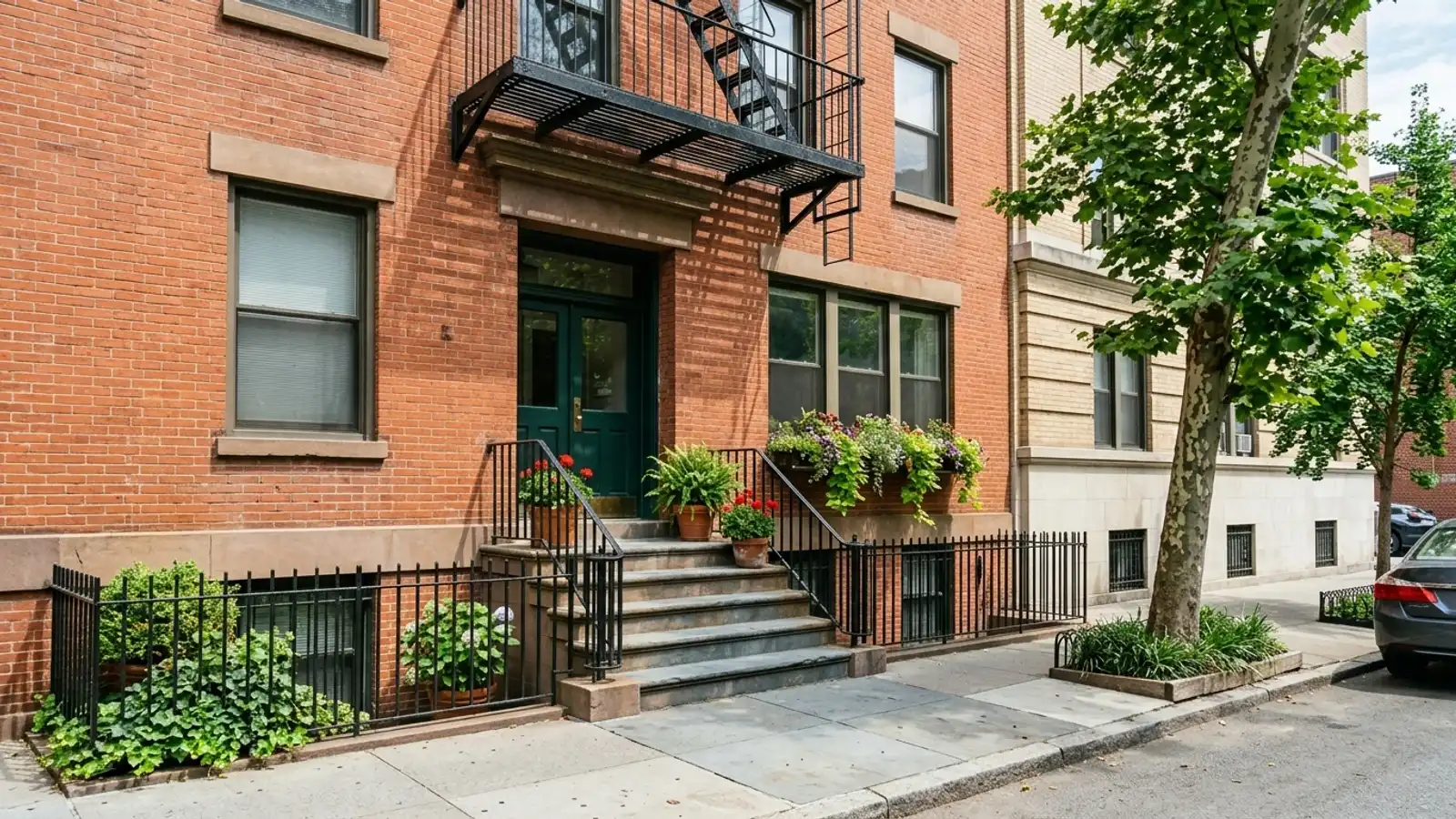
As one of the best neighborhoods in Manhattan, the East Village sits on the east side of Lower Manhattan, bounded roughly by 14th Street to the north, Houston Street to the south, the East River to the east, and the Bowery to the west. If you’re looking here, you’ll find a mix of historic pre-war walk-ups, mid-rise co-ops, and newer condominium developments – a range that’s broader than most buyers expect before they start touring.
The pricing picture is worth understanding upfront. In the summer of 2026, the median home sale price in East Village was around $890,000, while the broader Manhattan median hovered near $1.31 million. That gap doesn’t make the East Village cheap, but it does make it one of the more active markets for buyers comparing options across Lower Manhattan.
Real Estate and Property Types in East Village
As of June 2026, the median home sale price in East Village stood at approximately $890,000 – a 35.1% drop year-over-year – with a median price per square foot of roughly $1,284. For context, Manhattan’s median home sale price was about $1.2 million during that same June period, and reached $1.31 million by late August.
Most of the inventory here is older, established buildings. New construction exists, but it’s a smaller share. You’ll run into both co-op and condo ownership structures, and that distinction matters more than most buyers realize before they’re deep into the process.
Co-ops typically require larger down payments and board approval – some boards are thorough to the point of being demanding. Condos offer more flexible ownership terms but tend to list at higher prices. Neither is better in the abstract; it depends on your finances, your timeline, and your tolerance for a board package.
Comparing Costs Across Manhattan
That roughly $400,000 difference between the East Village median and the overall Manhattan median is real enough that it’s worth watching local listings closely. The range here goes from compact studio and one-bedroom co-ops all the way up to multi-level condo units in elevator buildings.
One line item buyers consistently underestimate: monthly maintenance fees and homeowners association dues. These cover building upkeep, municipal taxes in co-ops, and shared amenities. They’re not optional, and they directly affect how much home you can afford.
Dining, Transit, and Daily Life in the Neighborhood
The Cooper Union Foundation Building anchors the western edge of the neighborhood – and it’s more than just a landmark on a map. It was the first building to use rolled iron I-beams, included an elevator shaft before passenger elevators existed, and hosted Abraham Lincoln for a speech that propelled his presidential campaign. Not a bad piece of context for a building you’ll walk past on a regular basis.
Day to day, residents here rely on the MTA subway system and multiple bus routes to reach Midtown or the Financial District. Walking handles a lot, too – the density of the neighborhood puts most everyday errands well within reach on foot.
Local Restaurants and Everyday Dining
The dining options are dense. Long-standing delis, contemporary cafes, international restaurants – most of it concentrated along Second Avenue and St. Marks Place, with smaller spots tucked into the side streets. For most residents, a bakery, coffee shop, or full-service restaurant is a few minutes’ walk at most.
That commercial density is worth thinking about from a real estate angle. Ground-floor commercial spaces are woven directly into the residential blocks, which means higher foot traffic around certain buildings. Whether that’s a plus or a minus depends on what you’re looking for in a home.
Practical Neighborhood Information: Schools, Healthcare, and Climate
The East Village falls under New York City Community School District 1, which also covers the Lower East Side. Here’s what makes District 1 different from most of the city: it’s one of only three districts that doesn’t have zoned elementary or middle schools. Every family here goes through a school choice process – there’s no default neighborhood school you’re automatically assigned to.
District 1 has a long history of progressive education, with many of its schools emphasizing student-centered learning, creativity, and community involvement over traditional test-based methods. For current enrollment deadlines and application procedures, check the district’s official enrollment page directly.
Medical Centers and Weather Patterns
The New York Eye and Ear Infirmary is a teaching hospital located directly within the East Village. Just outside the neighborhood, you have NYU Langone Health in Kips Bay and NewYork-Presbyterian Lower Manhattan Hospital. Mount Sinai Beth Israel – Petrie Division, another teaching hospital, is in nearby Gramercy, close to Union Square.
Climate follows the standard four-season pattern for this part of the region – hot and humid summers, cold winters with occasional snow. One thing worth asking about during any showing: how the building handles heat. Older steam radiators and modern HVAC units perform very differently across those seasonal swings, and it’s not a small quality-of-life difference.
Common Questions About East Village Manhattan NY
What is East Village in Manhattan known for?
The East Village is known for its historic pre-war housing, dense concentration of local restaurants, and landmarks like The Cooper Union Foundation Building. It’s a walkable, mixed-use environment where residential buildings sit alongside everyday commercial services.
What are homes like in East Village Manhattan, and what do they cost?
Housing is primarily mid-rise co-ops and walk-up apartments, with some newer condominium developments in the mix. In June 2026, the median home sale price was approximately $890,000 – down roughly 35% year-over-year – with a median price per square foot of around $1,284.
What is the process for finding and securing a co-op or condo in East Village, Manhattan?
Buying a co-op means submitting an application, passing a board interview, and meeting the building’s specific financial requirements. Condos don’t require a board interview and generally offer a more straightforward purchase process, but they tend to list at higher price points.
How does buying real estate in the East Village compare to the nearby Lower East Side?
Both neighborhoods share New York City Community School District 1 and have similar housing histories. Buyers often look at both areas when searching for downtown properties, though specific building types and price points vary block by block.
What are the best subway lines and transit options for commuting from East Village, Manhattan?
Residents typically rely on the MTA subway system and local bus routes to reach Midtown or the Financial District. Walking is also a primary mode of getting around – the neighborhood’s density puts everyday services and dining close to most residential buildings.
What restaurants and dining are in East Village Manhattan?
The dining lineup is dense: corner cafes, long-standing delis, international restaurants. Most options cluster along the avenues and prominent cross streets, which puts walkable everyday meals within reach for most residents.
What hospitals and medical care are near East Village Manhattan?
The New York Eye and Ear Infirmary is located directly within the neighborhood. Nearby facilities include NYU Langone Health in Kips Bay, NewYork-Presbyterian Lower Manhattan Hospital, and the Mount Sinai Beth Israel – Petrie Division in Gramercy.
Social Cookies
Social Cookies are used to enable you to share pages and content you find interesting throughout the website through third-party social networking or other websites (including, potentially for advertising purposes related to social networking).