

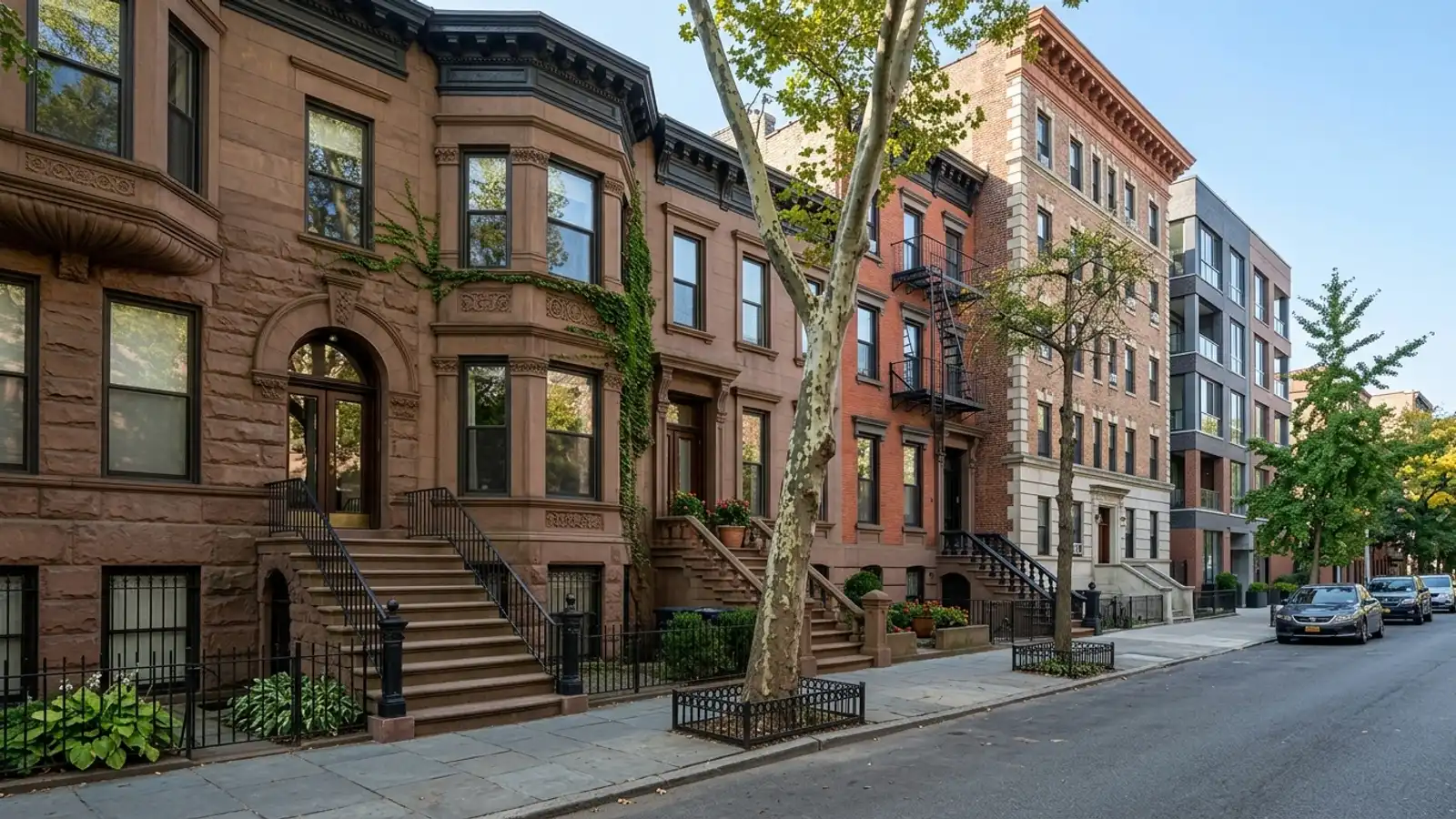
Manhattan’s overall median home sale price sits around $1.31 million. That number prices a lot of buyers out of many of the best neighborhoods in Manhattan. Harlem is different – recent median sale prices here land between $650,000 and $845,000 depending on exactly where you look, which makes it a genuinely distinct market within the borough, not just a cheaper version of somewhere else.
Located in the northern section of Manhattan, Harlem offers historic brownstones, established co-ops, and newer condo developments. If you’re buying or renting here, you’ll find solid transit, real neighborhood amenities, and a daily lifestyle that doesn’t resemble downtown in the slightest.
Harlem in Manhattan, NY: An Overview of the Area
Harlem covers a large stretch of northern Manhattan – generally from 155th Street at the north down to 96th or 110th Street at the south (depending on the avenue), with the Harlem River to the east and the Hudson River to the west. It breaks into three main sub-districts: Central Harlem, West Harlem, and East Harlem. Each one has its own architectural character and commercial corridors, and they’re worth distinguishing when you’re deciding where to focus your search.
The street layout is dense and urban, with wide avenues cutting through tree-lined cross streets and a mix of mid-rise apartment buildings, rowhouses, and mixed-use buildings doing most of the work. Morningside Park and the northern end of Central Park are both immediately accessible.
What and Where Harlem Is
Central Harlem forms the geographic core, anchored by wide thoroughfares like Lenox Avenue and Adam Clayton Powell Jr. Boulevard. West Harlem pushes toward the Hudson River and takes in Morningside Heights and Hamilton Heights. East Harlem – also called El Barrio – sits east of Fifth Avenue.
All three connect directly to the rest of Manhattan, NY, through the street grid and the subway. The neighborhood pulls a lot of people who work elsewhere in the city and want a residential base that’s livable.
The Local Housing Setting
You won’t find single-family detached homes here. That’s not a Harlem quirk – it’s just Manhattan. Almost everything you’ll look at sits inside a larger multi-unit structure.
Historic rowhouses, the brownstones that line so many of the residential blocks, are the most recognizable housing type. Alongside those, you’ve got pre-war co-op buildings and a growing number of modern condo developments that have been added over the past decade or so. The mix of old and new is one of the things that makes the inventory here more interesting than people expect.
Real Estate Options and Prices in Harlem
The broader Manhattan market currently has homes sitting around 73 days before going into contract, with that borough-wide median of roughly $1.31 million. Harlem cuts that entry point. Buyers come here for the price difference, and sometimes for the building types – a brownstone that would cost twice as much in another part of the island is attainable here.
Recent 2026 figures put Harlem’s median home sale price somewhere between $650,000 and $845,000. PropertyShark reported a median of $655,000 in April 2026, and a September 2026 report citing Redfin and Houzeo data placed the three-month median through June at roughly $842,200. That’s a real range, and where you land within it depends on which part of Harlem you’re looking at.
Home Types and Available Inventory
Homes for sale in Harlem, Manhattan, are primarily co-op apartments, condos, and multi-story townhouses. Co-ops represent the largest share of available inventory. They’re often the most affordable way in, but they come with board approval requirements and building-specific financial rules that can slow down or complicate a purchase if you’re not prepared for them.
Condos offer more flexibility – fewer restrictions, typically newer amenities, and generally higher price tags. If you’re interested in whole-building ownership, brownstones are the option to watch. They can function as a large single-unit home or as a multi-unit income property, depending on how they’re configured.
How Harlem Prices Compare to the Manhattan Median
Where you buy within Harlem matters quite a bit. Central Harlem tends to command the highest prices – medians ranging from $865,000 to $950,000, driven by specific building types and recent development activity. You’ll find a mix of renovated historic homes and luxury condos in that corridor.
West Harlem runs a bit lower, currently around $800,000. Both of those figures are well below the borough average, but don’t let that number lull you into underestimating carrying costs. Co-op maintenance fees and condo HOA dues add up, and they’re part of the real monthly picture for any unit you’re evaluating.
Daily Life, Transit, and Dining in Harlem
Most everyday errands in Harlem are walkable. The commercial density is high enough that you’re not dependent on a car for groceries, coffee, or a pharmacy run. The 125th Street corridor is the main commercial and transit spine for the neighborhood.
The Apollo Theater at 253 West 125th Street is the landmark most people already know. Opened in 1914 and rebranded in 1934, it holds designations as a New York City, state, and national landmark – both the facade and the interior.
Restaurants and Everyday Dining
The dining options here are genuinely varied. Sylvia’s Restaurant has been a soul food institution since 1962. Red Rooster Harlem, Melba’s, Amy Ruth’s, and Maison Harlem – a French bistro at 127th and St. Nicholas – round out the better-known spots.
For everyday eating, Harlem Tavern is a beer garden near Morningside Park that works well for casual nights. Renaissance Bistro Harlem, The Edge Harlem for all-day brunch, Sottocasa Pizzeria, and Lido Harlem, an Italian bistro, are all in regular rotation for residents.
Landmarks and Getting Around
The 2, 3, A, B, C, and D trains all run through Harlem, which means getting to Midtown or Lower Manhattan is straightforward. This is a well-served neighborhood from a subway standpoint – you’re not dependent on one line.
Bus routes handle cross-town trips and north-south travel along the major avenues. Drivers have the Harlem River Drive and the Henry Hudson Parkway as routes out of the borough or down the island’s edges.
Practical Information: Schools, Hospitals, and Climate
Before you commit to a specific block, it’s worth understanding which school district serves that address, what hospital access looks like, and what you’re signing up for weather-wise. None of these are surprises in Harlem, but they’re worth spelling out.
The climate here is the same as the rest of New York City – four real seasons, no exceptions.
Local School Districts
Public education is managed through the NYC Department of Education. Central Harlem falls primarily under Community School District 5. West Harlem and Morningside Heights are covered by District 3, and East Harlem is served by District 4.
Attendance zones can be specific to the block, so don’t assume a district boundary tells you which school a particular address feeds into. Check the current attendance-zone maps for any address you’re seriously considering.
Hospitals and Medical Care
The main facility in the neighborhood is NYC Health + Hospitals/Harlem, also known as Harlem Hospital Center – a 272- to 282-bed public teaching hospital affiliated with Columbia University, located at 506 Lenox Avenue.
Mount Sinai Morningside and The Mount Sinai Hospital in East Harlem are both nearby. NewYork-Presbyterian Morgan Stanley Children’s Hospital also serves the surrounding area.
Weather and Seasonal Climate
Summers in Harlem regularly push into the 80s and 90s. Air conditioning isn’t optional in most apartments here – it’s a real consideration when you’re evaluating a unit.
Winters drop into the 20s and 30s, with snow and freezing rain that affects commutes. Spring and fall are the easy seasons – mild temperatures, moderate rainfall, and the kind of weather that makes the neighborhood’s parks worth using.
Renting or Buying a Home in Harlem
Whether you’re renting or buying comes down to where you are financially and how long you’re planning to stay. The neighborhood has a steady supply of both – walk-up studios and luxury doorman buildings on the rental side, co-ops and condos and the occasional brownstone on the for-sale side.
The broader Manhattan market is sitting at around 4.4 months of supply right now. That gives buyers some room to look at multiple properties without panicking, though well-priced homes don’t tend to linger.
Homes for Sale and Rent
If you’re buying, you need to be ready for the specific mechanics of New York City real estate. Co-ops mean board applications, financial disclosure, and interviews – the process is more involved than a standard purchase, and some buildings are stricter than others. Condos are more straightforward but typically cost more.
Renters face their own requirements. Most landlords here expect you to show annual income of 40 times the monthly rent. If you don’t hit that threshold, a guarantor is usually how people meet the requirement.
Working With a Local Agent
New York City real estate has layers that don’t exist in most other markets – building-specific rules, co-op board requirements, condo financing quirks, and neighborhood boundaries that shift by a few blocks. A local agent who knows Harlem specifically can help you figure out which properties fit your budget and ownership goals.
That includes putting together a co-op board package if you’re going that route, or identifying condo developments where the financing terms are more favorable.
Frequently Asked Questions
What is Harlem in Manhattan known for?
Harlem is recognized for its historic architecture, cultural landmarks, and established dining scene. The neighborhood features major transit corridors and signature venues like the Apollo Theater at 253 West 125th Street.
What are homes like in Harlem Manhattan, and what do they cost?
Homes consist mostly of co-op apartments, modern condominiums, and historic rowhouses. Recent 2026 data shows the median home sale price in Harlem ranges from about $650,000 to $845,000.
What are the common pitfalls to watch out for when buying a historic brownstone in Harlem, Manhattan?
Buyers should watch out for deferred maintenance on aging roofs, masonry, and mechanical systems. A thorough inspection is recommended to identify any structural updates needed before closing.
How easy is it to commute from Harlem to other parts of Manhattan, NY via the subway?
It’s very easy. The neighborhood is served by the 2, 3, A, B, C, and D trains, all of which offer direct routes to Midtown and Lower Manhattan.
What restaurants and dining are in Harlem Manhattan?
The area features well-known dining spots like Sylvia’s Restaurant, Red Rooster Harlem, Melba’s, and Amy Ruth’s. Everyday casual options include Harlem Tavern, The Edge Harlem, and Sottocasa Pizzeria.
What hospitals and medical care are near Harlem Manhattan?
The primary local facility is NYC Health + Hospitals/Harlem, a public teaching hospital at 506 Lenox Avenue. Residents can also access Mount Sinai Morningside and The Mount Sinai Hospital in East Harlem.
What is the weather like in Harlem Manhattan?
Four distinct seasons. Summers are hot and humid; winters are cold with occasional snow. Spring and fall are the mild ones.
Social Cookies
Social Cookies are used to enable you to share pages and content you find interesting throughout the website through third-party social networking or other websites (including, potentially for advertising purposes related to social networking).