

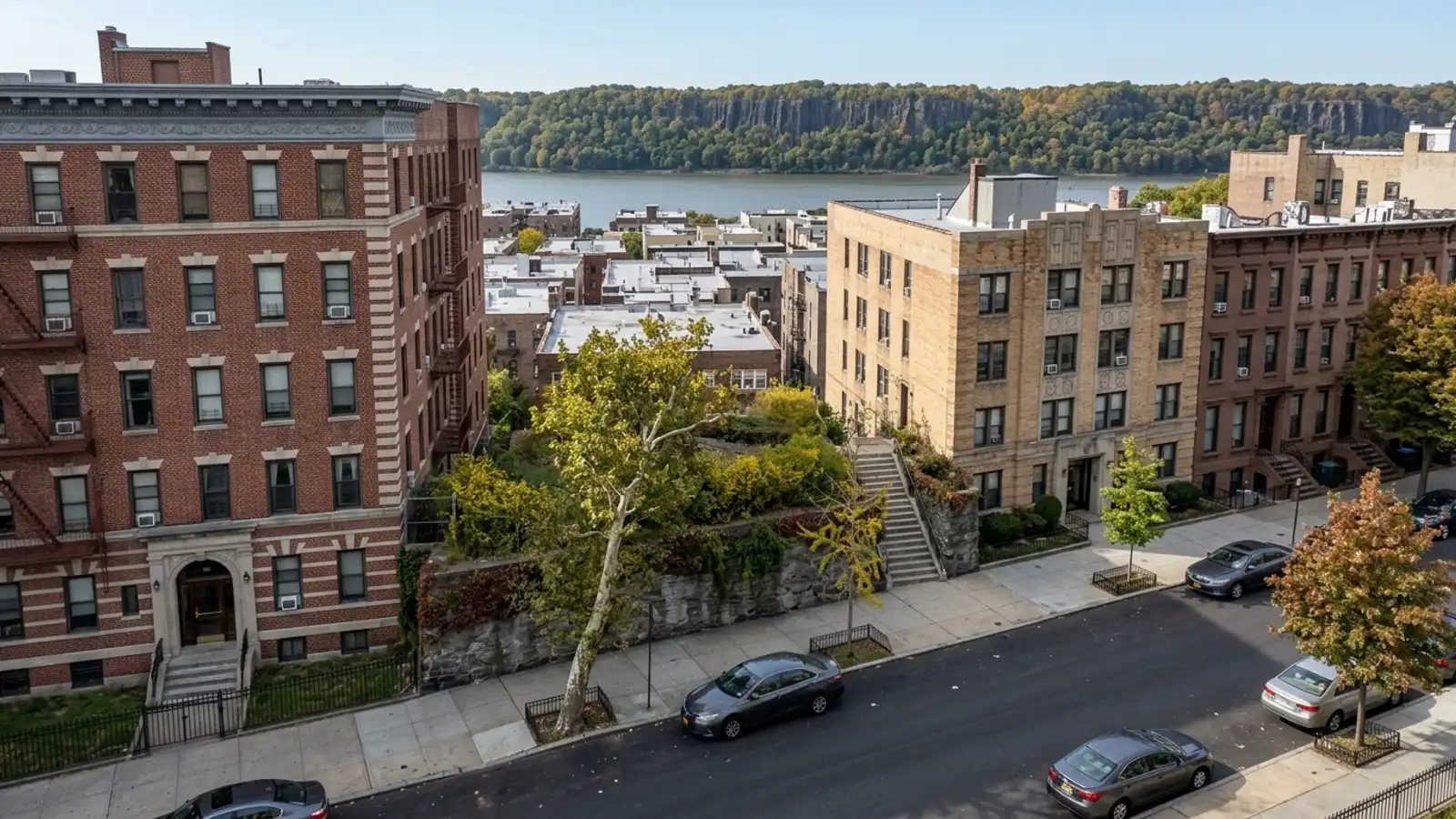
Manhattan’s median home sale price sits around $1.31 million, which puts many of the best neighborhoods in Manhattan out of reach for a lot of buyers. Washington Heights offers a different reality. Located in the northern section of the borough, the neighborhood is built around a large inventory of pre-war co-op apartments, distinct local landmarks, and – for buyers watching their budget – more square footage than you’ll typically find further south.
An Overview of Washington Heights in Manhattan
Washington Heights occupies a significant stretch of Upper Manhattan, bordered by the Harlem River to the east and the Hudson River to the west. The George Washington Bridge anchors the area and connects it directly to New Jersey.
Several landmarks define the neighborhood’s character in ways that go beyond the residential blocks. The Met Cloisters sits inside Fort Tryon Park, dedicated to medieval European art and architecture. The Morris-Jumel Mansion – Manhattan’s oldest house – served as George Washington’s headquarters during the Revolutionary War. The United Palace theater rounds out a cultural footprint that’s genuinely unusual for a neighborhood this far north on the island.
Where the Neighborhood Sits in Manhattan
Washington Heights sits north of Harlem and south of Inwood. The terrain is steep in places, with step streets and sharp elevation changes that are a stark contrast to the flat grid you find in Midtown.
That elevation works in residents’ favor – many buildings have clear sightlines to the Hudson River or the Palisades across the water. Commercially, the hilly layout tends to concentrate activity along Broadway and St. Nicholas Avenue, where the grades are more manageable.
Local Character and Housing Setting
The housing stock is almost entirely established, multi-family apartment buildings. You won’t find glass high-rises here. Block after block is masonry construction from the early to mid-20th century – dense, historic, and architecturally consistent in a way that makes the neighborhood feel distinct from the rest of Manhattan.
Real Estate and Home Prices in Washington Heights
Recent 2026 data puts the median sale price for homes in Washington Heights roughly between $480,000 and $525,000. That’s well below the broader Manhattan median of around $1.31 million, and it’s the single biggest reason buyers come here first.
Homes in Manhattan are currently spending about 73 days on the market. In Washington Heights specifically, available inventory is dominated by co-op apartments – not single-family homes, not new condominiums. That distinction matters because buying a co-op is not the same process as buying a condo, and buyers who don’t know that going in tend to be the ones who run into trouble.
Home Types and Property Attributes
Most units are in pre-war buildings with classic layouts: sunken living rooms, arched doorways, hardwood floors. That’s the upside. The downside is that older construction typically means no central air conditioning and no in-unit laundry. If you want updated kitchens and bathrooms, budget for renovations – those don’t come standard.
Co-op Boards and Purchasing Rules
When you buy a co-op, you’re buying shares in a corporation that owns the building, not the physical apartment itself. That means a board interview, a financial review, and meeting whatever requirements that specific building has set.
Most boards require a minimum 20% down payment. They also enforce subletting restrictions, which limits your options if you ever want to rent the unit out. Know those rules before you fall in love with a particular apartment.
Daily Life, Dining, and Transit
The 1 local train on the IRT Broadway-Seventh Avenue Line and the A express train on the IND Eighth Avenue Line are your primary subway options. The C train also serves local stations, including 168th Street. For drivers, Interstate 95 runs through the area with direct access to the George Washington Bridge, and the Alexander Hamilton Bridge connects the neighborhood east to the Bronx.
Day-to-day life is organized around the commercial strips on Broadway, Amsterdam Avenue, and St. Nicholas Avenue – grocery stores, pharmacies, and local businesses that serve residents rather than tourists.
Local Restaurants and Everyday Dining
The dining options are genuinely varied. Malecon Restaurant is a long-running Dominican spot that locals go to specifically for the roast chicken. Saggio handles Italian, Terravita is another neighborhood staple, and Flor De Mayo covers Chino-Latino, Chinese, and Peruvian dishes. Native Noodles brings Singaporean food to the mix.
Getting Around the Area
The A train is your fastest option – it runs express down the west side of Manhattan. Local buses fill in the crosstown and avenue gaps between subway lines.
One practical note: the hilly terrain makes some blocks genuinely tiring to walk, especially in winter. When you’re evaluating an apartment, pay attention to how far it sits from the nearest train station. That distance feels different on a steep block than it does on flat ground.
Schools, Healthcare, and Climate
NewYork-Presbyterian/Columbia University Irving Medical Center – commonly called Columbia Presbyterian Hospital – is the major medical facility serving the neighborhood. It operates as a major teaching and research hospital, and its presence in the area is significant.
Washington Heights falls within New York City Community School District 6, which covers northern Harlem, Washington Heights, and Inwood, bounded by the Harlem River, the Hudson River, and 163rd Street. School zoning is address-specific, so verify the boundaries for any property you’re seriously considering directly on the district website. Attendance zones determine which public schools a given address is assigned to.
Washington Heights Manhattan Weather
The climate here matches greater New York City – four seasons, hot and humid summers, cold winters with snow. The neighborhood’s elevation and Hudson River exposure do make a difference: winter winds feel stronger here than in flatter, more central parts of Manhattan. Summer temperatures regularly reach into the upper 80s, and most pre-war apartments handle that with window air conditioning units rather than central systems.
Finding a Home in Washington Heights
Manhattan’s active inventory currently sits at roughly 4,105 homes, with around 2,870 recent sales across the borough. Within Washington Heights, co-op apartments are the dominant product – lower entry prices than condos, but with stricter financial requirements attached.
Before you submit an offer on anything, review the building’s financials and board policies. That’s not a step you can do after the fact. A real estate agent who knows upper Manhattan co-ops will help you put together the board package and steer you toward buildings that are realistic for your financial profile.
Buying Versus Renting
Renting gives you flexibility without the co-op commitment. Buying lets you build equity in a neighborhood where prices are still well below the Manhattan average – that’s a real consideration. When you’re running the numbers, compare monthly co-op maintenance fees against local rent prices. Maintenance covers property taxes and building upkeep, but those fees can increase over time, and you want to know what you’re signing up for.
Working with a Manhattan Agent
A local agent knows which boards run stringent financial reviews and which are more straightforward. That knowledge alone saves you time. They’ll handle viewings, help you negotiate the purchase price, and manage the paperwork that New York City co-op transactions require – which is not a small amount.
Frequently Asked Questions
What is Washington Heights in Manhattan known for?
Washington Heights is known for its pre-war masonry apartment buildings and hilly terrain overlooking the Hudson River. The neighborhood is anchored by landmarks like the Met Cloisters, the Morris-Jumel Mansion, and the George Washington Bridge.
What are homes like in Washington Heights Manhattan, and what do they cost?
Homes are predominantly established co-op apartments in early-to-mid 20th-century multi-family buildings. Recent 2026 data shows the median sale price in the neighborhood sits roughly between $480,000 and $525,000.
What restaurants and dining are in Washington Heights Manhattan?
Local dining includes Malecon Restaurant for Dominican roast chicken, Saggio for Italian, and Terravita. Residents also eat at Flor De Mayo for Chino-Latino dishes and Native Noodles for Singaporean food.
What is the weather like in Washington Heights Manhattan?
The neighborhood experiences a standard Northeastern climate with hot summers and cold winters. Due to its higher elevation and location along the Hudson River, winter winds can be more noticeable than in flatter areas of the city.
What hospitals and medical care are near Washington Heights Manhattan?
The primary medical facility is NewYork-Presbyterian/Columbia University Irving Medical Center, commonly called Columbia Presbyterian Hospital. It serves as a major teaching and research hospital for the area.
How long does it take to commute from Washington Heights to Midtown Manhattan on the subway?
The A express train and the 1 local train provide direct service from the neighborhood to Midtown. Specific commute times depend on which station you use and whether you catch the express or local route.
What are the common pitfalls to avoid when buying a co-op apartment in Washington Heights, NY?
Don’t underestimate what co-op boards require. You’ll need the down payment – typically 20% – and you need to understand the building’s specific rules on subletting and renovations before you’re under contract, not after.
Social Cookies
Social Cookies are used to enable you to share pages and content you find interesting throughout the website through third-party social networking or other websites (including, potentially for advertising purposes related to social networking).