

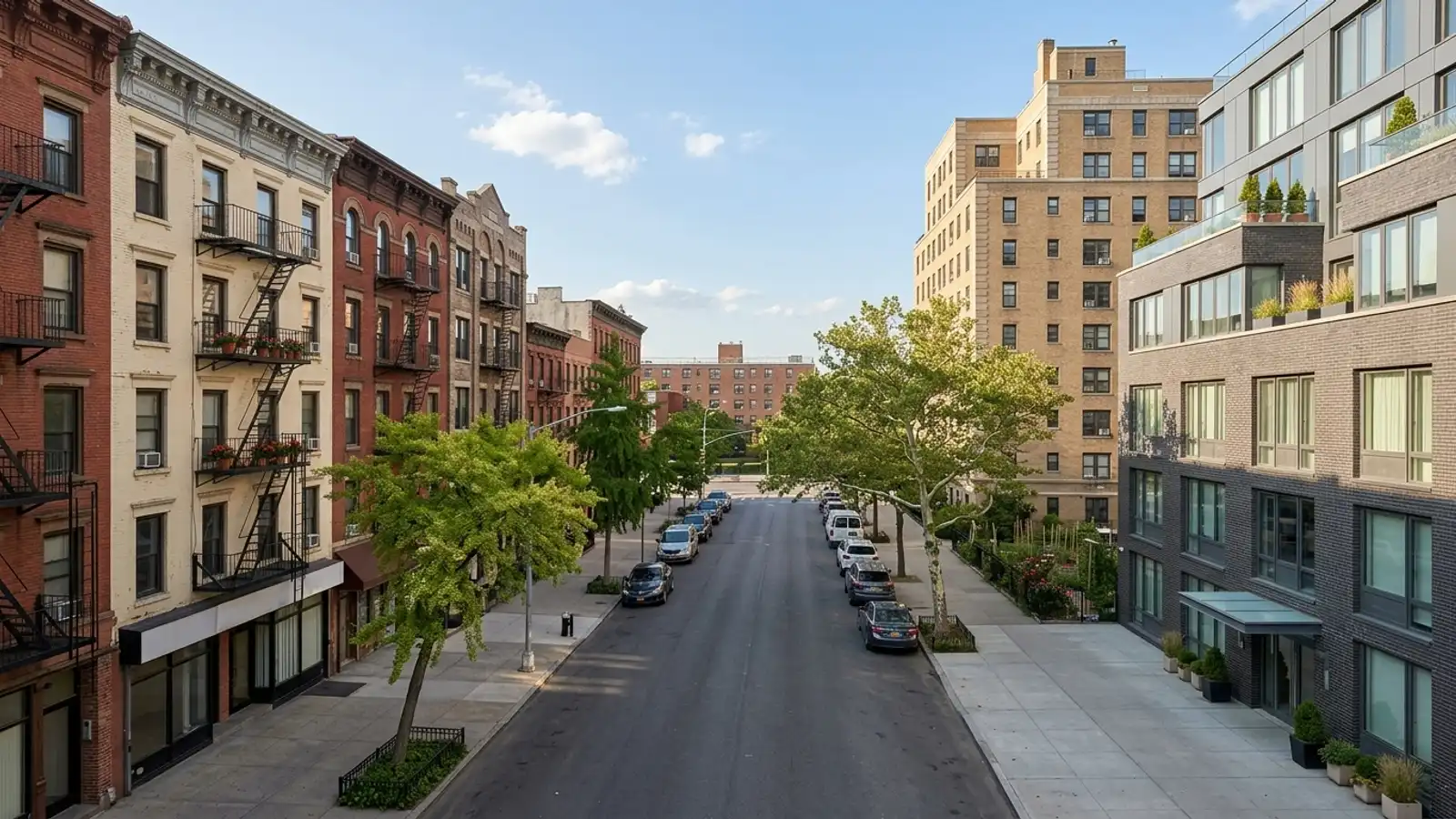
The Lower East Side sits south of 14th Street on the eastern edge of Manhattan – a dense residential district where prewar architecture and newer development exist side by side, sometimes on the same block. Today, it stands out as one of the best neighborhoods in Manhattan.
If you’re looking here, the housing profile is genuinely different from the rest of the borough. Manhattan’s overall median sale price recently sat around $1.31 million. The Lower East Side runs lower than that, and the property mix is its own thing entirely.
Real Estate Prices and Property Types in the Lower East Side
The median home sale price in the Lower East Side ranges from roughly $820,000 to $970,000 for 2026 – meaningfully below the broader Manhattan median of about $1.31 million. That gap is real, and it’s part of why buyers who’ve been priced out elsewhere start looking here. For context, homes across Manhattan currently spend an average of 73 days on the market, with borough-wide inventory running over 4,100 listings.
Most of what you’ll find is prewar and tenement walk-up buildings alongside older co-ops. The newer inventory – boutique condos and new-development units – is concentrated along Essex Crossing, Orchard Street, Chrystie Street, and the waterfront.
Co-ops Versus Condominiums
Older co-ops make up a large share of available inventory here, and they come with the standard Manhattan co-op experience: formal board approval, financial requirements, and rules that vary building to building. It’s not onerous if you’re prepared for it, but it does slow things down.
The newer condos along Essex Crossing operate differently. You’re still looking at homeowners association guidelines, but the approval process is less intensive. Either way, you’ll want to read the specific building requirements carefully – they dictate everything from how much you can finance to what renovations you’re allowed to do.
Transit, Dining, and Daily Life in the Neighborhood
You won’t struggle to get around. The Lower East Side has roughly half a dozen direct subway lines: the F train at Delancey St–Essex St and East Broadway, the J and Z at Bowery and Essex St, and the B and D at Grand St. That’s solid coverage for a neighborhood this size.
Day-to-day food options are anchored by businesses that have been here for a long time. Remedy Diner, Clinton St. Baking Company, and the vendors inside Essex Market handle the everyday. Specialty spots like Kossar’s Bagels & Bialys, The Pickle Guys, Doughnut Plant, and Yonah Schimmel’s Knish Bakery are all part of the regular rotation for residents.
Historic Landmarks and Restaurant Options
The Tenement Museum is the neighborhood’s most significant cultural landmark – it draws visitors from all over, but it’s also just part of the fabric of the place if you live here.
On the restaurant side, Katz’s Delicatessen has been operating in the area since 1888. Russ & Daughters is another longstanding fixture. Beyond the classics, you’ve got Contra, Dhamaka, Freemans, Dirty French, Congee Village, and Sammy’s Roumanian Steakhouse – a range that covers a lot of ground.
Local Schools, Healthcare, and Manhattan Weather
The Lower East Side falls entirely within New York City’s Community School District 1, which covers the section of Manhattan south of 14th Street on the east side. School assignments are zone-specific, so you’ll want to verify the attendance zone for any property you’re seriously considering directly with the district – don’t assume based on the neighborhood boundary alone.
For medical care, you have several facilities in or right next to the neighborhood. NYC Health + Hospitals/Gotham Health (Gouverneur), the Gouverneur Diagnostic & Treatment Center, and NYU Langone Health on Essex Street are the closest options. Mount Sinai Doctors–Delancey Street is also nearby, and NewYork-Presbyterian Lower Manhattan Hospital – just south of the neighborhood in the Financial District – serves residents as well.
Climate and Seasonal Weather
Four seasons, same as the rest of Manhattan: humid summers, cold winters with occasional snow. The one local wrinkle is the waterfront – those blocks along the East River tend to catch more wind, which is fine in summer and less fine in February. It’s worth factoring seasonal utility costs into your monthly housing budget before you commit to a number.
Buying or Renting a Home in the Area
Your decision here comes down to timeline and budget. The neighborhood has rental apartments in walk-up buildings as well as units for sale across both co-ops and condos, so there’s flexibility depending on where you are. If you’re not sure which building type makes sense, a local agent can walk you through the differences – co-op board requirements versus condo HOA rules, and the specific closing process Manhattan properties require. It’s not complicated once you’ve done it, but it’s different enough from other markets that you don’t want to figure it out on the fly.
Frequently Asked Questions
What is Lower East Side in Manhattan known for?
The Lower East Side is known for its dense, historic architecture and deep cultural roots. It features a mix of prewar walk-up buildings, older co-ops, and historic landmarks like the Tenement Museum. The neighborhood also offers extensive everyday dining options and direct access to multiple subway lines.
What are homes like in Lower East Side Manhattan, and what do they cost?
Homes here are primarily prewar and tenement walk-up buildings, older co-ops, and newer boutique condos along Essex Crossing and the waterfront. The median home sale price sits roughly between $820,000 and $970,000, which is lower than the overall Manhattan median of roughly $1.31 million.
What restaurants and dining are in Lower East Side Manhattan?
Katz’s Delicatessen has been open since 1888, and Russ & Daughters is another longtime fixture. For everyday dining, residents rely on Remedy Diner, Clinton St. Baking Company, Kossar’s Bagels & Bialys, and the vendors inside Essex Market. Other notable restaurants include Dhamaka, Freemans, Dirty French, and Congee Village.
What hospitals and medical care are near Lower East Side Manhattan?
Local options include NYC Health + Hospitals/Gotham Health (Gouverneur), Gouverneur Diagnostic & Treatment Center, and Mount Sinai Doctors–Delancey Street. NYU Langone Health has a location on Essex Street. NewYork-Presbyterian Lower Manhattan Hospital is just south of the neighborhood in the Financial District.
How accessible is public transit and getting around the Lower East Side in Manhattan?
The area is served by roughly half a dozen direct subway lines. The F train stops at Delancey St–Essex St and East Broadway, the J and Z run at Bowery and Essex St, and the B and D serve Grand St.
What are the local public and private school options for families moving to the Lower East Side in Manhattan?
The neighborhood is part of New York City’s Community School District 1, which covers Manhattan south of 14th Street on the east side. You’ll want to check the district’s boundary maps directly for specific school assignments – zone lines matter here.
What should buyers know about purchasing a historic walk-up co-op versus a new condo in the Lower East Side?
Historic walk-up co-ops require formal board approval and come with specific financial rules that vary by building. New condos – including those along Essex Crossing and the waterfront – have different homeowners association guidelines and a less intensive approval process. Work with an agent who knows both types so you understand what you’re getting into before you make an offer.
Social Cookies
Social Cookies are used to enable you to share pages and content you find interesting throughout the website through third-party social networking or other websites (including, potentially for advertising purposes related to social networking).