

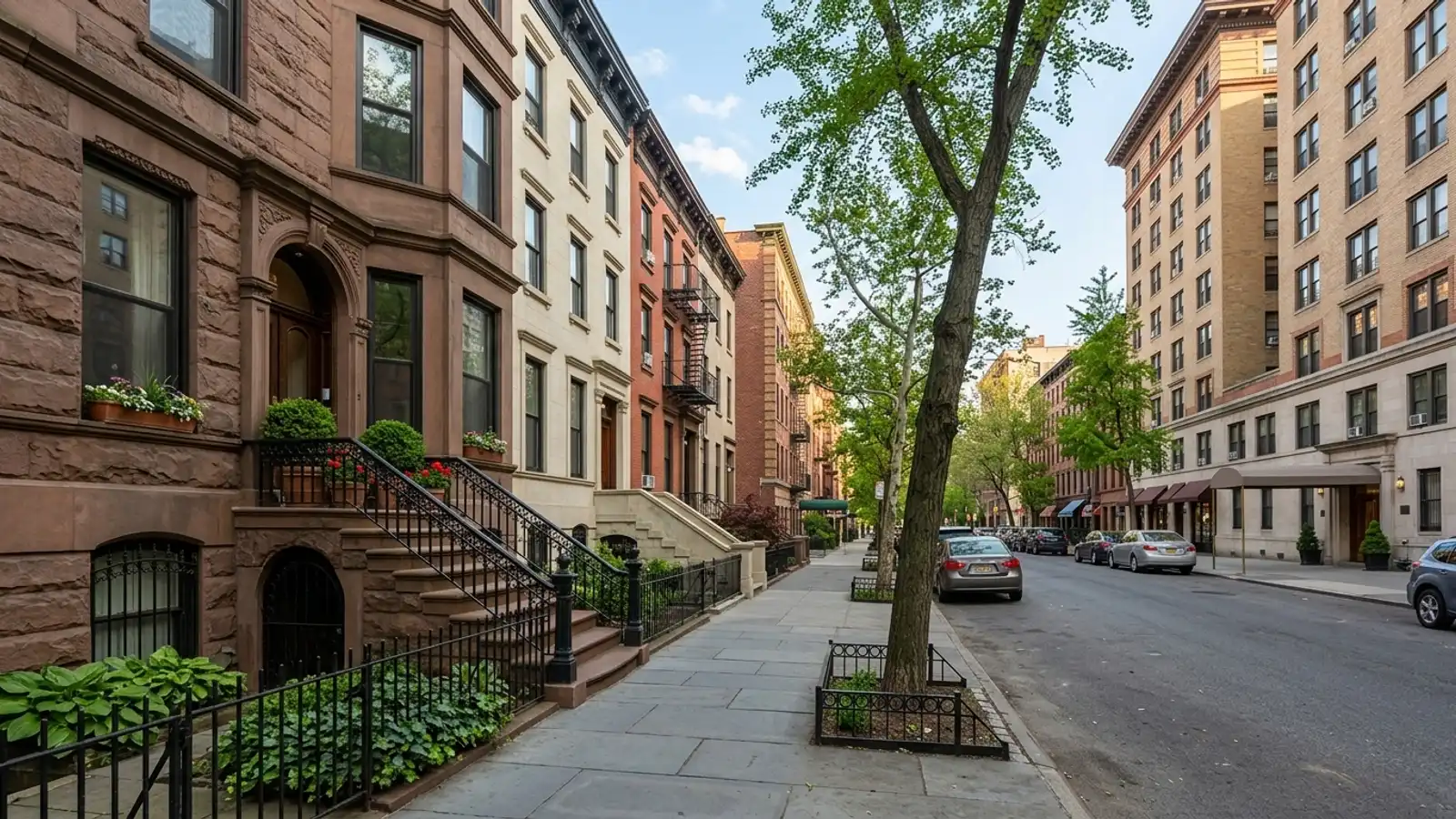
The Upper West Side sits between Central Park and Riverside Park, which means most residents here have immediate access to two of the largest green spaces in Manhattan, NY. The neighborhood stretches from 59th Street up to 110th Street, though some definitions push it to 122nd Street near Morningside Heights. It’s a serious residential hub and one of the best neighborhoods in Manhattan – pre-war architecture, broad avenues, and a mix of co-op and condo buildings define the streetscape.
If you’re looking at homes for sale in Upper West Side, Manhattan, you’ll find a market that largely mirrors broader borough pricing, though certain blocks carry their own premiums. Currently, the overall Manhattan median sale price hovers around $1.31 million. Before you start touring, you’ll want to get your arms around co-op board rules, express subway access, and everyday amenities – because those factors move the needle on which specific property works for your life.
Getting to Know the Upper West Side
The neighborhood’s footprint is defined by the Hudson River to the west and Central Park to the east, with Morningside Park capping the northeastern edge near Morningside Heights. That geography puts most residents within just a few avenues of major outdoor recreation, which is a meaningful part of daily life here – not just a bullet point on a listing.
The residential blocks have a distinct character compared to neighborhoods further downtown. Side streets are lined with historic brownstones, while the major avenues – Broadway, West End Avenue, Central Park West – are flanked by large pre-war apartment buildings. Where you land within those few avenues shapes the experience considerably.
Location and Borders
The boundaries run north from Columbus Circle at 59th Street, with the western edge following Riverside Park along the Hudson River. You get paved paths and waterfront views on that side.
To the east, Central Park West forms the boundary, and Morningside Park closes off the northeastern corner. That layout keeps the Upper West Side geographically distinct from the Upper East Side across the park.
Housing Landscape and Architecture
Mid-rise and high-rise pre-war buildings make up most of the streetscape, and the majority operate as co-ops. These are established buildings – classic layouts, high ceilings, full-time doormen – and they tend to run their houses accordingly.
Scattered among them are brownstones and townhouses on the tree-lined cross streets between the main avenues. Those smaller multi-family or single-family homes are a different product entirely, and buyers who want them should expect to be patient.
Connecting to the Rest of Manhattan
Broadway cuts diagonally through the grid and functions as the main commercial and transit corridor for the neighborhood. From here, you can move south into Midtown or north toward Harlem and Washington Heights without much friction. The Upper West Side plugs into the broader Manhattan layout while still feeling like its own thing.
Buying Real Estate on the Upper West Side
The current Manhattan, NY, market shows a median sale price of roughly $1.31 million, with homes spending an average of 73 days on the market. That borough-wide baseline matters, but it only tells part of the story.
Within the Upper West Side specifically, median sale prices generally range between $1.3 million and $1.5 million as of mid-2026. From there, pricing depends on the property type, how close you are to Central Park, and whether you’re looking at a co-op or a condo – and those distinctions aren’t minor.
Property Types and Building Styles
Co-ops dominate the Upper West Side, Manhattan, real estate market and make up the majority of available inventory. Condominiums exist but are less common, and they draw buyers who want more flexible ownership rules.
You’ll also find a limited number of townhouses and brownstones for sale. Those properties carry higher prices and offer multiple floors of living space without monthly building maintenance fees – a genuinely different proposition from apartment life.
Co-ops, Condos, and Board Requirements
Co-op boards review your financial history and require a formal interview before approving a sale. Expect to provide detailed documentation of your income and assets. This isn’t a formality – boards take it seriously, and some turn down buyers with strong financials for other reasons.
Condos offer a simpler purchase process, which makes them attractive to investors and foreign buyers. That flexibility comes at a premium: condo buyers should expect to pay more per square foot than they would for a comparable co-op.
Daily Life on the Upper West Side: Dining and Transit
Broadway, Amsterdam Avenue, and Columbus Avenue handle most of the day-to-day commercial activity. Grocery stores, pharmacies, and local businesses are genuinely dense here – this is a neighborhood built around people who live in it.
Transit access is equally practical. Multiple subway and bus lines run the length of the neighborhood, and the grid layout means frequent stops. You can manage daily commutes and errands without a car, and most residents do.
Local Dining and Everyday Eateries
Restaurants in Upper West Side, Manhattan, tend to serve residents rather than tourists. The avenues carry a mix of neighborhood diners, cafes, and established local spots – bagels in the morning, sit-down dinner at night, everything in between.
The clusters around the major subway stops at 72nd Street and 86th Street are particularly dense. Picking up food on the way home is genuinely easy from either of those hubs.
Subway Lines and Bus Routes
The neighborhood’s primary subway service runs under Broadway with the 1 local train and the 2 and 3 express trains, stopping at 72nd Street and 96th Street. Under Central Park West, the A, B, C, and D lines provide additional service, with the B and C stopping at 59th, 72nd, 81st, 86th, 96th, 103rd, 110th, 116th, and 125th Streets.
For east-west travel, the M72, M79, M86, and M96 crosstown buses connect the neighborhood to the Upper East Side through Central Park. North-south bus routes include the M5, M104, M7, M11, and M10.
Schools, Healthcare, and Weather on the Upper West Side
The Upper West Side falls under a single geographic school district for public education, and access to medical care is substantial given the concentration of facilities in and around the neighborhood. Both are worth understanding before you commit to an address.
The climate follows the standard New York City seasonal pattern. Hot, humid summers. Cold winters with occasional snow and freezing rain. The westernmost blocks along the Hudson can feel noticeably windier during the colder months – a small thing, but worth knowing if you’re choosing between two comparable apartments.
Local School District Information
The neighborhood is served by New York City Geographic School District 3, which covers the west side of Manhattan from 59th Street up to 122nd Street. District 3 encompasses the entire Upper West Side, along with Morningside Heights and parts of Harlem.
That said, buyers should verify specific school zones within the district. Boundaries for individual buildings can change, so don’t rely on general district information when you’re evaluating a specific address.
Hospitals and Medical Facilities
Several hospitals serve the Upper West Side, Manhattan, and the immediately surrounding areas. The Mount Sinai health system operates a location directly in the neighborhood, with Mount Sinai Morningside to the north and Mount Sinai West in Hell’s Kitchen.
Other nearby medical centers include St. Luke’s Hospital in Hell’s Kitchen, Lenox Hill Hospital, and NewYork-Presbyterian/Columbia Presbyterian Medical Center – all within a reasonable distance for emergency services and specialized care.
Seasonal Weather and Climate
Four distinct seasons, straightforwardly. Summers are hot and humid, with July and August bringing the highest temperatures. Winters are cold, with snow and freezing rain in the mix. Spring and fall are when residents get to enjoy the paths in Central Park and Riverside Park – and most of them do.
Finding a Home in the Neighborhood
Available inventory across Manhattan currently sits at just over 4,100 homes, giving buyers roughly a 4.4-month supply. Secure your financing or proof of funds before you start touring – sellers expect you to be ready, and the board approval process alone adds time to every co-op transaction.
Renting is a legitimate alternative if you want to get a feel for the neighborhood before committing to a purchase. Upper West Side rental options run from walk-up studios to large pre-war units in doorman buildings, so there’s range on that side of the market too.
Viewing Available Listings
When you’re touring properties, pay close attention to the monthly maintenance fees on co-ops and common charges on condos. These recurring costs affect your purchasing power and factor into mortgage approval – they’re not an afterthought.
A local Manhattan agent will help you understand what separates one block from another. They’ll also walk you through the formal board approval process, which comes with most buildings here and has its own timeline and documentation requirements.
Renting Versus Buying
Buying makes sense if you’re planning to stay long-term, particularly given the high closing costs and board fees involved in purchasing on the Upper West Side. Renting keeps things flexible and spares you the financial scrutiny of a co-op board. Both options are real choices here, not a default and a fallback.
One thing that affects both sides: inventory fluctuates by season. Spring and early fall tend to bring the highest number of new listings to market.
Frequently Asked Questions
What is Upper West Side in Manhattan known for?
The Upper West Side is known for its pre-war architecture, brownstones, and immediate access to large green spaces. It’s bordered by Central Park to the east and Riverside Park to the west along the Hudson River, with a dense mix of co-op buildings and everyday commercial avenues throughout.
What are homes like in Upper West Side Manhattan, and what do they cost?
Homes primarily consist of pre-war co-ops, condominiums, and historic townhouses. As of mid-2026, median sale prices in the neighborhood generally sit between $1.3 million and $1.5 million – closely aligned with the broader Manhattan median sale price of roughly $1.31 million.
What restaurants and dining are in Upper West Side Manhattan?
Broadway, Amsterdam Avenue, and Columbus Avenue are lined with everyday eateries, diners, and local cafes. The densest concentration of restaurants clusters near the major subway stations at 72nd Street and 86th Street.
What hospitals and medical care are near Upper West Side Manhattan?
Local medical care includes a Mount Sinai location directly in the neighborhood, along with Mount Sinai Morningside and Mount Sinai West nearby. Residents also have close access to St. Luke’s Hospital, Lenox Hill Hospital, and NewYork-Presbyterian/Columbia Presbyterian Medical Center.
How does buying a home on the Upper West Side compare to the Upper East Side in Manhattan?
Buying on the Upper West Side gives you access to Riverside Park and subway lines including the 1, 2, and 3 trains along Broadway. Both neighborhoods border Central Park, and residents connect between the two using the major crosstown buses – the M72, M79, M86, and M96.
What are the typical co-op board requirements and hidden fees for Upper West Side Manhattan apartments?
Purchasing a co-op means passing a board interview and submitting detailed financial documentation. Budget for board application fees and closing costs on top of the purchase price – these are real expenses, not incidentals.
How easy is it to commute via subway from the Upper West Side to Midtown or Lower Manhattan?
Multiple train routes make commuting straightforward. The 2 and 3 express trains run under Broadway, and the B and C trains run along Central Park West – both move you through the borough efficiently.
Social Cookies
Social Cookies are used to enable you to share pages and content you find interesting throughout the website through third-party social networking or other websites (including, potentially for advertising purposes related to social networking).