

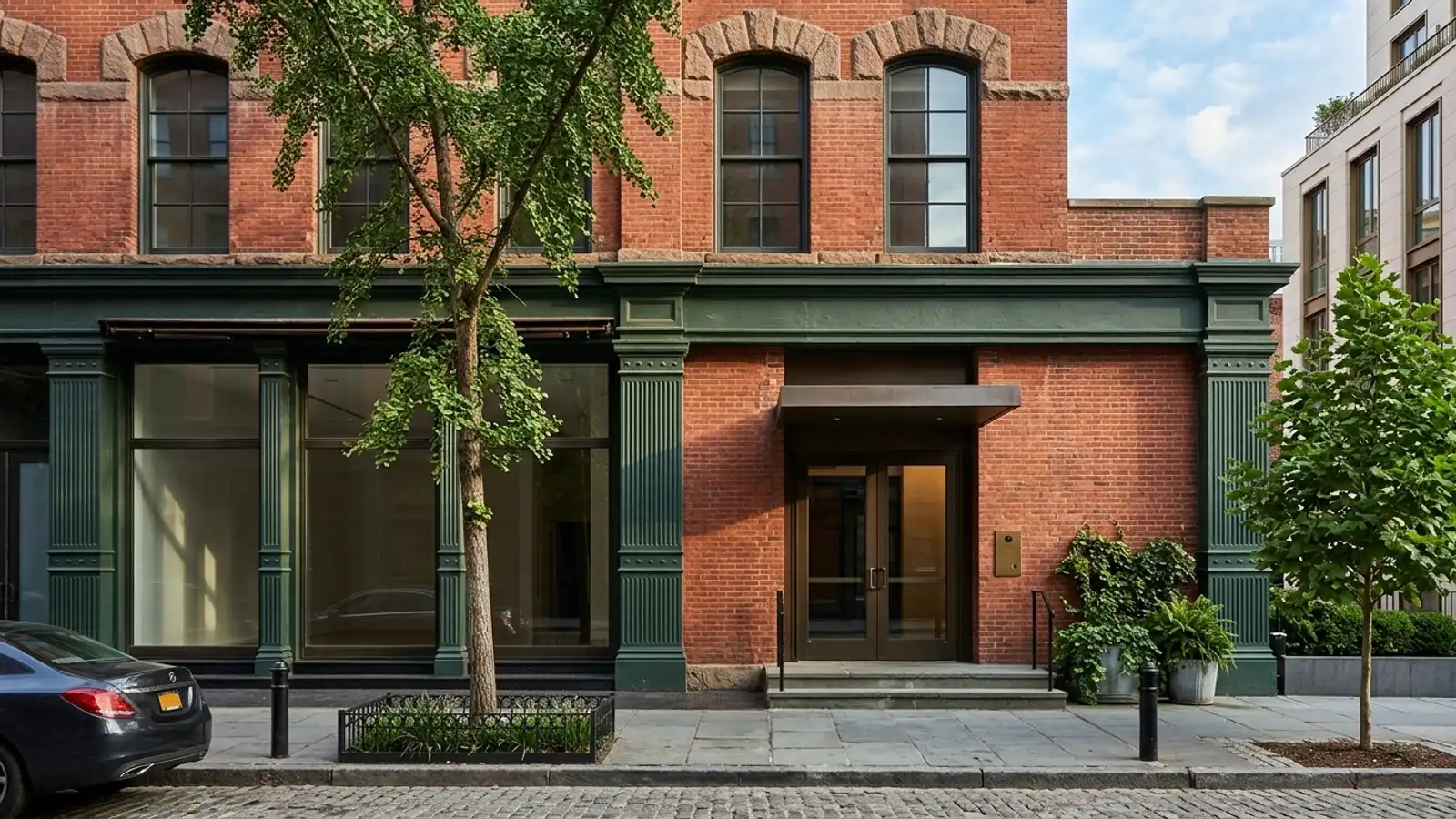
Manhattan’s median sale price currently sits around $1,311,132 as of late summer 2026. The luxury market operates on an entirely different scale – top-tier properties regularly clear $10 million, and the inventory in the best neighborhoods in Manhattan ranges from historic townhouses to new glass supertalls that would look at home on a sci-fi movie set.
Inventory sits at roughly 4,105 available homes, and the borough sees steady movement, with 2,870 homes sold recently. If you’re shopping at the upper end, pricing comes down to exact street boundaries, building amenities, and how close you are to a major landmark. Sometimes a single avenue is the difference between one tier and the next.
Top-Priced Neighborhoods in Manhattan, NY
Hudson Yards currently holds the title for the highest median sale price in the borough. In Q2 2026, the median sale price in this development-focused area reached roughly $6.56 million.
Other downtown areas follow close behind. Tribeca and SoHo consistently rank among the highest-priced neighborhoods in Manhattan, with median prices at $3.68 million and $3.41 million, respectively.
Median Sale Prices for Top Areas
The Upper East Side offers a slightly different price structure depending on the property type. Condo median prices in that area range from $1.4 million to $1.7 million – a lower entry point than the downtown lofts of SoHo. Averages can skew higher when a few ultra-luxury developments record multiple closings in a single quarter, so it’s worth looking at the underlying data rather than the headline number.
How These Prices Compare to the Borough
The overall Manhattan market moves at a median of about $1.31 million, with homes spending roughly 73 days on the market. Properties tend to sell close to asking, averaging a 99.37% sale-to-list ratio. When you compare that borough-wide figure to Hudson Yards, the premium for new construction and unobstructed river views becomes pretty obvious pretty fast.
Inside Manhattan’s Top Luxury Neighborhoods
Manhattan’s luxury tier generally starts around $4 million, which represents roughly the top 10% of the market. Median luxury sale prices currently hover between $5.9 million and $6.45 million. The ultra-luxury and trophy product segment trades at roughly $4,000 to $9,500 per square foot – these are the properties with private elevators, expansive terraces, and full-time concierge staff.
Hudson Yards and Billionaires’ Row
Hudson Yards leads the market with its high concentration of new, amenity-rich skyscrapers. The area was built over rail yards and now features some of the highest-priced residential real estate in New York City. Billionaires’ Row, located along the southern edge of Central Park, is another major center for ultra-wealth – supertall buildings there regularly clear $5,000 per square foot.
Iconic Towers and Co-ops
Central Park Tower on Billionaires’ Row is the defining landmark for what this market looks like at its ceiling. As of August 2026, residences in this building range from about $7.75 million to $128 million. Other prominent luxury landmarks include 432 Park Avenue, One57, and the historic Plaza Hotel at Grand Army Plaza.
What Defines an Upscale Manhattan Neighborhood
High real estate prices tend to correlate with higher localized income levels. The NYU Furman Center reported the median household income in Manhattan at $110,000 in 2024, which was about 31% higher than the NYC-wide median.
Other data models show figures ranging from roughly $106,000 up to $138,744, depending on the specific metrics and geographic boundaries used. In the wealthiest pockets of the borough, localized incomes far exceed these borough-wide medians – those numbers are just a starting point for understanding the landscape.
Income and Home Value Benchmarks
A neighborhood typically needs to see consistent sales above the $4 million mark to be considered a top-tier luxury market. The overall Manhattan listing inventory ranges from about $490,000 up to $85 million, which tells you everything you need to know about the gap between entry-level and luxury here. Property values in the upper-tier areas tend to hold steady even when the broader market cools – not immune to cycles, but more insulated than most.
Amenities That Drive High Valuations
Proximity to green spaces, high-end retail, and private services all move the needle. Buildings that offer residents-only fitness centers, private dining rooms, and on-site parking see the highest price per square foot. Historical significance also plays a role – a restored 19th-century townhouse carries a different kind of prestige than a brand-new glass penthouse, and certain buyers are specifically shopping for one or the other.
Current Luxury Listings and Market Activity
Recent listing data shows the most expensive home for sale in Manhattan is a 9,677-square-foot condo listed at $74,121,785. Active listings in buildings like Central Park Tower reach as high as $128 million.
That said, even trophy properties have their slow weeks. No single Manhattan luxury contract topped $10 million in the week before Labor Day 2026, which is a good reminder that seasonal lulls happen at every price point.
The Highest-Priced Homes Available
The highest-priced listings are almost exclusively penthouses in supertall buildings or large, multi-lot townhouses. These properties typically feature 360-degree views of the city, private outdoor spaces, and custom architectural details. Buyers shopping in this bracket generally close in all-cash transactions.
Townhouses and Penthouses
Townhouses and penthouses are solving for different things, and it’s worth being clear-eyed about which one fits your life. Townhouses give you multiple floors of private living space and private gardens, but exterior upkeep is on you. Penthouses offer turn-key convenience – full-building staff, integrated security systems – in exchange for high monthly common charges. Neither is wrong; it depends entirely on what you want your day-to-day to look like.
Top Manhattan Neighborhoods for Different Lifestyles
Buyers looking for the best Manhattan neighborhoods usually end up choosing based on daily routines rather than median price. A buyer who wants immediate access to Broadway theaters is targeting a different area than someone looking for quiet residential blocks.
With over 4,100 active listings across the borough, you have real options – downtown lofts, uptown historic homes, and everything in between. The choice comes down to architectural preference and what’s on your route every morning.
Spacious Layouts and Park Proximity
The Upper East Side and Upper West Side provide immediate access to Central Park and feature wider sidewalks than most of downtown. The housing stock here runs to large pre-war co-ops with multiple bedrooms and formal dining rooms. These neighborhoods also house many of the city’s prominent museums and cultural institutions, which matters more to some buyers than others.
Transit and Business Hub Access
Tribeca and Hudson Yards put you closer to major downtown corporate offices and transit hubs. Hudson Yards connects directly to the 7 train, while Tribeca offers quick access to multiple subway lines and the Financial District. If minimizing a downtown commute is the priority, these southern and western neighborhoods tend to be the answer.
Cost of Living and Livability Factors
Moving to Manhattan means budgeting for one of the highest cost-of-living standards in the country. Beyond the $1.31 million median home price, you’ll need to factor in high property taxes and monthly building maintenance fees. The NYU Furman Center notes a median household income of $110,000 for the borough, but comfortable living in top-tier neighborhoods requires a substantially higher financial baseline. Luxury condo common charges alone can exceed the median national mortgage payment.
Market Stability and Demand
Manhattan real estate maintains strong long-term stability because of limited land supply and consistent international demand. Homes are spending a median of 73 days on the market, and the sale-to-list ratio holds at 99.37% – sellers are largely getting their asking prices, which is a meaningful data point when you’re deciding how to structure an offer.
Building Rules and Requirements
A large portion of Manhattan’s historical housing stock is governed by co-op boards, and that process deserves your full attention before you fall in love with a specific unit. You’ll need to submit detailed financial statements and pass a board interview before closing. Condos are more flexible and generally easier to purchase, which is why they tend to be popular with foreign investors who want to sidestep co-op subletting restrictions.
Location and Transit Access for Top Areas
Manhattan’s grid makes the borough navigable, but neighborhood borders are what move property values. A single avenue can separate a $2 million condo from a $5 million penthouse – that’s not an exaggeration, it’s just how the market works here. Buyers often pay a premium to live within a five-minute walk of major transit hubs like Penn Station or Columbus Circle, and access to express subway lines adds tangible value to almost any listing.
Where These Areas Are Located
Hudson Yards sits on the Far West Side, bordered roughly by 30th Street to the south and 43rd Street to the north. Tribeca occupies a prime downtown stretch below Canal Street, known for its cobblestone streets and converted warehouses. Billionaires’ Row is a specific corridor of supertall skyscrapers along 57th Street and the southern edge of Central Park.
Transit and Landmark Proximity
Proximity to Central Park remains one of the strongest drivers of real estate value in New York City – that’s been true for a long time and shows no sign of changing. The historic Plaza Hotel at Grand Army Plaza anchors the southeast corner of the park, surrounded by some of the highest-priced real estate in the world. Downtown neighborhoods rely on hubs like the Fulton Center and the Oculus for transit connectivity.
Frequently Asked Questions
What is the richest part of Manhattan?
Hudson Yards currently has the highest median sale price, reaching roughly $6.56 million in Q2 2026. Tribeca and SoHo follow closely, with median prices of $3.68 million and $3.41 million. Billionaires’ Row is also a major center for ultra-wealth, featuring supertall skyscrapers with units priced up to $128 million.
What is the most expensive house in Manhattan, NY?
As of recent data, the most expensive listing is a 9,677-square-foot condo priced at $74,121,785. In supertall buildings like Central Park Tower, active listings have reached up to $128 million as of August 2026.
Social Cookies
Social Cookies are used to enable you to share pages and content you find interesting throughout the website through third-party social networking or other websites (including, potentially for advertising purposes related to social networking).