

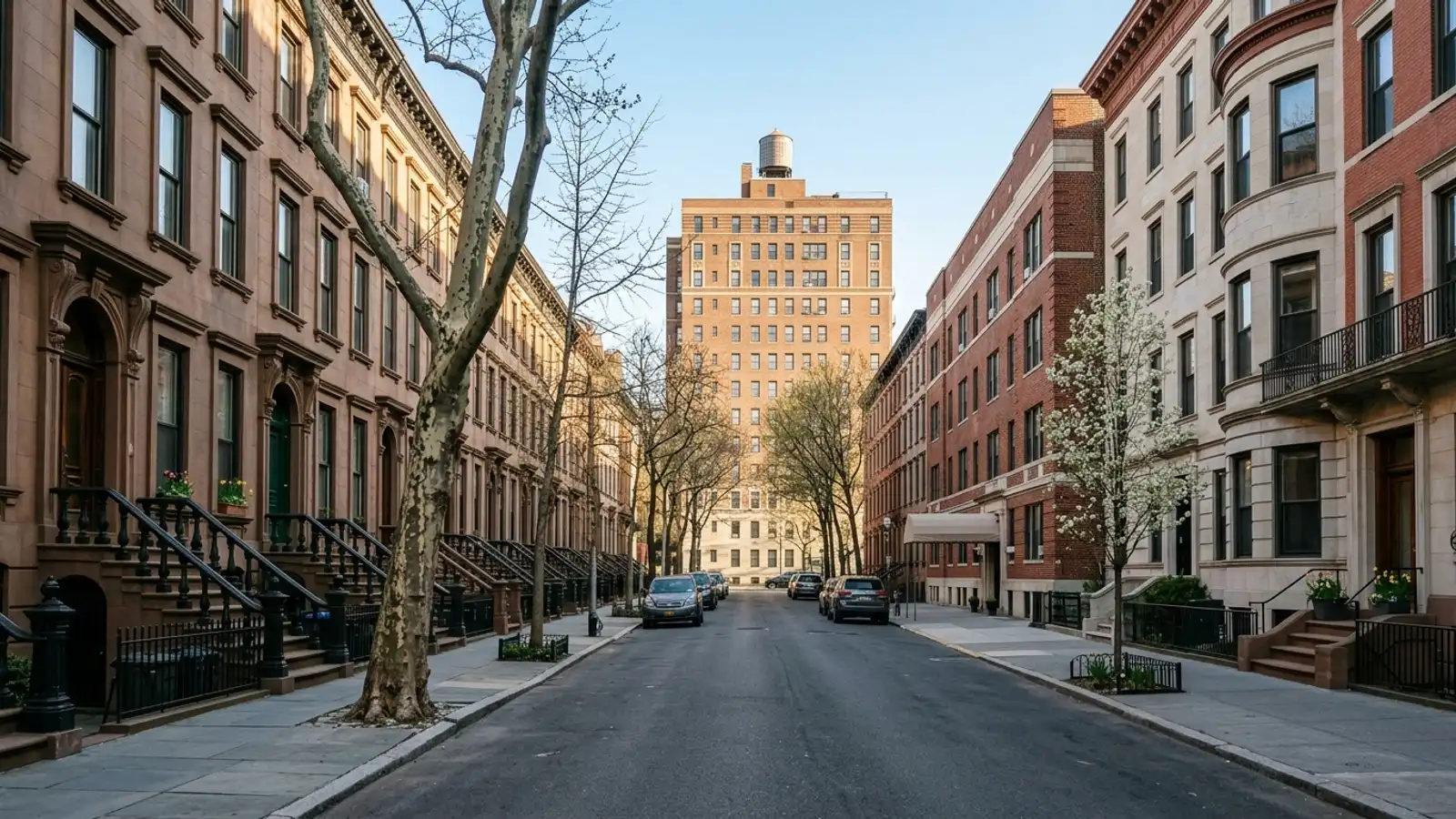
Manhattan’s overall median sale price is currently around $1.31 million, and homes spend an average of 73 days on the market. When comparing the best neighborhoods in Manhattan, buyers looking for something along Central Park usually narrow their search to two addresses: the Upper East Side or the Upper West Side. Both have the historic architecture and the park access. What they don’t share is how their housing markets work.
The choice between the Upper East Side and Upper West Side comes down to a few specific things – housing inventory, transit access, and what the local co-op boards are going to ask of you. The east side is known for strict cooperative buildings and Museum Mile. The west side gives you more subway options and Riverside Park. Before you get to the point of submitting an offer on either side, you’ll want a clear picture of the financial expectations each neighborhood carries.
Types of Homes Available in Each Neighborhood
New York City real estate runs on co-ops, condos, and historic townhouses, and that’s exactly what you’ll find here. Co-ops make up the majority of inventory in both neighborhoods, which means passing a board interview and hitting specific financial benchmarks isn’t optional – it’s the process. Pre-war buildings and brownstones line the side streets on both sides of the park.
The board package alone tells you something about what you’re getting into: tax returns, bank statements, employment letters, personal references. Both neighborhoods require all of it. Where they diverge is in the specific down payment and liquid asset requirements.
Buying on the Upper East Side
The Upper East Side features some of the strictest co-op requirements in the city. Premium buildings frequently ask for 25% down, a 25% debt-to-income ratio, and 1.5 to 2 years of post-closing liquid reserves. Some prestige buildings require 30% to 50% down, or all-cash purchases outright.
Subletting is tightly controlled as well. Many Upper East Side co-ops require a three-year initial residency before you can sublet your unit, and sublessees must sometimes show $500,000 or more in liquid assets. If you’re targeting this side of the park, get your financial documentation together early.
Buying on the Upper West Side
Historic co-ops on the Upper West Side hold to slightly more traditional standards – 20% to 25% down, a 28% debt-to-income ratio, and about two years of post-closing reserves.
Sublet policies tend to be a bit more flexible here, often requiring a two-year initial residency rather than three. That said, owners who do sublet frequently face sublet surcharges ranging from 25% to 35% of their monthly maintenance fees, so “more flexible” is relative.
Current Market Prices and Carrying Costs
Recent data from late 2025 and 2026 shows Upper East Side median sale prices ranging from $1.4 million to $1.6 million, depending on property type. The Upper West Side sits slightly lower, with overall median sale prices reported between $1.335 million and $1.5 million. Condos in both neighborhoods price higher than co-ops, often reaching medians between $1.575 million and $1.76 million.
Purchase price is one number. Monthly carrying costs are another conversation entirely.
Manhattan co-op maintenance fees generally run about $1.25 to $2.50 per square foot per month, averaging roughly $2.27 to $2.54. That fee bundles the building’s property taxes and any underlying mortgage debt into a single monthly payment. Condo common charges look lower on paper – typically $0.75 to $1.50 per square foot per month – but condo owners pay property taxes separately, and the effective tax rate for Manhattan condos runs around 1.2%. Once you add those taxes back in, total condo carrying costs often land in roughly the same place as co-op maintenance fees.
Subway Lines and Commute Times
The Upper East Side runs on the 4 and 5 express trains and the 6 local, all under Lexington Avenue. The 4 and 5 stop at 59th and 86th Streets; the 6 also serves 68th Street – Hunter College, 77th Street, and 96th Street. The Q train on the Second Avenue Subway adds another route, with stops at 96th, 86th, 72nd, and Lexington Avenue – 63rd Street.
The Upper West Side has more lines to work with. The 1, 2, and 3 trains run under Broadway – the 2 and 3 providing express service – and the A, B, C, and D trains run along Central Park West and Eighth Avenue. That’s two distinct north-south corridors, which gives you more flexibility depending on where you’re headed.
Getting between the two neighborhoods is slower. There’s no direct crosstown subway above 63rd Street, so you’re looking at MTA crosstown buses – the M66, M72, M79, and M86 – or driving through Central Park’s transverse roads at 65th, 79th, 85th, and 97th Streets. For regional travel by car, the FDR Drive runs along the east side and the Henry Hudson Parkway serves the west.
Parks, Museums, and Architecture
The Upper East Side sits between Central Park and the East River, with Carl Schurz Park on its eastern edge. Museum Mile along Fifth Avenue includes the Cooper-Hewitt National Design Museum and the Neue Galerie. The Asia Society Museum on Park Avenue and the 92nd Street Y on Lexington Avenue round out the cultural footprint. Commercial activity runs along Madison, Lexington, and Third Avenues, surrounded by historic districts and the pre-war architecture the neighborhood is known for.
The Upper West Side stretches from Central Park to Riverside Park, with the Hudson River providing a different kind of waterfront green space. Lincoln Center for the Performing Arts and the American Museum of Natural History anchor the neighborhood culturally. Commercial life concentrates along Broadway, Columbus Avenue, and Amsterdam Avenue.
Frequently Asked Questions
What is the difference in home prices between the Upper East Side and Upper West Side?
Recent estimates place the Upper East Side overall median sale price between $1.4 million and $1.6 million. The Upper West Side typically runs slightly lower, with median sale prices ranging from $1.335 million to $1.5 million. In both areas, condominiums command higher prices than co-ops.
What types of properties are available in the Upper East Side vs Upper West Side?
Both neighborhoods consist primarily of pre-war co-ops and new development condos. Buyers will also find historic brownstones and townhouses on the side streets of both areas. Co-ops make up the bulk of the inventory and require strict board approval.
How does transportation compare between the Upper East Side and Upper West Side?
The Upper West Side offers a wider variety of subway lines, including the 1, 2, 3, A, B, C, and D trains. The Upper East Side relies on the 4, 5, and 6 trains along Lexington Avenue and the Q train on Second Avenue. Crosstown travel between the two relies on MTA buses like the M79 and M86.
Is the co-op board approval process generally stricter on the Upper East Side or the Upper West Side?
The Upper East Side generally has stricter board requirements. Premium buildings on the east side often ask for 25% to 50% down and a three-year initial residency before subletting. Upper West Side co-ops typically ask for 20% to 25% down and a two-year residency before subletting.
Which Manhattan neighborhood offers better access to parks and recreational amenities, the UES or UWS?
Both neighborhoods border Central Park, with equal access to its paths and fields. The Upper West Side also borders Riverside Park along the Hudson River, while the Upper East Side offers Carl Schurz Park along the East River.
Do properties typically sell faster on the Upper West Side or Upper East Side in today’s Manhattan market?
Across Manhattan, homes currently spend an average of 73 days on the market. Specific days on market for the Upper East Side and Upper West Side fluctuate based on building type and price point. Neither neighborhood is universally faster than the other.
Social Cookies
Social Cookies are used to enable you to share pages and content you find interesting throughout the website through third-party social networking or other websites (including, potentially for advertising purposes related to social networking).