

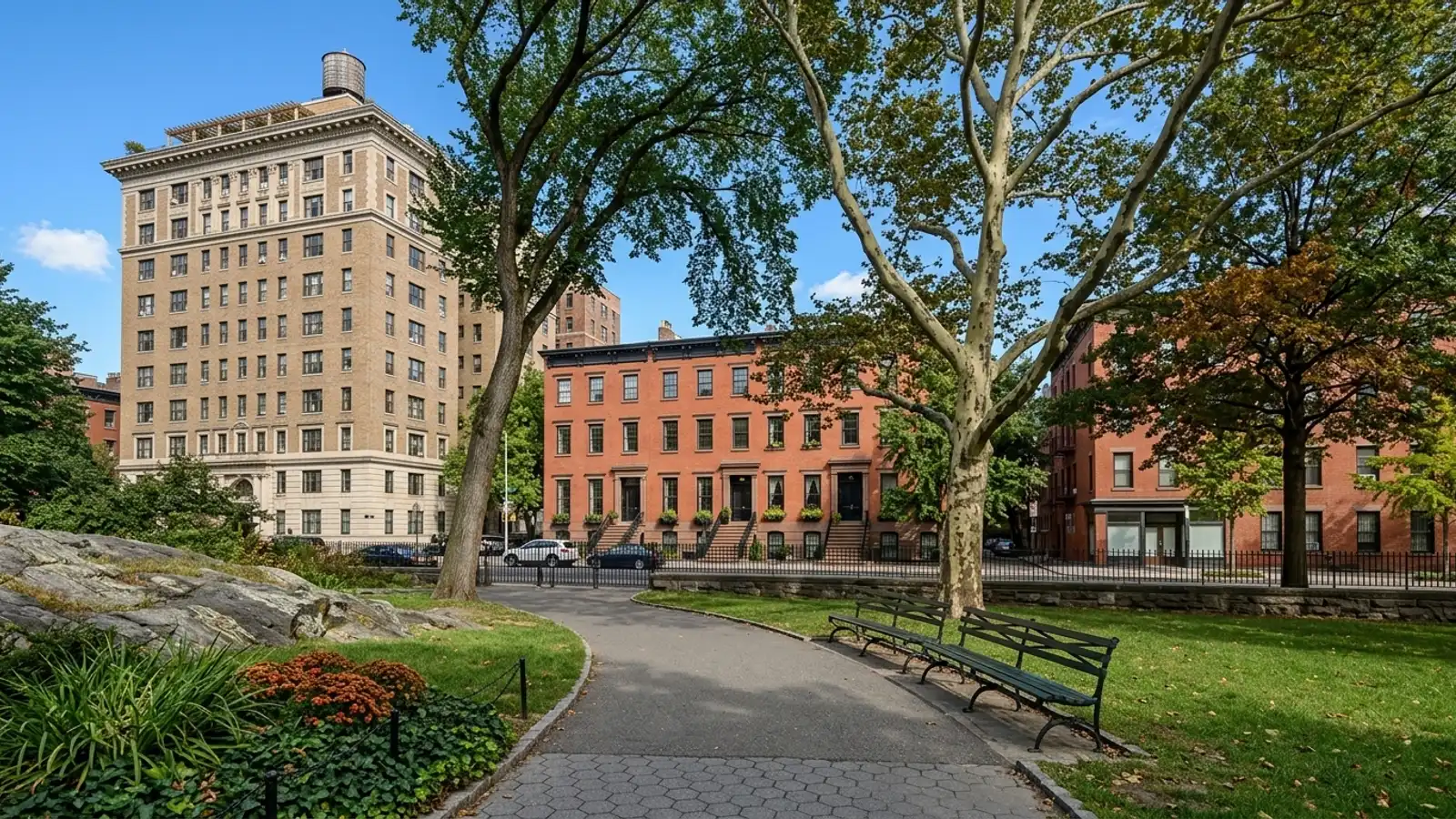
The Upper East Side sits between Central Park and the East River – one of the more established residential pockets in all of Manhattan, NY. Prewar architecture lines the avenues, and you’re essentially next door to some of the largest cultural institutions in the city. This combination of location and culture makes it one of the best neighborhoods in Manhattan.
If you’re looking at homes for sale in the Upper East Side, Manhattan, you’ll find a market where co-ops dominate and new-development condos are carving out a growing share. Knowing the housing stock, how people get around, and what daily life looks like here goes a long way toward understanding what you’re paying for – and what you’re getting.
Upper East Side Boundaries and Architecture
The western edge runs along Central Park, so outdoor space is genuinely immediate, not a ten-block walk. The neighborhood is also strongly defined by Museum Mile, the stretch of Fifth Avenue from roughly 82nd to 110th Streets.
That corridor is home to The Metropolitan Museum of Art, Neue Galerie, The Jewish Museum, the Museum of the City of New York, and El Museo del Barrio. The Solomon R. Guggenheim Museum – completed in 1959 with a spiral rotunda designed by Frank Lloyd Wright – functions as the district’s most recognizable architectural landmark.
Prewar Buildings and Streetscapes
Past the museums, you’re looking at a mix of high-rise residential buildings and historic properties. The density here feels residential in a way that Midtown, a few miles south, simply doesn’t.
The architecture skews prewar. That’s especially true along Fifth, Park, and Madison Avenues, where some of the oldest residential buildings in the city are concentrated.
Real Estate and Home Prices in the Upper East Side
The borough-wide Manhattan median sale price sits around $1.31 million, with homes spending roughly 73 days on the market and a 4.4-month supply of available inventory. The Upper East Side tends to trade above that number.
Late 2025 data placed the median home price in this specific neighborhood at about $1.4 million.
Co-ops, Condos, and Townhouses
Co-ops are the dominant for-sale product here, particularly in the prewar buildings along the major avenues. Buying one means going through a formal board approval process – that’s standard, not an exception.
Condos make up a smaller but growing share, driven mostly by new development. Classic townhouses are also available. Multi-floor living spaces like that are genuinely rare elsewhere in Manhattan.
Transit and Dining in the Upper East Side
The 4, 5, and 6 trains run along Lexington Avenue and handle most of the commuting load for residents heading to Midtown or Lower Manhattan. The Q train on the Second Avenue Subway added a meaningful option on the neighborhood’s east side, giving people closer to the East River a more direct route.
Two lines serving different parts of the same neighborhood are a practical distinction worth understanding before you decide which block you want to be on.
Neighborhood Restaurant Institutions
Madison Avenue is the main dining corridor. Sant Ambroeus Madison has been open since 1985. Newer arrivals include Armani/Ristorante at 760 Madison Ave and Avra Estiatorio.
Third Avenue fills in the everyday gaps. JG Melon has a long reputation for its classic burgers, and Sarabeth’s East on Madison Avenue draws a steady weekend brunch crowd.
Local Schools, Medical Care, and Climate
The medical infrastructure here is genuinely significant. NewYork-Presbyterian/Weill Cornell Medical Center and Memorial Sloan Kettering Cancer Center are in or immediately adjacent to the neighborhood, along with the Hospital for Special Surgery and Lenox Hill Hospital.
For public schools, the Upper East Side falls within New York City Geographic School District 2. Attendance boundaries determine school assignments, so you’ll want to verify the specific zoning for any building you’re seriously considering – don’t assume; check directly with the district.
Upper East Side Weather Patterns
Manhattan sits in a transitional zone between humid continental and humid subtropical climates. Summers run June through August with high humidity and average highs in the low-to-mid 80s Fahrenheit. Winters from December through February bring average highs in the upper 30s to low 40s, with lows near freezing.
Precipitation is spread fairly evenly across the year – 45 to 50 inches annually, with no real dry season to speak of.
Investment Properties and Short-Term Rentals
Local Law 18, enforced since September 2023, requires anyone renting a New York City dwelling unit for fewer than 30 days to register with the Mayor’s Office of Special Enforcement. For practical purposes, that law kills most short-term rental activity in the Upper East Side.
Only a host’s primary residence qualifies, the host must be physically present during the guest’s stay, and the city caps paying guests at two per reservation.
Purchasing an Investment Property
Whole-unit, Airbnb-style rentals are effectively off the table. Platforms like Airbnb are legally required to verify a host’s city registration before processing any bookings, so there’s no workaround there.
If you’re buying here as an investment, you’re planning for long-term traditional leasing. Co-op boards add another layer – most have strict subletting rules of their own – which is why investors typically focus on condo properties rather than co-ops.
Frequently Asked Questions
What is the Upper East Side in Manhattan known for?
The neighborhood is known for Museum Mile, the stretch of Fifth Avenue that includes The Metropolitan Museum of Art and the Solomon R. Guggenheim Museum. Central Park runs along its western edge, and the housing stock is defined by prewar co-ops and townhouses.
What are homes like in the Upper East Side, Manhattan, and what do they cost?
Co-ops in prewar buildings dominate, alongside classic townhouses and a growing share of new condos. As of late 2025, the median home price in the neighborhood was about $1.4 million – above the borough-wide median of roughly $1.31 million.
What restaurants and dining are in the Upper East Side, Manhattan?
Madison Avenue is the main dining corridor, with Sant Ambroeus Madison, Armani/Ristorante, and Avra Estiatorio among the options. JG Melon on 3rd Avenue is a long-running local spot for burgers, and Sarabeth’s East handles the weekend brunch crowd.
What hospitals and medical care are near the Upper East Side, Manhattan?
The area is served by NewYork-Presbyterian/Weill Cornell Medical Center, Memorial Sloan Kettering Cancer Center, the Hospital for Special Surgery, and Lenox Hill Hospital.
Are short-term rentals and Airbnb allowed for investment properties in the Upper East Side, Manhattan?
Whole-unit short-term rentals are effectively barred by Local Law 18. You can only rent for fewer than 30 days if it’s your primary residence, you’re physically present during the stay, and you have no more than two paying guests.
What are the public and private school options like for families moving to the Upper East Side, Manhattan?
The neighborhood is zoned within New York City Geographic School District 2 for public education. Verify specific building boundaries directly with the district before assuming anything.
What should buyers expect from the co-op board approval process when purchasing a home in the Upper East Side, Manhattan?
Co-ops are the dominant property type here, so most buyers will go through a board approval process. It’s particularly standard in the older prewar buildings on Fifth, Park, and Madison Avenues.
Social Cookies
Social Cookies are used to enable you to share pages and content you find interesting throughout the website through third-party social networking or other websites (including, potentially for advertising purposes related to social networking).